
Commercial Dominance
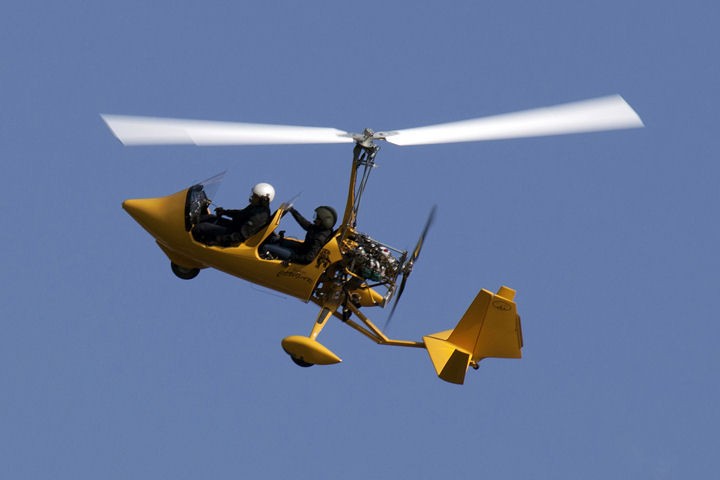
The ELA-07 transformed the ultralight autogyro market through exceptional commercial success, propelling ELA Aviación from a small family operation to global market leadership within a decade. By 2006, the company had become the largest ultralight gyrocopter manufacturer worldwide and the only Spanish firm producing autogyros. The aircraft achieved international distribution with examples exported to Australia, New Zealand, and numerous other countries, demonstrating the design's global appeal and reliability.
The Manufacturer's Rise
ELA Aviación emerged from the passion of Emilio López Alemany, who began constructing composite aircraft in the early 1980s. After building his first successful single-seat gyrocopter, the ELA-03, in 1996, López and co-founder Rita Nieves established ELA Aviación to pursue mass production. The company's first two-seat autogyro, the ELA-04, flew in 1998, leading to the refined ELA-07 design that would define their success.
In 2002, ELA Aviación forged a crucial partnership with Rotax, the world's leading aircraft engine manufacturer, establishing a relationship that continues today. The company relocated to Fuente Obejuna aerodrome in Córdoba in 2005 to expand manufacturing capacity and conduct prototype testing. Under current leadership of Emilio José López (Emilio Jr.), ELA Aviación has evolved into what the company describes as "the Spanish company that has manufactured and sold the most aircraft in history."
Revolutionary Construction
The ELA-07 introduced advanced materials and construction techniques that set new standards for ultralight autogyros. The fuselage employs TIG-welded, CNC laser-cut stainless steel tubing, providing superior corrosion resistance compared to traditional aluminum construction. Non-structural carbon fiber and resin compose the cockpit fairing, while the rotor blades combine aluminum and carbon fiber for optimal strength-to-weight ratios.
This innovative approach to materials extended the aircraft's operational life and reduced maintenance requirements, crucial factors in the competitive ultralight market. The tricycle landing gear with wheel pants and open cockpit with windshield configuration balanced practicality with aerodynamic efficiency.
Rotax Powerplant Integration
The ELA-07 series standardized on Rotax four-cylinder, air-cooled, four-stroke engines in pusher configuration. The standard powerplant, the Rotax 912S, produces 100 horsepower, while the optional turbocharged Rotax 914 delivers 115 horsepower for enhanced performance. An alternative Rotax 912ULS variant provides 101 horsepower with liquid and air cooling.
These engines, horizontally-opposed and renowned for reliability, became the backbone of the light aircraft industry. The ELA-07's mechanical pre-rotator system achieves 300 rpm, complemented by pneumatic rotor brakes with parking capability and pneumatic trim systems for enhanced pilot control.
Operational Characteristics
With an empty weight of 250 kilograms and maximum takeoff weight of 500 kilograms, the ELA-07 offers substantial payload capacity for its class. The 75-liter fuel capacity provides extended range capability, while the 8.23-meter rotor diameter with 22-centimeter chord delivers efficient lift generation. The tandem seating arrangement accommodates one pilot and one passenger in an open cockpit environment that provides excellent visibility.
Specialized Variants
The ELA-07's versatility led to specialized variants addressing specific market needs. The ELA-07 Agro variant features a 130-liter tank system for agricultural applications, equipped with an 8-meter spray boom for applying liquids or solids in ultra-low volumes. This agricultural variant demonstrated the autogyro's adaptability beyond recreational and training roles.
Continued production includes multiple variants: the ELA-07 Scorpion, ELA-07 Cougar, and the agricultural ELA-07 Agro, each tailored to specific operational requirements while maintaining the core design philosophy.
Legacy and Evolution
The ELA-07's commercial success provided the foundation for ELA Aviación's expansion into more advanced autogyro designs. The company leveraged lessons learned from ELA-07 production to develop the enclosed-cabin ELA 10-Eclipse in 2014, followed by the high-performance EVO in 2021 and the REV in 2023.
This progression established Spain as a significant force in rotorcraft manufacturing and proved the viability of modern materials and engineering in ultralight aircraft production. The ELA-07's influence extends beyond its direct commercial impact, inspiring a generation of autogyro designs that prioritize reliability, advanced materials, and practical operational characteristics. Today, examples continue operating worldwide, testament to the design's enduring appeal and robust construction that transformed ultralight rotorcraft aviation.