
Development and Design
The Eurotrainer 2000 emerged from a Swiss initiative to create a modern training aircraft that would incorporate advanced materials and design philosophies. Development began in 1985 under contract with FFA Altenrhein, a Swiss aerospace company based in the eastern part of the country. The project aimed to produce what was described as "effectively a composite" aircraft, making extensive use of advanced composite materials that were becoming increasingly important in aviation during the 1980s.
This emphasis on composite construction set the Eurotrainer 2000 apart from many contemporary training aircraft, which still relied heavily on traditional aluminum construction. The use of composites offered potential advantages in weight reduction, corrosion resistance, and manufacturing flexibility, though it also presented challenges in certification and maintenance procedures that were still being developed for such materials.
Commercial Breakthrough
The project achieved a significant milestone on April 25, 1988, when FFA announced it had secured a contract from Swissair for eight aircraft of this advanced design, designated FFA-2000. This order represented a major validation of the aircraft's design philosophy, as Swissair was one of Europe's most respected airlines and known for its exacting standards in aircraft selection and pilot training.
The Swissair contract demonstrated confidence in the aircraft's ability to meet the rigorous demands of airline pilot training, where aircraft must provide reliable service while exposing students to modern flight systems and handling characteristics. For a newly developed aircraft from a relatively small manufacturer, securing such a prestigious launch customer was crucial for establishing credibility in the competitive training aircraft market.
Technical Configuration
The Eurotrainer 2000 was classified as a light aircraft in the single-engine piston category, designated L1P in international aviation databases. This configuration made it suitable for initial and intermediate flight training, where students would learn fundamental flying skills before progressing to more complex multi-engine or turbine-powered aircraft.
The aircraft's composite construction required careful attention to manufacturing techniques and quality control procedures that differed significantly from traditional metal aircraft production. This construction method potentially offered advantages in creating complex curved surfaces and integrating various systems, while also providing opportunities for weight optimization that could improve performance and fuel efficiency.
Manufacturing Evolution
The aircraft's development history reflects the complex nature of the European aerospace industry during the 1980s. Originally developed by FFA (Flug- und Fahrzeugwerke Altenrhein), the project later became associated with FFT, though the exact relationship between these designations remains unclear from available records. This type of corporate evolution was common in the aerospace industry as companies merged, formed partnerships, or restructured to meet changing market demands.
FFA Altenrhein had a history in Swiss aviation, and the Eurotrainer 2000 represented an ambitious attempt to establish a presence in the international training aircraft market. The company's location in Altenrhein provided access to testing facilities and positioned it within the broader European aviation community.
Operational Service
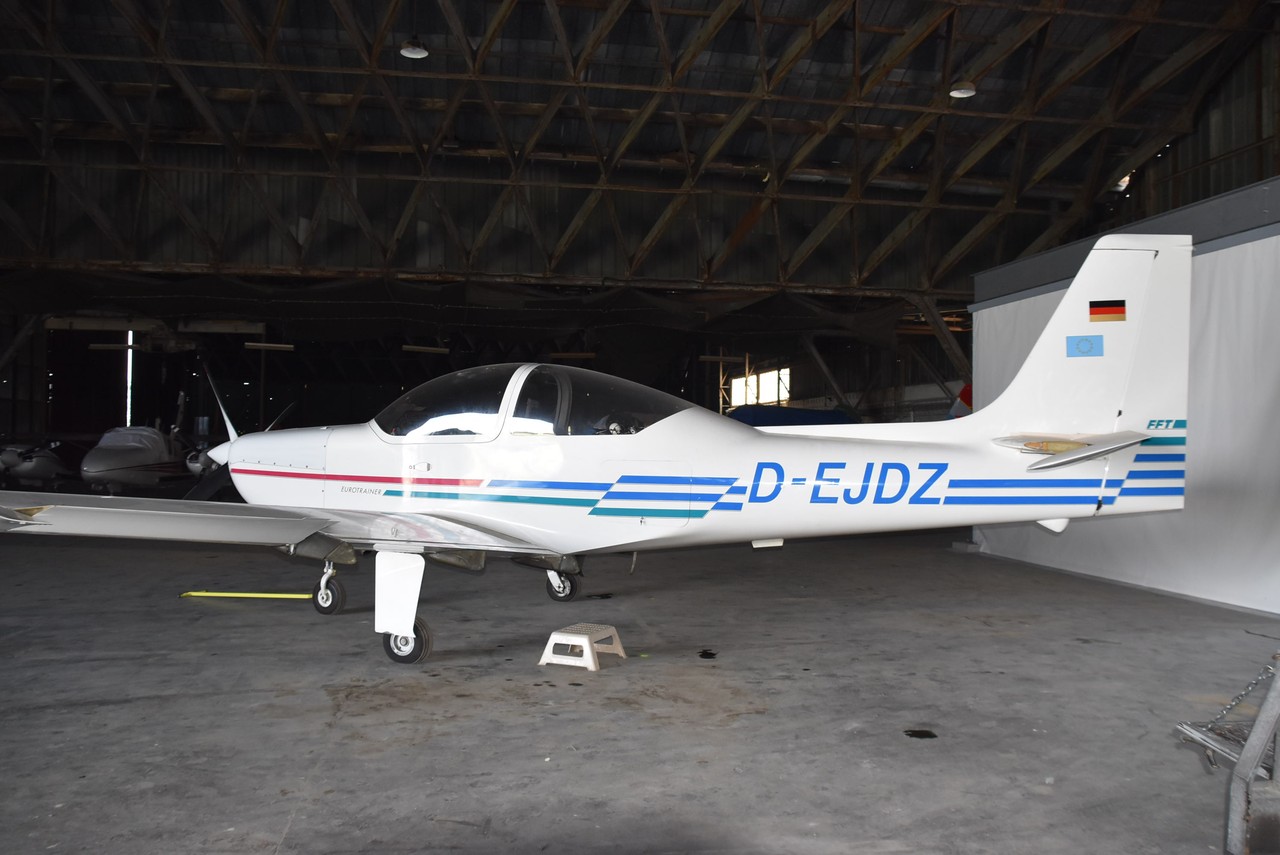
Beyond the initial Swissair contract, details of the aircraft's broader operational service remain limited. At least one aircraft, bearing registration D-EJDZ and construction number A-1, was later located at Oberschleißheim Airport in Germany, indicating that the type did achieve some level of operational deployment beyond its original Swiss context.
The aircraft received the ICAO type designator EURT, which established its recognition in international aviation databases and allowed it to operate across international boundaries. This designation became important for air traffic control systems, maintenance documentation, and regulatory oversight.
Legacy and Current Status
The Eurotrainer 2000's legacy lies primarily in its role as an early example of composite construction in training aircraft, anticipating trends that would become more widespread in general aviation during subsequent decades. While comprehensive production numbers and current operational status remain unclear, the aircraft represented an important step in the evolution of flight training equipment and demonstrated Swiss capabilities in advanced aircraft design.
The limited available information about current examples suggests that the type may have had restricted production numbers, which was not uncommon for specialized training aircraft from smaller manufacturers during this period. The competitive nature of the training aircraft market, dominated by established manufacturers with extensive support networks, made it challenging for new entrants to achieve sustained commercial success.