
Market Dominance and Commercial Success
The EV-97 EuroStar achieved remarkable market penetration, with nearly 1,000 units delivered globally since production began in 1997. By August 2005, more than 500 EuroStar aircraft had been ordered across all versions, with 470 actively flying. The aircraft's commercial success was validated in 2014 when Aerokurier magazine included the EV-97 among the ten most-sold ultralight aeroplanes in Germany, demonstrating its enduring popularity in Europe's largest ultralight market.
The Manufacturer's Evolution
Evektor-Aerotechnik emerged from a fascinating corporate transformation. The original Aerotechnik company was established on January 1, 1970, in Kunovice, Czechoslovakia, initially focusing on small aircraft construction including the L-13 Vivat powered glider and A-70 autogyro. Following privatization in the early 1990s, the company briefly acquired rights to manufacture the French Pottier P.220S Koala before merging with the Evektor group in 1996 to form Evektor-Aerotechnik.
The merged company achieved international recognition when its SportStar derivative became the first aircraft type approved by the FAA in the light sport aircraft category in 2005. In 2012, the SportStar SL gained certification from the Chinese Civil Aviation Authority, making Evektor the first and only CAAC-certified aircraft manufacturer from the Czech Republic.
Design Development and Innovation
Development of the EV-97 began in September 1996 as an extensive redesign of the Pottier P.220 UL, adapting the French design to meet ultralight aircraft category requirements. The first prototype, registered OK-CUR 97, completed its maiden flight on May 31, 1997, with first customer delivery following in October 1997.
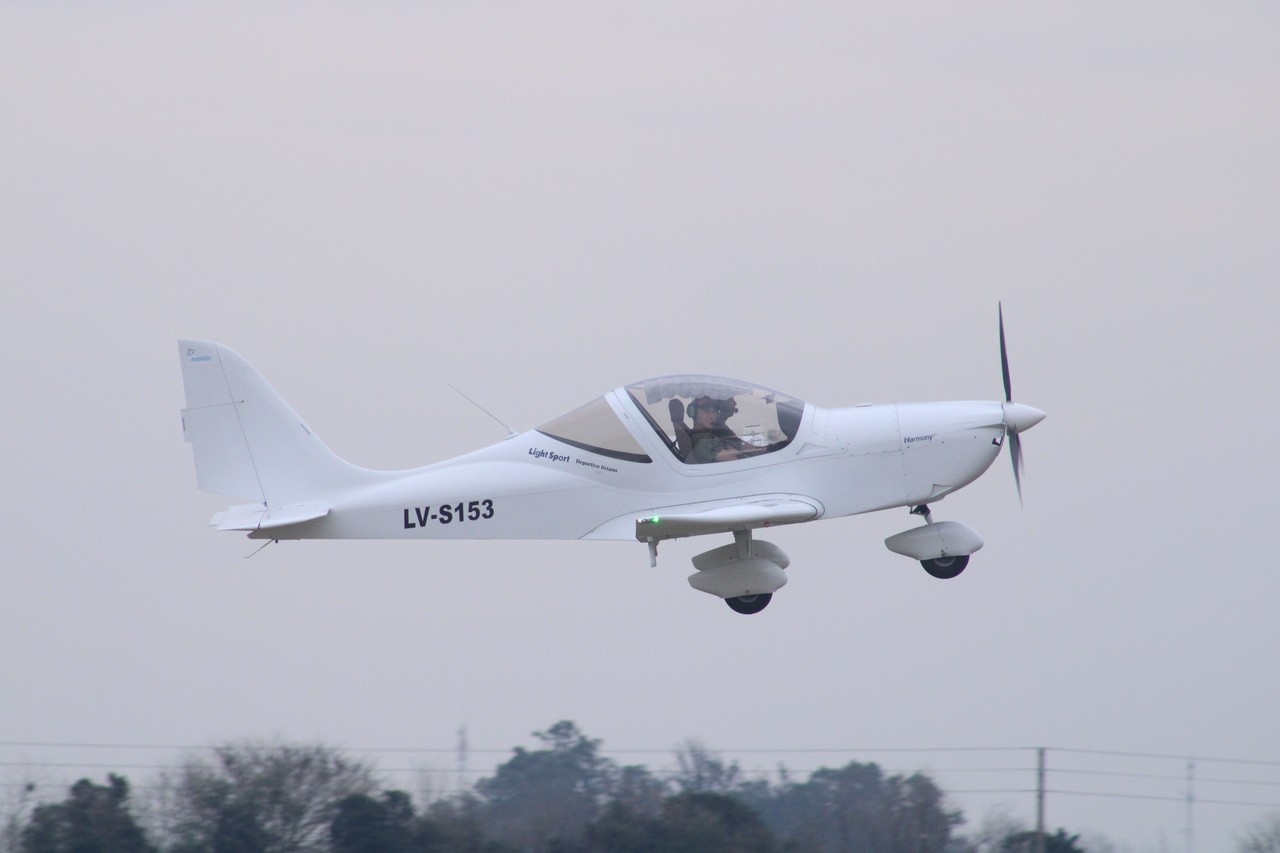
The design team created an innovative two-seat, low-wing monoplane featuring side-by-side seating beneath a large bubble canopy. Construction utilized both aluminum and composite materials, with the airframe optimized for extended service life and improved fatigue characteristics. The testing program faced tragedy in December 1997 when an accident resulted in the death of a test pilot, but this setback did not prevent the aircraft's certification and subsequent commercial success.
Powerplant and Performance
The EV-97 EuroStar is powered by engines from the Austrian-developed Rotax 912 series, four-cylinder piston engines that became the standard for European ultralight aircraft. The standard version utilizes the Rotax 912 UL, while more powerful variants employ the Rotax 912 ULS engine. Alternative powerplants include the 80-horsepower Jabiru 2200, available on special request.
With its maximum speed limited to 270 km/h and impressive range of 1,300 km, the EuroStar offered performance previously unavailable in the ultralight category. The aircraft maintains a maximum take-off weight of 450 kg to comply with ultralight regulations across multiple European nations.
International Expansion
The EuroStar achieved certification as an ultralight in multiple European countries including Belgium, Czech Republic, Finland, France, Germany, Italy, Slovak Republic, Spain, Switzerland, and the United Kingdom. International expansion included local assembly in China through Guizhou Evektor Aircraft Corporation, with the first Chinese-assembled EV-97 flying on October 24, 2000. This agreement continued until 2005, after which aircraft were sold directly from the Czech facility.
Evolution Through Variants
The aircraft evolved through numerous iterations, beginning with the original Eurostar in 1997 and progressing through the Eurostar Model 99 and Eurostar 2000. The latter, introduced in late 1999, featured increased fuselage width of 4 centimeters, modified wingtips, increased wingspan, larger ailerons, steerable nosewheel, and a flush oval nose air intake.
The teamEurostar 2001, introduced in early 2001, offered choice between Rotax 912 UL or 912 ULS engines while adopting a new name to avoid conflict with the Eurostar France-UK rail link. Subsequent versions included the teamEurostar 2002, which met Sport Pilot NRPM requirements in the United States, and the teamEurostar 2005 with optional electric flaps and redesigned cockpit layout.
Legacy and Continued Production
The EV-97 EuroStar's success spawned the SportStar derivative, a very light aircraft certified under JAR-VLA regulations by the Czech CAA in 2003 and by EASA in 2005. The SportStar won the "S-LSA Aircraft of the Year" award from AeroNews Network in 2006, featuring advanced Garmin G3X Touch glass avionics, optional ballistic recovery systems, and night operation packages.
With over 1,400 Evektor aircraft delivered globally and an estimated 1,000,000 flight hours logged across all variants, the EuroStar family has proven its reliability and enduring appeal. The aircraft remains in continuous production at the Kunovice facility, representing one of the most successful European ultralight aircraft designs of the modern era.