
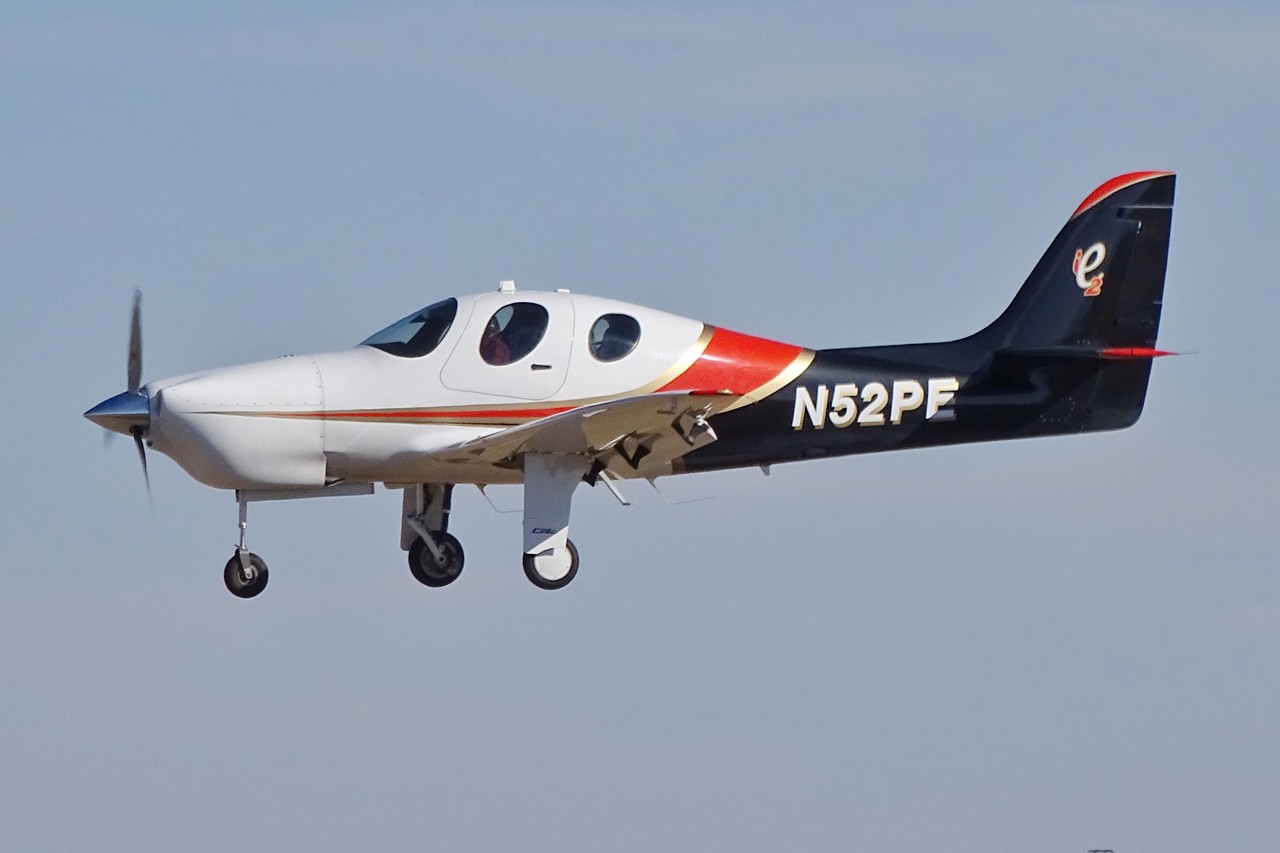
The Ultimate Experimental Aircraft
The Evolution Piston emerged from Lancair's three-decade legacy of pushing the boundaries of amateur-built aircraft performance. When production concluded in October 2017, only a single piston-powered Evolution had been completed, making it among the rarest modern aircraft ever produced. This exclusivity stemmed not from lack of demand, but from the complexity and cost of manufacturing what essentially amounted to a pressurized airliner in experimental aircraft clothing.
Manufacturing Excellence
Lancair International, founded by Lance Neibauer in the mid-1980s, had already delivered more than 2,100 aircraft by the time the Evolution Piston entered production. The company's journey began with the Lancair 200, a revolutionary two-seat composite aircraft capable of nearly 200 mph on just 100 horsepower. This early success established Lancair as the premier manufacturer of high-performance kit aircraft.
The Evolution Piston utilized the same carbon fiber composite airframe as its turbine-powered sibling, differing only in the engine section forward of the firewall. Computer-controlled ovens at the Redmond facility ensured precise curing of each composite component, with quality control standards matching those of certified aircraft manufacturers. The build process required customers to spend two weeks at the factory for initial assembly, followed by approximately seven months of professional assistance to satisfy FAA requirements.
Engineering Innovation
At the heart of the Evolution Piston beats a Lycoming YTEO-540 iE2 engine, delivering 350 horsepower through full authority digital engine control (FADEC). This sophisticated powerplant, developed by Lycoming Engines under Avco Corporation, represented cutting-edge technology in piston aviation. The engine drives a three-bladed Hartzell propeller and required years of development to overcome cooling challenges that initially delayed the aircraft's introduction.
The FADEC system simplified pilot workload while optimizing engine performance across all flight phases. Maximum cruise settings produced fuel flows of 23 gallons per hour, while economy cruise required only 12 gallons per hour from the aircraft's 168-gallon fuel system. This efficiency enabled the Evolution Piston to achieve remarkable range capabilities for a single-engine aircraft.
Performance Excellence
The Evolution Piston's performance figures rival those of twin-engine aircraft while maintaining single-engine simplicity. Maximum cruise speed reaches 242 knots, while economy cruise settings still deliver 210 knots. The aircraft climbs initially at 2,200 feet per minute, averaging 1,375 feet per minute to its maximum altitude of 25,000 feet. At these altitudes, the pressurization system maintains an 8,000-foot cabin altitude using a 6.5 psi differential pressure.
Range capabilities set the Evolution Piston apart from conventional single-engine aircraft. Maximum cruise configuration provides 1,800 nautical miles range, extending to 2,500 nautical miles in economy cruise. This performance enables transoceanic flights and positions the aircraft as a legitimate alternative to light jets for personal transportation.
Design Philosophy
Engineers designed the Evolution Piston to meet FAR Part 23 certification standards, the same requirements governing type-certified aircraft. This approach ensured structural integrity and systems reliability matching commercial aviation standards while maintaining experimental aircraft flexibility. The carbon fiber construction provided exceptional strength-to-weight ratios while enabling the smooth surfaces essential for high-speed flight.
The four-seat cabin features airline-style pressurization, allowing comfortable high-altitude flight above most weather and air traffic congestion. Low-speed handling remains docile, with stall speeds of just 61 knots with flaps extended. This combination of high-speed cruise and gentle handling characteristics makes the Evolution Piston accessible to pilots transitioning from conventional aircraft.
Limited Legacy
The Evolution Piston's production history tells the story of ambitious engineering meeting economic reality. The first customer kit delivery occurred on July 22, 2008, with the prototype following in 2011. The first and only customer delivery happened in April 2016, marking both the culmination and conclusion of the program.
Evolution Aircraft now supplies the design as an amateur-built kit, though the complexity and cost continue to limit interest. The estimated 1,000-hour build time, combined with the sophisticated systems and premium materials, places the Evolution Piston beyond most amateur builders' capabilities and budgets.
Despite its limited numbers, the Evolution Piston demonstrates the feasibility of high-performance, efficient piston aircraft in an era dominated by turbine power. Its exceptional range and speed capabilities prove that modern piston engines, when properly integrated with advanced airframes, can deliver performance rivaling entry-level turboprops while maintaining lower operating costs and fuel consumption.