
Development and Design
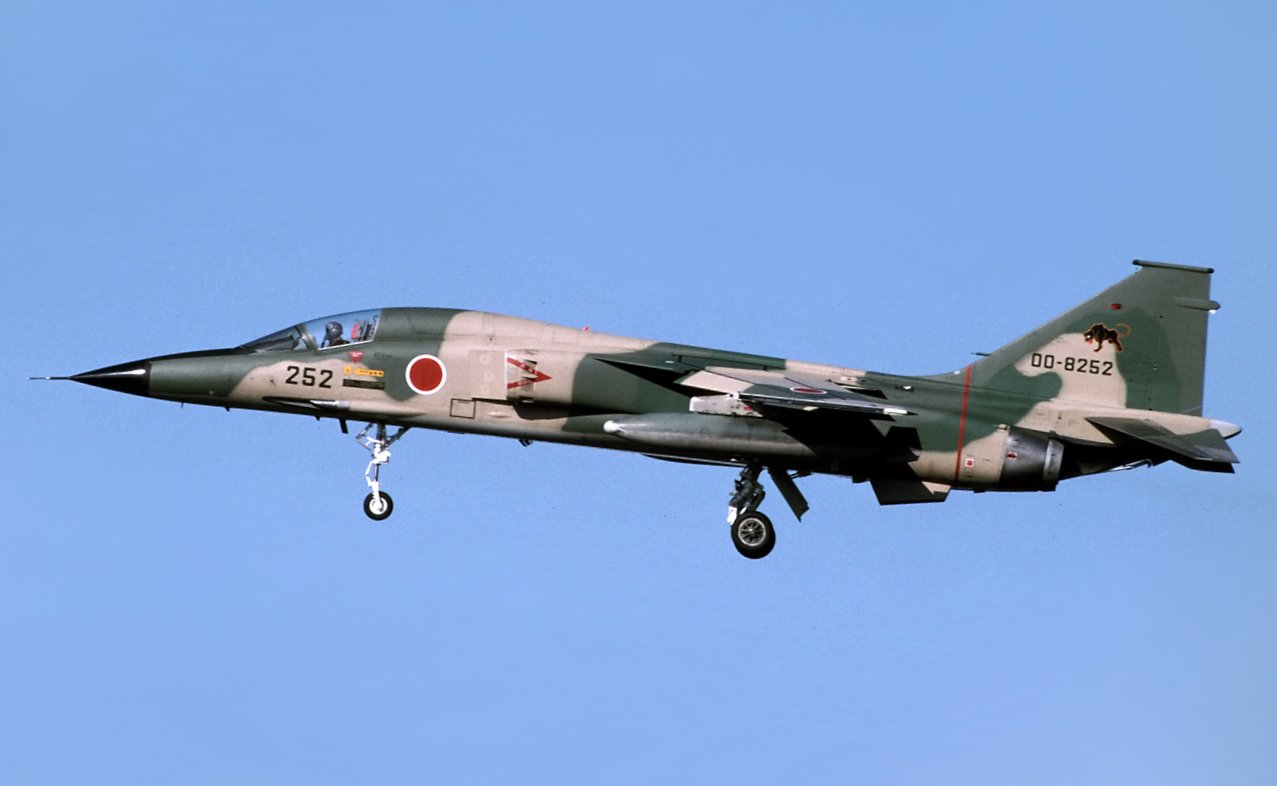
The F-1 emerged from Japan's need for a dedicated close air support and anti-shipping strike aircraft during the 1970s. Developed by a joint team from Mitsubishi Heavy Industries and Fuji Heavy Industries, the fighter was derived directly from the successful T-2 supersonic trainer. Two T-2 aircraft were converted into FST-2 Kai prototypes, which served as the foundation for the F-1's design. The first prototype took to the skies on June 3, 1975, followed by the first production aircraft on June 16, 1977.
The F-1 represented a significant milestone as Japan's first post-war indigenous supersonic combat aircraft, symbolizing the nation's technological revival in military aviation. The design team focused on creating a versatile ground attack platform capable of anti-shipping missions and close air support operations for the Japan Air Self-Defense Force.
Engine and Performance
Powering the F-1 was a single Turbomeca Adour low-bypass turbofan engine, manufactured under license by Ishikawajima-Harima Heavy Industries as the TF40-801A. This reliable powerplant, originally developed by the French company Turbomeca (now Safran Aircraft Engines), had proven itself in other aircraft including the SEPECAT Jaguar and the T-2 trainer from which the F-1 was derived.
The engine provided sufficient thrust for supersonic performance, enabling the F-1 to achieve speeds exceeding Mach 1.6. The compact design of the Adour engine made it ideal for the trainer-to-fighter conversion, maintaining the aerodynamic efficiency of the original T-2 airframe while delivering the performance required for combat operations.
Production History
Mitsubishi Heavy Industries orchestrated F-1 production from 1976 to 1987, with the first production aircraft rolling off the assembly line in February 1977. The program concluded on March 9, 1987, with the delivery of the 77th and final aircraft. This production total fell significantly short of the JASDF's original requirement for 160 aircraft due to budget constraints that plagued the program throughout its lifespan.
The limited production run reflected Japan's cautious approach to military aircraft development during the Cold War era, balancing defense needs with political considerations about indigenous weapons production.
Service History
The F-1 entered operational service with the JASDF in April 1978, serving exclusively in peacetime roles throughout its 28-year career. The aircraft equipped three squadrons: the 3rd Squadron of the 3rd Air Wing at Misawa Air Base beginning September 16, 1977, the 8th Squadron of the 3rd Air Wing from June 1979 to February 1980, and the 6th Squadron of the 8th Air Wing at Tsuiki Air Base starting March 1, 1981.
Designed primarily for close air support, anti-shipping strikes, and ground attack missions, the F-1 never saw combat but served as a crucial component of Japan's defensive capabilities. The aircraft provided the JASDF with its first indigenous supersonic strike capability, bridging the gap between older imported fighters and more modern multirole aircraft.
The Manufacturer
Mitsubishi Heavy Industries, founded in 1884 as a shipbuilding company, had expanded into aviation during the early 20th century, producing notable aircraft including the legendary A6M Zero during World War II. Following Japan's post-war occupation, the company re-entered the aerospace sector in the 1950s under Allied restrictions, gradually rebuilding its aviation expertise.
Fuji Heavy Industries, the collaborative partner on the F-1 project, underwent significant corporate changes, rebranding as Subaru Corporation in 2017. Both companies remain active in the aerospace industry today, with Mitsubishi Heavy Industries continuing as a major defense contractor and Subaru maintaining its aviation operations independently.
Legacy and Retirement
The F-1's service life ended on March 9, 2006, when all 77 aircraft were retired after reaching their 4,000-hour airframe limits. The JASDF replaced the F-1 fleet with the more capable F-2 fighter (based on the F-16) and upgraded F-4EJ Kai Phantoms, marking the end of Japan's first indigenous post-war fighter program.
None of the F-1 aircraft remain in flying condition today, though the type's historical significance endures. The F-1 proved Japan's ability to design and manufacture sophisticated military aircraft, laying the groundwork for future indigenous defense projects. Despite its limited production numbers, the F-1 successfully demonstrated Japanese aerospace capabilities and served as a stepping stone toward the more ambitious F-2 program that followed.