
Naval Supremacy
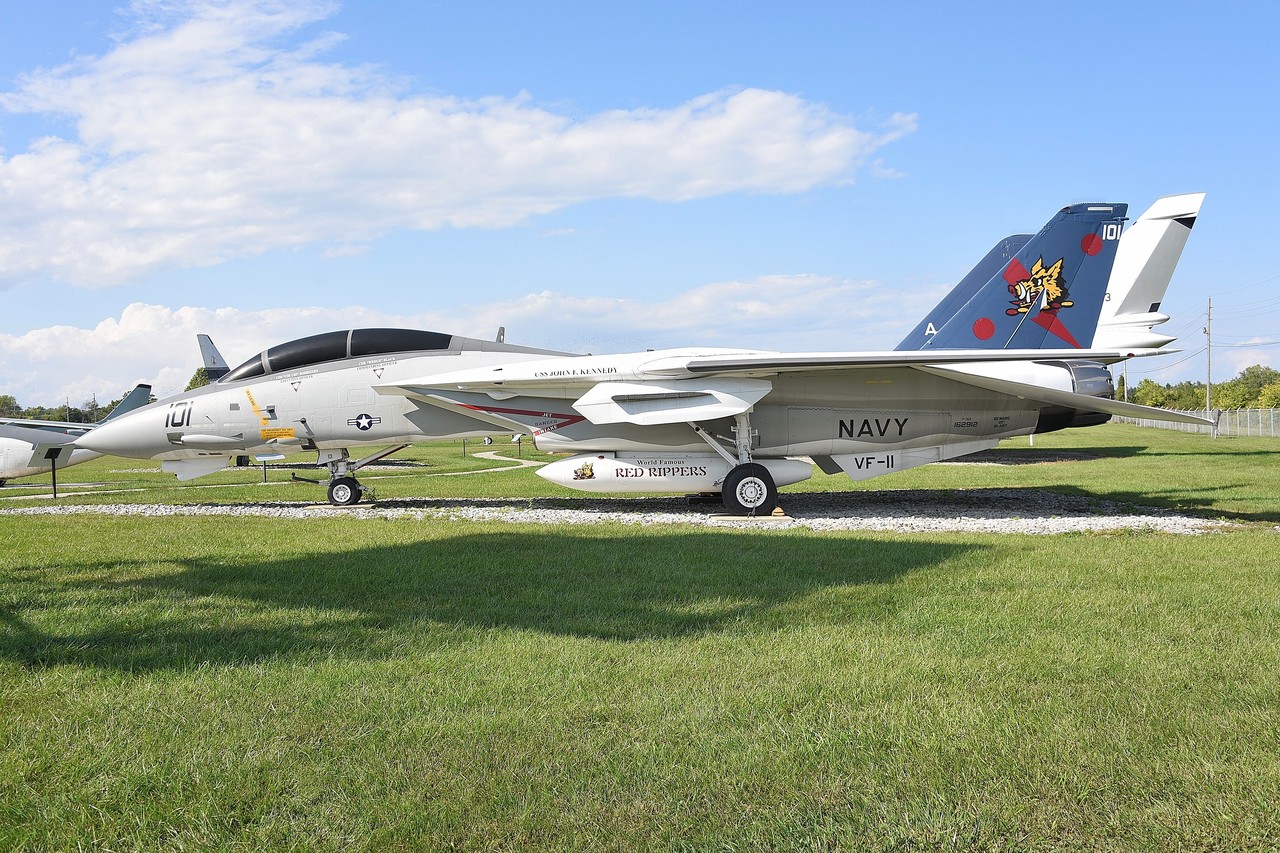
The F-14 Tomcat emerged from the ashes of the failed F-111B program to become the most formidable carrier-based interceptor ever built. When it entered service in 1973, the Tomcat provided the U.S. Navy with an unprecedented long-range air defense capability, designed specifically to counter the Soviet bomber threat to carrier battle groups. Its sophisticated AWG-9 radar system could track 24 targets simultaneously and engage six with the massive AIM-54 Phoenix missile at ranges exceeding 100 nautical miles.
Combat Record
The F-14 first drew blood on August 19, 1981, when two Tomcats from VF-41 "Black Aces" shot down a pair of Libyan Su-22 Fitters over the Gulf of Sidra. Lieutenant Commander Henry "Hank" Kleemann and Lieutenant Lawrence "Music" Muczynski achieved the kills using AIM-9L Sidewinder missiles in a brief but decisive engagement. The Tomcat scored again on January 4, 1989, when two F-14As from VF-32 downed two Libyan MiG-23 Floggers in the same waters.
During Operations Desert Shield and Desert Storm, F-14s flew combat air patrols and reconnaissance missions, though they achieved no air-to-air victories due to the limited Iraqi air opposition. The 1990s saw the Tomcat evolve into a capable strike fighter with the integration of the LANTIRN targeting pod, transforming the pure interceptor into a precision ground-attack platform nicknamed the "Bombcat."
The Grumman Legacy
Grumman Corporation, founded in 1930 by Leroy Grumman and Jake Swirbul, had built its reputation on rugged carrier aircraft including the F4F Wildcat, F6F Hellcat, and F9F Panther. The company's tradition of feline names culminated in the F-14 Tomcat, their most sophisticated creation. Grumman's Calverton facility was dramatically expanded to accommodate F-14 production, becoming one of the largest aircraft manufacturing plants on Long Island.
In 1994, Grumman merged with Northrop Corporation to form Northrop Grumman, which continues operations today as a major defense contractor. The Calverton plant closed in 1996, marking the end of an era in American naval aviation manufacturing.
Engineering Marvel
The F-14's variable-geometry wing system represented cutting-edge 1970s technology, automatically adjusting from 20 degrees for takeoff and landing to 68 degrees for high-speed flight. This innovation, combined with twin vertical stabilizers and powerful engines, gave the 62,000-pound fighter exceptional performance across all flight regimes.
Early F-14As were powered by Pratt & Whitney TF30-P-412A engines producing 20,900 pounds of thrust each, engines originally intended for the F-111B. These powerplants proved problematic in the demanding carrier environment, leading to numerous engine-related accidents. The solution came with the General Electric F110-GE-400, first tested in July 1984, which provided 27,000 pounds of thrust and dramatically improved reliability.
Variants and Production
Grumman delivered 712 F-14s between 1972 and 1991. The original F-14A comprised 557 aircraft, while 38 F-14Bs featured the superior F110 engines and upgraded avionics. The ultimate variant, the F-14D, incorporated digital flight controls, a glass cockpit, and improved radar systems in 37 new-build and 18 converted aircraft. Secretary of Defense Dick Cheney terminated F-14D production in 1991, citing cost concerns and the end of the Cold War.
International Service
Iran remains the only international F-14 operator, having received 79 aircraft between 1976 and 1978 under the Shah's modernization program. Despite decades of sanctions and isolation, Iran has maintained a portion of its Tomcat fleet through indigenous modifications and repairs, occasionally releasing footage of operational aircraft to demonstrate continued capability.
Pilot's Aircraft
Tomcat crews praised the aircraft's stability, long-range capability, and powerful radar systems, though early TF30-powered variants required careful throttle management to avoid compressor stalls. The spacious cockpit and excellent visibility made it popular among naval aviators, while the radar intercept officer position attracted the Navy's top systems operators. Captain Dale "Snort" Snodgrass became the Tomcat's most celebrated demonstration pilot, showcasing the aircraft's capabilities at air shows worldwide.
Legacy
The F-14's retirement on September 22, 2006, marked the end of an era in naval aviation. VF-213 "Black Lions" conducted the final Tomcat cruise aboard USS Theodore Roosevelt, concluding 32 years of fleet service. Today, surviving F-14s are displayed at museums across the United States, while Iran's handful of operational aircraft represents the last chapter in the Tomcat's story. The aircraft's cultural impact, cemented by the 1986 film "Top Gun," ensures its place in aviation history long after its retirement from American service.