
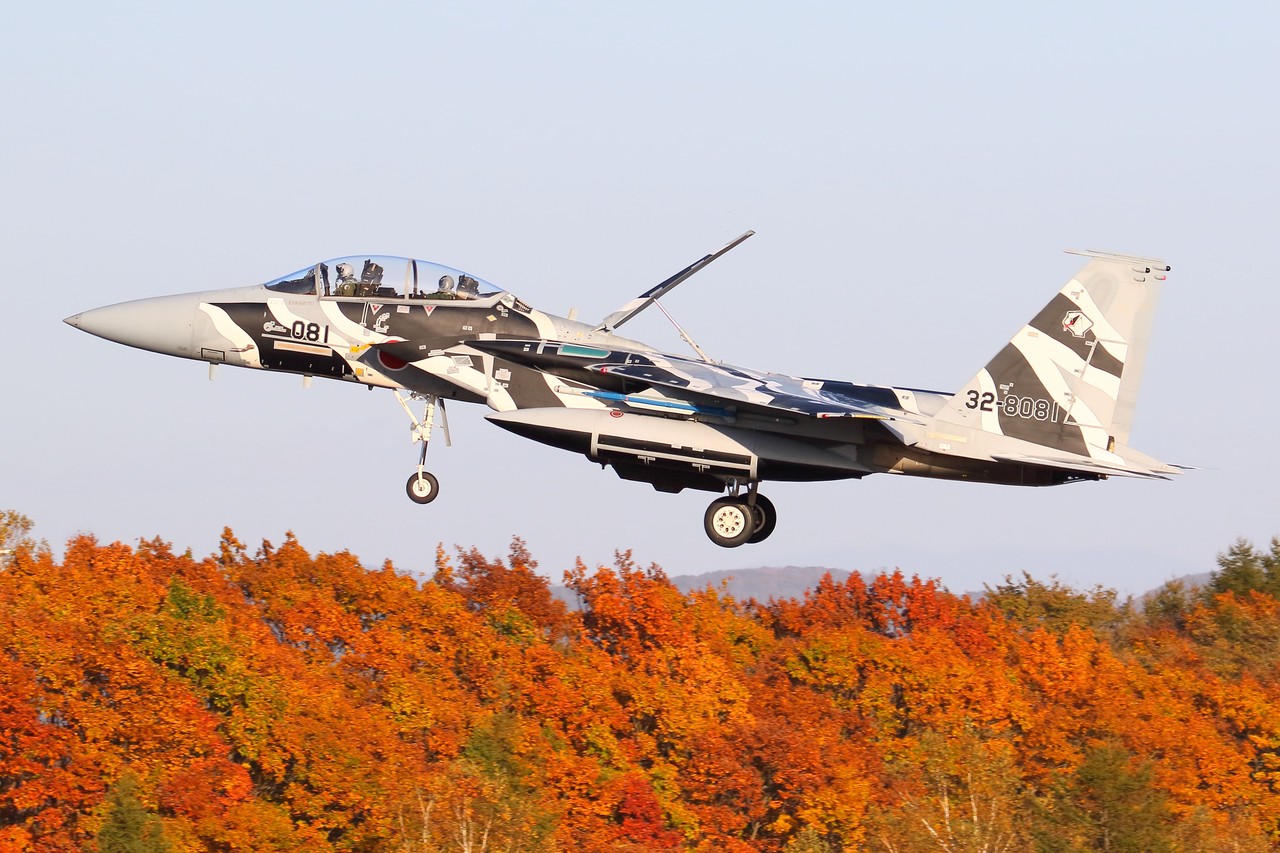
Unmatched Combat Dominance
The F-15 Eagle's combat record speaks volumes about its superiority in air-to-air warfare. With 104 confirmed aerial victories and no losses to enemy fighters, the Eagle has proven itself the ultimate air superiority weapon. The majority of these kills were achieved by the Israeli Air Force, most notably during the 1982 Lebanon War when Israeli F-15s destroyed more than 80 Syrian aircraft in the Bekaa Valley engagement. This "Turkey Shoot" demonstrated the aircraft's overwhelming technological advantage over Soviet-supplied opposition fighters.
Swift Development and Record-Breaking Performance
McDonnell Douglas responded to a 1965 USAF requirement for a dedicated air superiority fighter capable of countering advanced Soviet threats like the MiG-25. The first F-15A prototype rolled out of the St. Louis, Missouri assembly plant on June 26, 1972, with initial flight occurring just one month later. The Eagle entered operational service in January 1976, remarkably quick for such an advanced fighter program.
The aircraft immediately proved its exceptional performance capabilities through the "Streak Eagle" program in 1974-75, where a specially modified F-15A shattered eight time-to-climb world records. These included reaching 3,000 meters in just 27.57 seconds, demonstrating the raw power of its twin Pratt & Whitney F100-PW-100 turbofan engines, each producing 23,450 pounds of thrust with afterburners.
Manufacturer Legacy
McDonnell Douglas Corporation, formed from the 1967 merger of McDonnell Aircraft Corporation and Douglas Aircraft Company, brought together decades of aviation excellence. McDonnell had previously created the legendary F-4 Phantom II, while Douglas contributed airliner expertise from aircraft like the DC-3 and DC-9. This combination proved ideal for developing the F-15's sophisticated systems and reliable airframe. Boeing acquired McDonnell Douglas in 1997, continuing F-15 production and development under the Boeing banner, including the modern F-15EX variant.
Production and Variants
Full production began with 30 aircraft announced on March 1, 1973, leading to initial service delivery in September 1974. The USAF received 355 single-seat F-15As and 57 two-seat F-15B trainers in the initial production run. The improved F-15C and F-15D variants followed, incorporating the Production Eagle Package (PEP 2000) modifications that increased maximum takeoff weight to 68,000 pounds and extended operational capability.
The most significant variant became the F-15E Strike Eagle, which first flew on December 11, 1986, and achieved initial operational capability in 1989. The USAF acquired 236 F-15E aircraft, transforming the pure air superiority fighter into a dual-role platform capable of precision ground attack missions. International variants included 139 F-15J aircraft built under license by Mitsubishi Heavy Industries for Japan between 1981 and 1997, and specialized variants like the F-15I Ra'am for Israel.
Global Operations
Beyond American service, the F-15 has equipped elite air forces worldwide. The Japanese Air Self-Defense Force operates F-15J variants as their primary air superiority platform, while Israel's air force has utilized 43 F-15A/B/C/D aircraft plus 25 F-15I Strike Eagles. Israeli units like the 106 Squadron at Tel Nof Air Base have been particularly successful, contributing significantly to the type's undefeated combat record.
Technical Excellence
The F-15's twin-tail design provides exceptional stability and control at high angles of attack, while its powerful engines enable sustained high-speed flight and rapid climb rates. The aircraft stretches 63.8 feet in length with a 42.8-foot wingspan, optimized for both speed and maneuverability. Advanced avionics systems allow crews to engage multiple targets simultaneously using AIM-9 Sidewinder, AIM-7 Sparrow, or AIM-120 AMRAAM missiles, backed by an internal 20mm M61 Vulcan cannon.
Enduring Legacy
As of April 2019, 249 F-15s remained in USAF inventory, with plans calling for 179 F-15C/D and 224 F-15E aircraft to serve beyond 2025. Boeing continues production with 144 new F-15EX aircraft ordered, ensuring the Eagle's dominance well into the future. The original "Streak Eagle" record-setter is preserved at the National Museum of the United States Air Force at Wright-Patterson Air Force Base in Ohio, commemorating four decades of aerial supremacy. The F-15's perfect combat record and technological excellence influenced the development of fifth-generation fighters like the F-22 Raptor, cementing its place as the benchmark for air superiority design.