
Service History
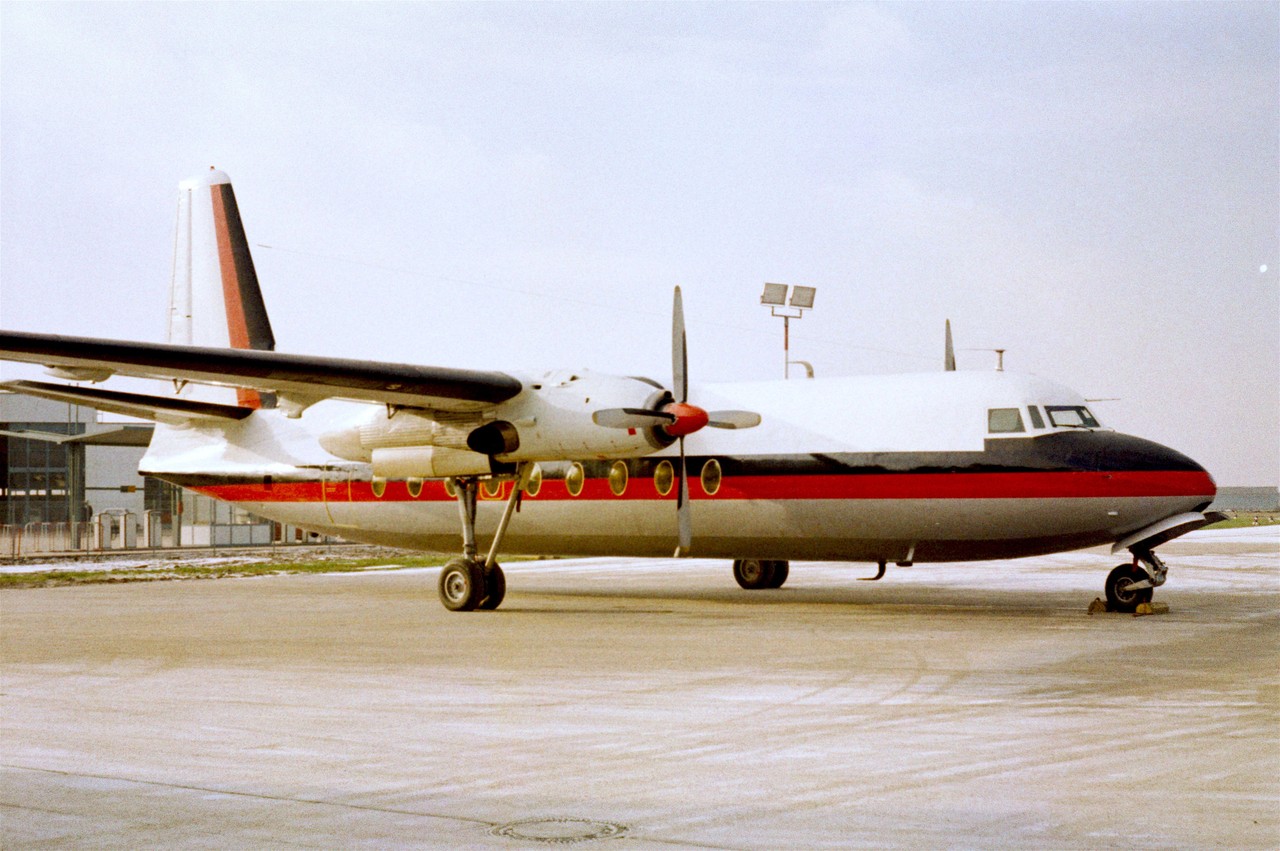
The F-27 Friendship dominated the regional airline market throughout the 1960s and 1970s, becoming the western world's best-selling turboprop twin in its class. With 799 aircraft produced across all variants, it served hundreds of operators on nearly every continent except Russia. Major carriers including Aer Lingus, Trans Australia Airlines, Turkish Airlines, and numerous American regional airlines built their route networks around the aircraft's reliable 1,500-mile range and economical operating costs.
Revenue service began on November 19, 1958, when Aer Lingus introduced the type on European routes, though the American-built Fairchild version had actually entered service two months earlier with West Coast Airlines on September 27, 1958. The aircraft's commercial success was immediately apparent, with operators praising its 40 percent reduction in operating costs compared to piston-engine predecessors.
The Manufacturer
Fokker Aircraft Company, founded in the early 20th century, emerged as Europe's premier turboprop manufacturer through the F-27's success. Operating from their Schiphol facility in Amsterdam, Fokker demonstrated remarkable foresight by surveying DC-3 operators in the early 1950s to understand exact replacement requirements. This market research approach proved decisive in the F-27's design philosophy.
Recognizing the importance of the American market, Fokker signed a licensing agreement with Fairchild Aircraft in 1956, allowing U.S. production. This partnership proved crucial, as Fairchild manufactured 207 examples through 1973, including 79 stretched FH-227 variants that Fairchild developed independently.
Engine & Technical Innovation
The F-27's heart was the Rolls-Royce Dart turboprop, initially rated at 1,540 horsepower in early prototypes before standardizing on the 1,720-horsepower Dart 511 for production aircraft. This British engine delivered substantially reduced vibration and noise compared to piston powerplants, transforming passenger comfort on regional routes.
Head Constructor Kees van Meerten's design team implemented revolutionary construction techniques that set new industry standards. The glued sandwich construction method, applied to fuselage and wing components, achieved 15 percent weight savings while improving fatigue life and aerodynamic efficiency. Combined with cabin pressurization—still uncommon on regional aircraft—these innovations positioned the F-27 a generation ahead of its competitors.
Development & Testing
Fokker's methodical development program began with four prototypes: two flying examples and two dedicated to static and fatigue testing. The maiden flight on November 24, 1955, lasted 34 minutes and validated the basic design concepts. The second prototype, lengthened by three feet to accommodate 36 passengers instead of 32, established the dimensions for most production variants.
The aircraft's name "Friendship" had been announced in 1953, reflecting Fokker's international marketing ambitions. This proved prescient as the type would operate across cultural and political boundaries throughout the Cold War era, earning recognition as a truly global aircraft.
Military Applications
While primarily designed for commercial service, Fokker adapted the F-27 for military roles including troop transport and maritime reconnaissance. Fourteen specialized maritime patrol versions were produced, extending the aircraft's versatility beyond passenger service. Military operators appreciated the same reliability and operational economics that attracted airlines, leading to adoption by air forces requiring dependable medium-range transport capability.
Production Legacy
Production spanned 32 years from 1955 to 1987, with Fokker manufacturing 592 examples across eight major variants from the initial Mk100 through the final Mk800 configuration. The base price of £239,000 in 1960 represented excellent value, contributing to steady order flow throughout the 1960s.
The F-27's success established Fokker as a major force in commercial aviation and validated the turboprop concept for regional operations. Many examples continue operating today, testament to the robust design and construction quality that made the Friendship one of aviation's most enduring success stories. The aircraft's influence extends beyond its own service life, establishing design principles and market segments that continue shaping regional aviation decades after the last example rolled off Fokker's Amsterdam production line.