
Service History
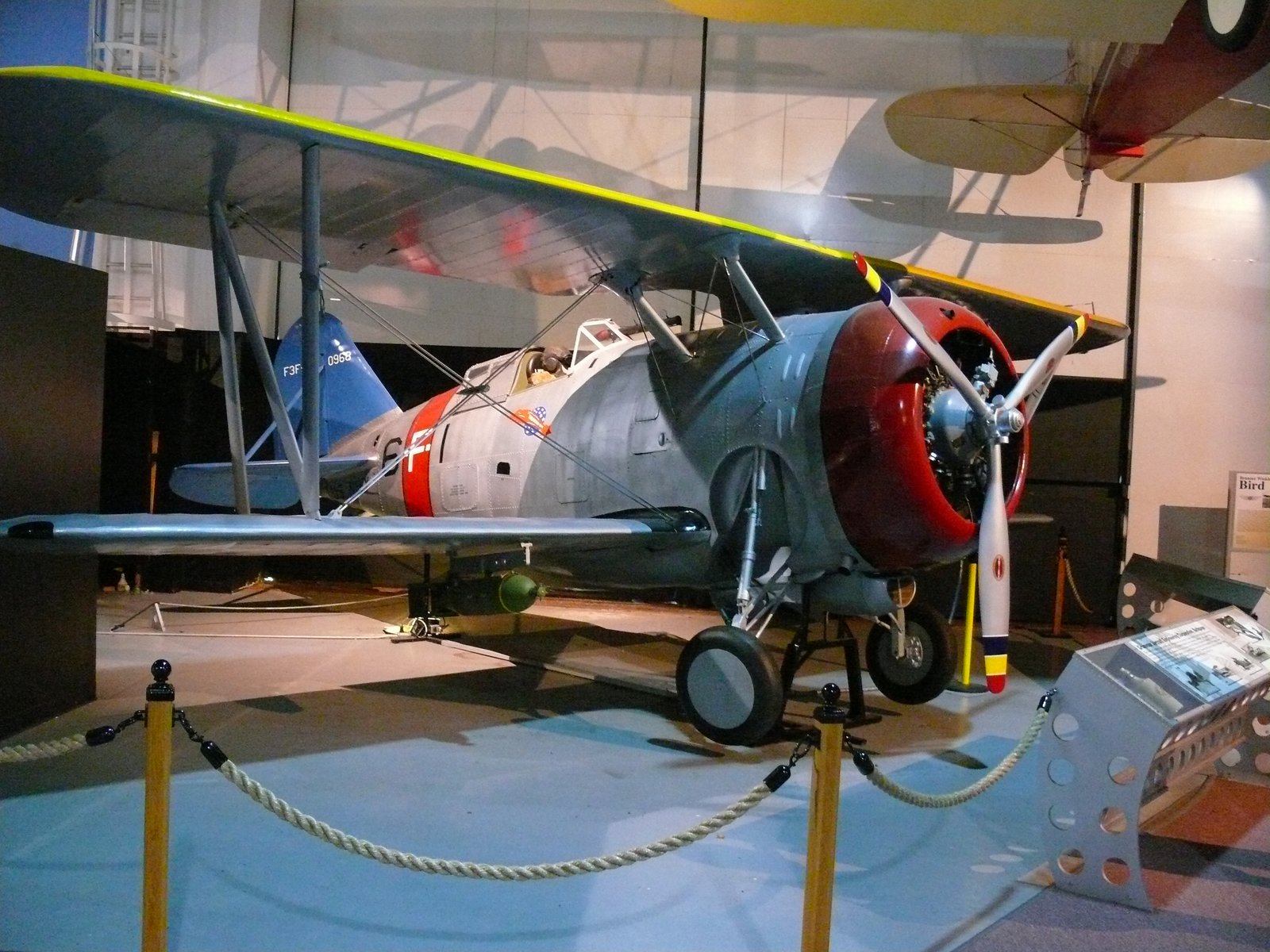
The F3F dominated naval aviation's transition from biplane to monoplane fighters, equipping virtually all Navy and Marine Corps fighter squadrons by 1938. Seven squadrons operated the type, including VF-5B aboard USS Ranger, VF-6B on USS Saratoga, VF-6 on USS Enterprise, and Marine squadrons VMF-1, VMF-2, and VF-4M. Despite its brief service life from 1936 to 1942, the F3F provided crucial training for pilots who would later fly Grumman's legendary F4F Wildcat and F6F Hellcat in World War II combat.
Production and Variants
Grumman delivered exactly 169 F3F aircraft between 1936 and 1938, plus five prototypes. The F3F-1, with 54 examples built, entered service in March 1936 powered by the 625-horsepower Pratt & Whitney R-1535-72 Twin Wasp Junior radial engine. The most numerous variant was the F3F-2, with 81 aircraft featuring the more powerful 950-horsepower Wright R-1820-22 Cyclone supercharged engine that gave the aircraft its distinctive barrel-shaped cowling. The final 27 F3F-3s incorporated aerodynamic refinements developed through NACA wind tunnel testing.
The Manufacturer
Grumman Aircraft Engineering Corporation, founded in 1929, built its reputation on innovative naval aircraft design. The company pioneered retractable landing gear on carrier aircraft with the FF-1 and dominated Navy biplane fighter production throughout the 1930s. After World War II, Grumman became synonymous with naval aviation excellence, producing over 12,000 F6F Hellcats and the iconic F-14 Tomcat. The company operated independently until 1994 when it merged with Northrop to form Northrop Grumman Corporation, which continues today as a major defense contractor.
Design and Development
The F3F emerged from Grumman's engineering team's efforts to address the stability and spin recovery problems that plagued the earlier F2F. The Navy awarded the XF3F-1 prototype contract on October 15, 1934, requiring both fighter and ground-attack capabilities. The design featured a lengthened fuselage, increased wing area, and smaller wheels for improved streamlining compared to its predecessor.
Development proved challenging and tragic. Test pilot Jimmy Collins died when the first XF3F-1 prototype crashed on March 22, 1935, just two days after its maiden flight on March 20. A second prototype crashed on May 9, 1935, though the pilot survived. The rebuilt aircraft finally flew successfully on June 20, 1935, clearing the way for production.
Technical Innovation
The F3F incorporated several advanced features for a 1930s biplane. Its enclosed cockpit with sliding canopy provided better pilot protection than earlier open-cockpit fighters. The manually retractable landing gear, though requiring significant pilot effort, improved aerodynamic efficiency. The single-bay wire-braced wing structure balanced strength with reduced drag compared to multi-bay designs.
The Wright R-1820 Cyclone engine in the F3F-2 and F3F-3 variants represented a significant advance in naval aviation powerplants. This supercharged radial engine, which would power early F4F Wildcats and Boeing B-17 Flying Fortresses, produced over 50 percent more power than the F3F-1's Twin Wasp Junior while maintaining the reliability essential for carrier operations.
Performance and Pilot Experience
Pilots found the F3F a significant improvement over earlier Navy fighters, with a maximum speed of 255 mph at 12,000 feet and a service ceiling exceeding 33,000 feet. The aircraft's range of approximately 600 miles provided adequate endurance for carrier operations. The enclosed cockpit and improved stability made it more comfortable and safer to fly than its open-cockpit predecessors.
Standard armament consisted of two forward-firing .30-caliber machine guns, with provisions for bombs when operating in the ground-attack role. This versatility made the F3F valuable for training pilots in multiple mission types.
Legacy and Survivors
Though the F3F never saw combat, retiring before America's entry into World War II, it played a crucial role in preparing Navy and Marine Corps pilots for the challenges ahead. The aircraft appeared in a 1941 Warner Brothers film featuring VMF-2 squadron aircraft, capturing its significance in popular culture.
Today, only one F3F remains airworthy: "Leroy's Last," an F3F-2 in private hands that continues to fly at air shows and commemorative events. The National Naval Aviation Museum in Pensacola, Florida, displays a restored F3F-2, while other examples are preserved by the Naval History and Heritage Command. These survivors represent the final chapter of biplane fighters in American naval aviation, bridging the gap between the fabric-and-wire era and the all-metal monoplanes that would dominate World War II skies.