
The Curtiss F5L was a significant evolution in naval aviation, derived from the British Felixstowe F.5 design. The original lineage was developed by John Cyril Porte at the Seaplane Experimental Station, Felixstowe. To adapt the aircraft for American production methods, the Naval Aircraft Factory undertook a redesign of the type. The F5L was particularly notable for its improved hull design, which allowed for heavier payloads and shortened takeoff distances compared to previous Curtiss flying boats.
Production of the F5L began in April 1918, with a total of 227 aircraft manufactured in North America. The production was split among three entities: the Naval Aircraft Factory in Philadelphia built 137 units, Curtiss produced 60, and Canadian Aeroplanes Limited manufactured 30. The Canadian production took place in Toronto, Ontario, at a factory on Strachan Avenue that had been acquired for wartime use. Canadian Aeroplanes Limited, which had been established in December 1916 to support flying schools, ceased its operations shortly after the November 1918 Armistice.
Technically, the F5L was powered by Liberty 12A piston engines, each rated at 400 horsepower. The aircraft featured a substantial wingspan of 103 feet 9 inches for the Canadian-built versions. In military configuration, the aircraft typically carried a crew of four, though provisions existed for a second reserve crew during extended missions.
During World War I, the F5L entered service in the final months of the conflict as a patrol and anti-submarine flying boat for the U.S. Navy. The broader Felixstowe lineage proved highly effective in the North Sea, where these aircraft sighted 67 U-boats and attacked 44 of them. Beyond the U.S. Navy, the type was operated by the Philippine Air Service as well as the Brazilian and Argentine Naval Aviations. The U.S. Navy continued to utilize the F5L as its standard patrol flying boat until 1928.
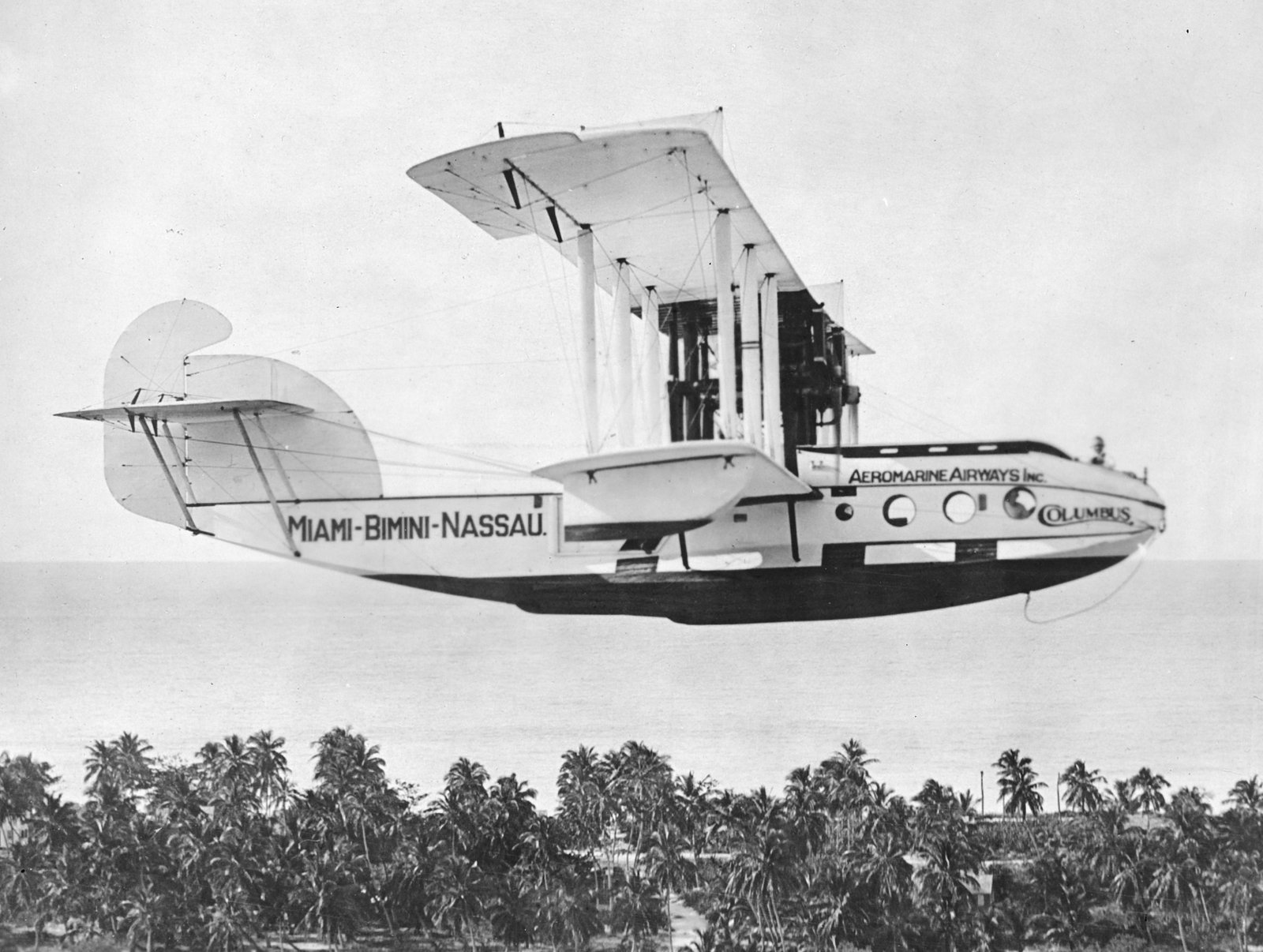
Following its military tenure, several F5L aircraft were converted for civilian use as the Aeromarine 75. These conversions typically accommodated 10 passengers and were operated by Aeromarine Airways on routes such as New York City to Atlantic City, Cleveland to Detroit, and Key West to Havana. One specific conversion for the Atlantic Coast Airways Corporation of Delaware was reported in August 1928 to carry as many as 25 passengers.