
Development and Design Philosophy
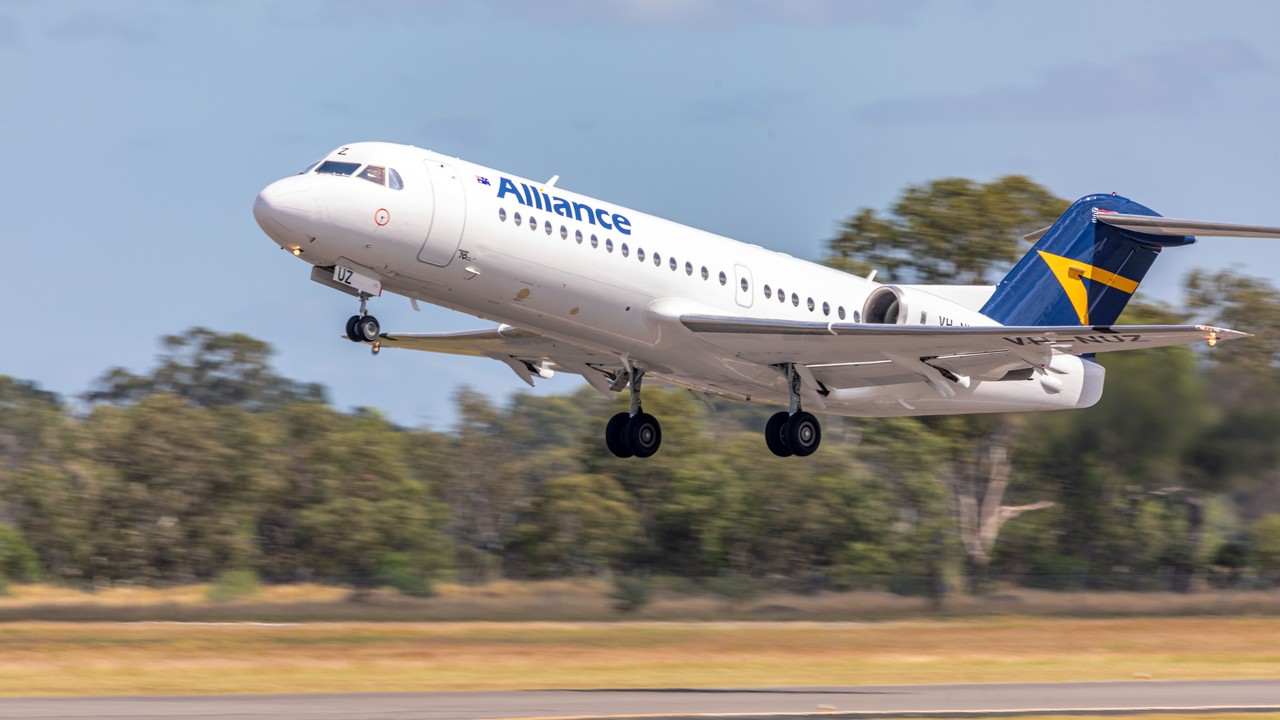
The Fokker 70 emerged from a pragmatic engineering approach rather than revolutionary design. In November 1992, Fokker initiated development to replace the aging F28 Fellowship, which had first flown in 1967. Rather than starting from scratch, Fokker's engineers chose to modify their successful Fokker 100, literally sawing out fuselage sections to create a shorter aircraft while retaining the proven wings, flight controls, and cockpit systems.
This cost-effective strategy reduced development time and expenses while maintaining the reliability of tested components. The prototype, designated PH-MKC, was created by converting the second Fokker 100 prototype at the Woensdrecht facility in southern Netherlands. The aircraft made its maiden flight on April 4, 1993, piloted by Fokker's test flight crew.
Production and Market Entry
Production began in earnest following the prototype's successful flight testing program. The first production aircraft flew in July 1994, with certification granted by aviation authorities on October 14, 1994. Ford Motor Company received the initial delivery in October 1994, configured as an executive transport rather than an airline passenger aircraft.
Sempati Air of Indonesia became the launch airline customer, introducing the type into scheduled passenger service. The aircraft found its market niche between smaller turboprops like the ATR-42/72 and larger jets such as the Boeing 737 or McDonnell Douglas MD-80 series.
Technical Specifications and Performance
Powered by two Rolls-Royce Tay 620 turbofan engines, the Fokker 70 inherited the powerplant originally developed for the larger Fokker 100. These British-manufactured engines proved ideally sized for the reduced aircraft weight and passenger capacity. The standard configuration accommodated 79 passengers in a single-class layout.
Fokker developed two primary variants to meet different operational requirements. The Fokker 70A was optimized specifically for United States carriers, incorporating modifications to meet American certification standards and operational preferences. The Fokker F70ER, introduced in 1994, featured additional fuel tanks for extended-range missions, appealing to airlines requiring longer-distance regional routes.
The Manufacturer's Final Chapter
Fokker Aircraft Company represented nearly a century of Dutch aviation heritage, maintaining particularly strong ties with KLM, which had operated Fokker aircraft for 97 consecutive years. The company's history stretched back to aviation pioneer Anthony Fokker, who had built fighters for Germany during World War I before establishing operations in the Netherlands.
However, the 1990s proved challenging for the regional aircraft manufacturer. Intense competition from Brazilian manufacturer Embraer and Canadian producer Bombardier squeezed market share, while development costs for new aircraft programs strained financial resources. In 1996, Fokker declared bankruptcy, abruptly ending production of both the F70 and F100 programs.
Operational Service and Operators
Despite its brief production run, the Fokker 70 served with several notable airlines worldwide. KLM City Hopper operated the largest fleet, flying 26 examples on European regional routes. The Dutch flag carrier's endorsement provided credibility for the aircraft type among other potential operators.
Vietnam Airlines received the final production aircraft in April 1997, marking the end of the production line. By November 2009, 48 Fokker 70s remained operational with 15 different operators globally, demonstrating the aircraft's continued utility despite the manufacturer's demise.
One aircraft was specially configured for the Dutch Royal Family and government, serving as a VIP transport. This application highlighted the aircraft's versatility beyond pure airline passenger service.
Production Numbers and Legacy
Total production reached only 46 or 47 aircraft, depending on whether the prototype is included in official counts. This limited production run, spanning just four years from 1993 to 1997, makes the Fokker 70 among the rarer commercial aircraft types in aviation history.
The aircraft's scarcity resulted from market timing rather than technical deficiencies. The F70's performance and reliability matched expectations, but Fokker's financial collapse prevented the type from achieving the production volumes necessary for commercial success.
Current Status
As of September 2020, 36 Fokker 70 aircraft remained in active service worldwide, testament to the type's durability and continued utility. KLM retired its final F70 in October 2017, symbolically ending the airline's nearly century-long relationship with Dutch aircraft manufacturer Fokker.
Since 1999, a company called Rekkof (Fokker spelled backwards) has attempted to negotiate resumption of both Fokker 70 and Fokker 100 production, recognizing continued market demand for aircraft in this size category. However, these efforts have not succeeded in restarting the production lines.
The Fokker 70 stands as the final chapter in Dutch commercial aviation manufacturing, representing both the technical competence and economic challenges facing traditional aircraft manufacturers in an increasingly competitive global market.