
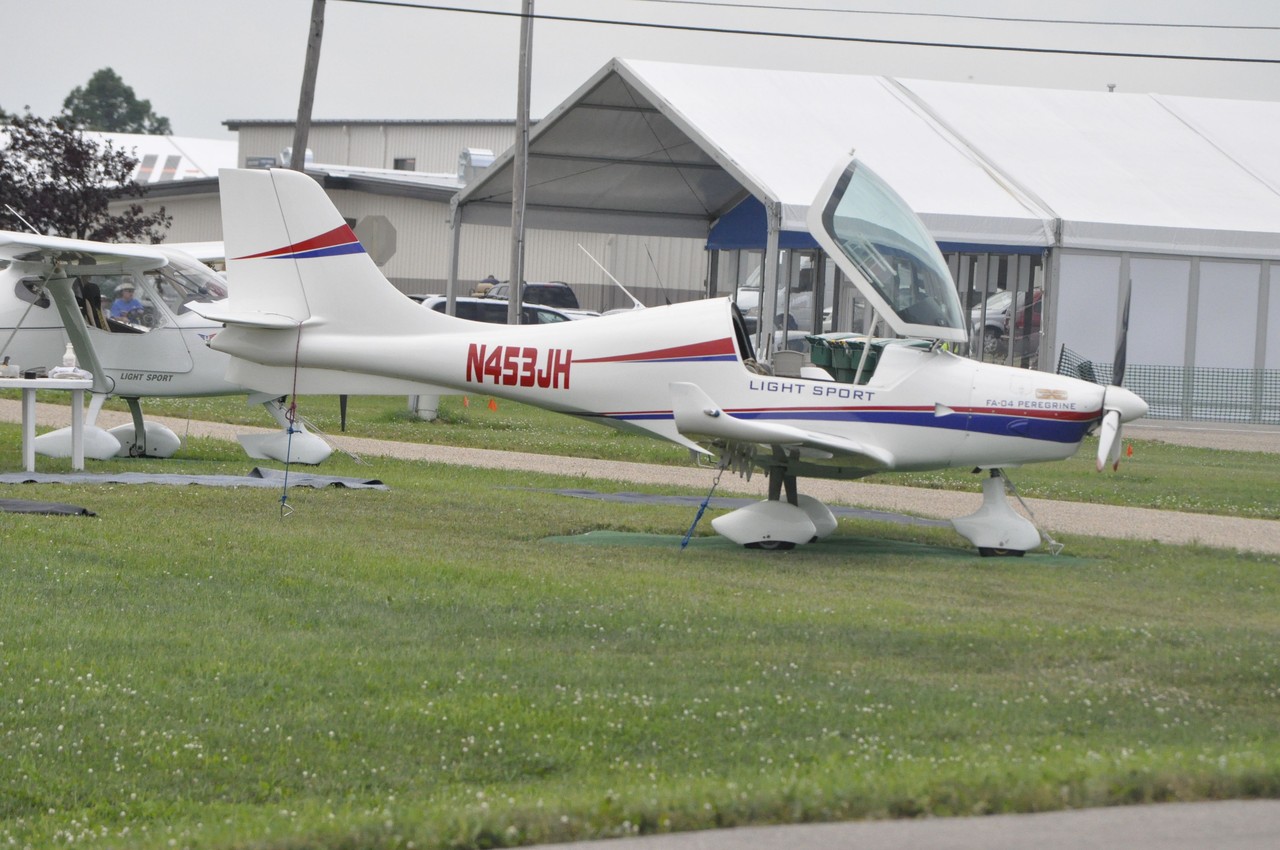
Design Philosophy and Development
The FA-04 Peregrine represents FLÄMING AIR's commitment to bridging European and American aviation markets through dual certification compliance. Engineers designed the aircraft to meet both Fédération Aéronautique Internationale microlight regulations and United States light-sport aircraft standards, creating different variants optimized for each category's specific weight and performance limitations.
The aircraft's development built upon lessons learned from the FA-02, which had successfully achieved European Very Light Aircraft approval. This foundation allowed designers to refine the concept while expanding market reach through broader international certification.
Advanced Composite Construction
The Peregrine showcases modern manufacturing techniques through extensive use of carbon fiber materials. The fuselage, wing spars, flaps, and rudder all utilize carbon fiber construction, providing exceptional strength-to-weight ratios while maintaining structural integrity. This advanced material selection contributes directly to the aircraft's impressive performance figures and efficient operation.
The cantilever low-wing configuration eliminates the need for external wing bracing, creating cleaner aerodynamics while simplifying manufacturing. A large bubble canopy provides excellent visibility for the side-by-side seating arrangement, essential for both training and recreational flying missions.
Engine Options and Performance
FLÄMING AIR offers three distinct powerplant options to suit different operational requirements and pilot preferences. The standard 100-horsepower Rotax 912ULS four-stroke engine provides reliable performance with proven maintenance characteristics. For pilots seeking additional power, the 120-horsepower Jabiru 3300 delivers enhanced climb rates and cruise performance. The Continental O-200, also producing 100 horsepower, offers traditional American engine reliability and widespread service network availability.
With these powerplants, the Peregrine achieves a maximum speed of 143 mph and cruise speed of 137 mph. The aircraft maintains excellent low-speed handling characteristics with a stall speed of just 40 mph, providing comfortable margins for pilot training and recreational flying. Its impressive range of 710 miles, enabled by 32-gallon fuel capacity, allows for extended cross-country flights without frequent fuel stops.
Operational Versatility
The FA-04's design accommodates multiple operational roles beyond basic recreation and training. The aircraft possesses sufficient power and structural strength for glider towing operations, capable of launching sailplanes up to 1,653 pounds gross weight. This capability expands its utility at gliding clubs and commercial operations.
Landing gear configuration offers operational flexibility through both tricycle and conventional (tailwheel) options. The tricycle gear provides easier ground handling for training operations, while conventional gear appeals to pilots preferring traditional handling characteristics and potentially improved rough-field performance.
Variant Development
FLÄMING AIR developed several variants to address different market segments and regulatory requirements. The FA-01 Smaragd (Emerald) served as the initial European FAI microlight version, establishing the basic design concept. The FA-02 introduced kit aircraft availability, allowing builder-owners to construct their own aircraft while reducing initial costs.
The FA-04 SL represents the super-light variant, achieving an empty weight of just 595 pounds while including a ballistic parachute system. This variant specifically targets markets with strict weight limitations while providing enhanced safety features through whole-aircraft parachute recovery systems.
The Manufacturer
FLÄMING AIR GmbH operates from Zellendorf in Brandenburg, Germany, positioning the company within Germany's general aviation manufacturing sector. The company focuses on modern composite aircraft design and manufacturing, emphasizing performance and efficiency in the ultralight and light-sport categories.
The company's location in Brandenburg places it within the former East German territory, representing part of the region's economic development following German reunification. This positioning allows access to both traditional European markets and expanding Eastern European aviation sectors.
Technical Innovation
The Peregrine's 1,200 feet per minute rate of climb demonstrates the effectiveness of its power-to-weight optimization. At 613 pounds empty weight and 1,042 pounds gross weight for the standard variant, the aircraft maintains excellent performance margins while staying within light-sport aircraft limitations.
The 99.8 square feet of wing area provides appropriate wing loading for the aircraft's intended missions, balancing cruise efficiency with low-speed handling characteristics. This design approach ensures pilots can operate safely across the aircraft's entire performance envelope.