
Service History
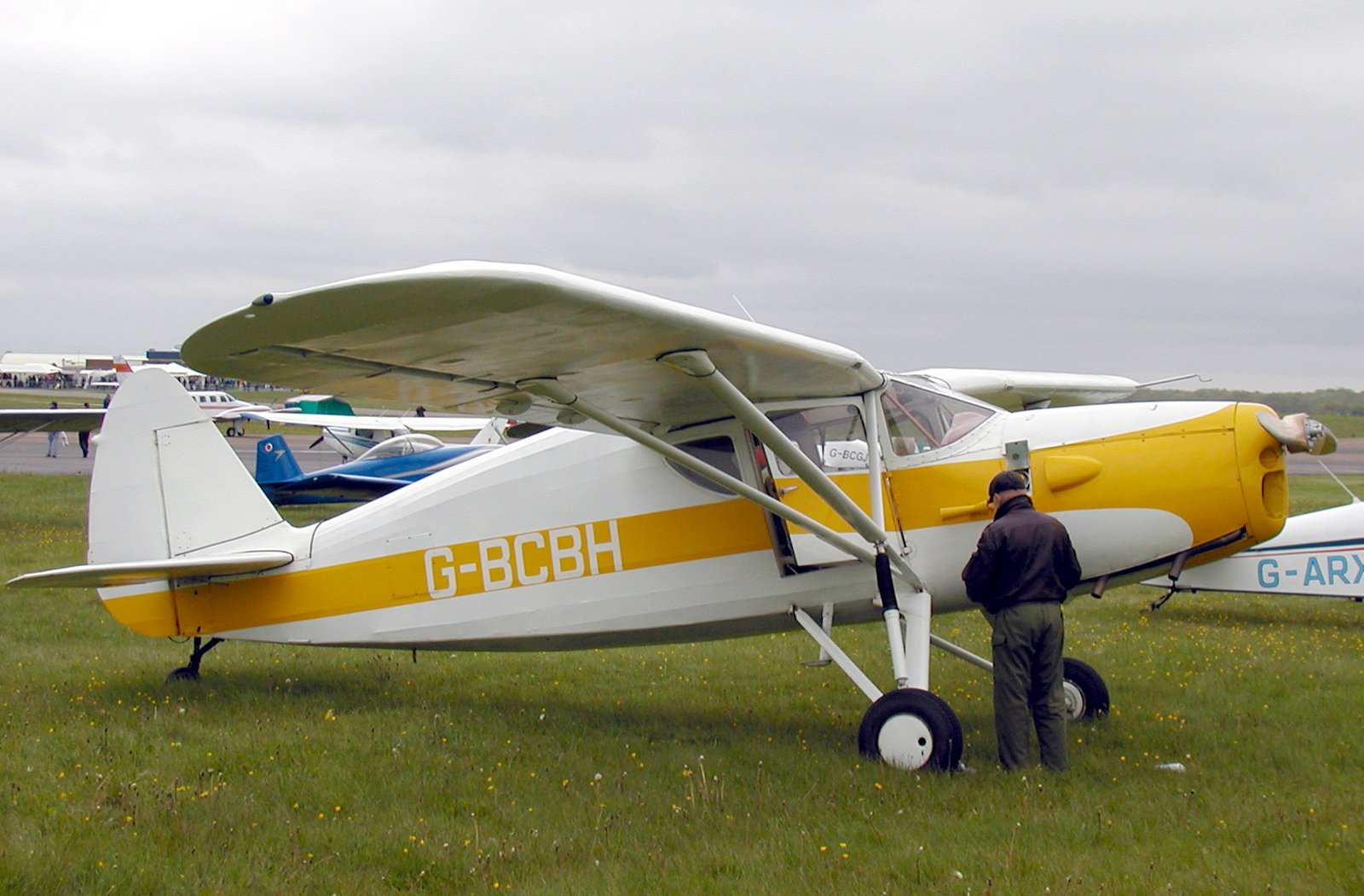
The F.24 R-46A Argus III represented the culmination of Fairchild's most successful light aircraft series, serving as both a popular civilian touring plane and essential military utility aircraft. During World War II, the type proved its versatility across multiple services, with the U.S. Army Air Forces operating it as the UC-61 Forwarder for liaison and light transport duties. The U.S. Navy designated variants as the GK-1 and J2K for instrument training, while the Royal Air Force received Lend-Lease aircraft designated Argus I, II, and III. Even the U.S. Civil Air Patrol armed some UC-61s with two 100-pound bombs for anti-submarine patrols against German U-boats along the East Coast in 1942.
The Manufacturer
Fairchild Airplane Manufacturing Corporation was established in 1925 by Sherman Mills Fairchild in Hagerstown, Maryland, initially focusing on aerial photography and mapping aircraft. The company acquired Kreider-Reisner Aircraft Company in 1928, inheriting the design lineage that would become the Model 24. Renamed Fairchild Aircraft Company in 1935, the firm operated under Fairchild Aviation Corporation as a holding company structure established in 1927. After World War II, Fairchild sold the Model 24 production rights to Texas Engineering & Manufacturing Company (TEMCO), which continued building the design until 1948. Fairchild itself transitioned to military jets and helicopters before eventually becoming Fairchild Republic, which declared bankruptcy in 1987 and was absorbed by Northrop Grumman.
Design Evolution
The F.24 R-46A traced its origins to the 1931 Kreider-Reisner K.R.22, evolving through the enclosed-cabin 24-CB two-seater that first flew in 1932. The three-seat F-24 followed in 1933, with the definitive four-seat F-24J introduced in 1937. Development occurred under Sherman Mills Fairchild's oversight, with noted industrial designer Raymond Loewy contributing modern interior styling beginning in 1937. The design remained fundamentally unchanged aerodynamically throughout its 16-year production run, with only minor refinements like the 1938 fin redesign implemented on the F-24G and subsequent variants.
Engine and Technical Specifications
The Argus III was powered by the 200-horsepower Ranger 6-440-C5 inverted inline engine, manufactured by Fairchild Aircraft Corporation. This powerplant was chosen over earlier radial engines like the 165-horsepower Warner Super Scarab used in the F-24W variant, providing better forward visibility due to its inverted configuration. The Ranger engine proved reliable in military service, also powering training aircraft like the PT-26 throughout the 1940s. Some aircraft were later retrofitted with different engines, including G-AJPI which received a replacement powerplant in the 1980s.
Production Legacy
Total production reached between 1,980 and 2,230 aircraft across all Model 24 variants, with Fairchild building approximately 1,500 units and TEMCO adding 280 to 450 more under license from 1946 to 1948. Manufacturing primarily occurred at Fairchild's Hagerstown, Maryland facility, with TEMCO production taking place in Dallas, Texas. The aircraft's 16-year production span from 1932 to 1948 demonstrated the enduring appeal of its fundamental design philosophy: a comfortable, enclosed-cabin monoplane suitable for business and recreational flying.
Surviving Aircraft
Several F.24 variants remain preserved in museums and private collections today. The RAF Museum at Midlands displays G-AIZE in Hangar 1, while the Western North Carolina Air Museum houses a 1946 Fairchild 24R. Australian examples include VH-ABZ, which survives at Wedderburn, New South Wales, and VH-BVF, stored since 1971. The UK-registered G-AJPI, operated by the West London Aero Club from 1947, remained active as late as 2007 before its Certificate of Airworthiness expired in 2010, later passing to Dutch ownership.
Cultural Impact
The Model 24 series symbolized the democratization of private aviation in the 1930s, attracting Hollywood actors and businessmen who appreciated its enclosed comfort and reliability. The type's military service during World War II, particularly in training and utility roles, proved the soundness of its basic design. Its influence extended into the post-war general aviation boom, demonstrating how a well-executed design could remain relevant across changing technological and operational requirements for nearly two decades.