
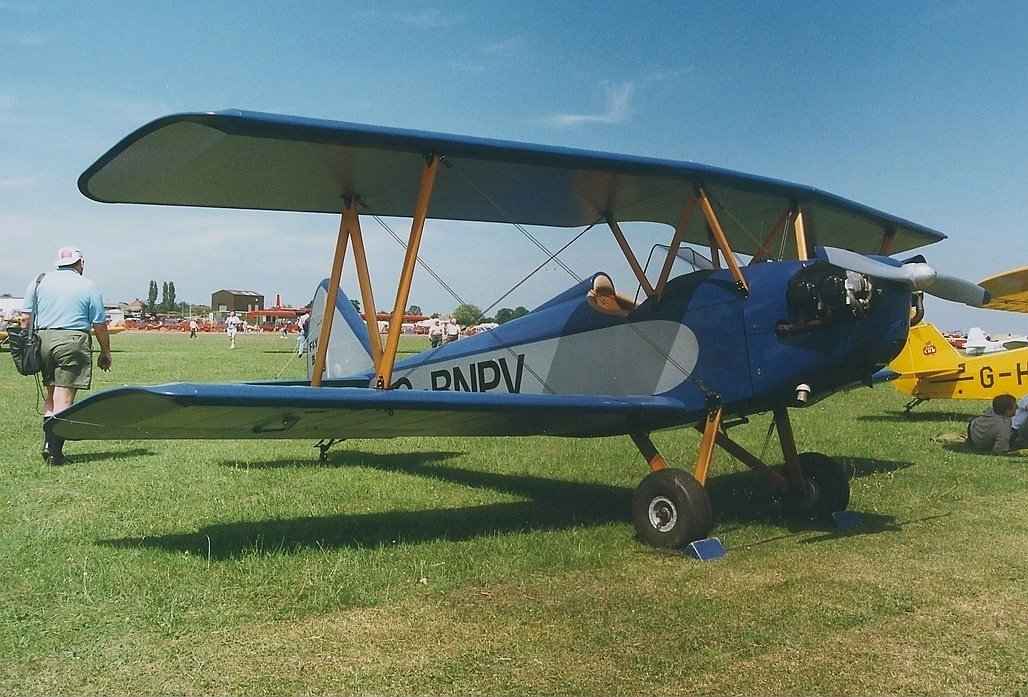
The Homebuilt Revolution
The Fly Baby's success fundamentally changed amateur aviation by proving that ordinary builders could construct sophisticated aircraft from mail-order plans. When Peter Bowers initially estimated he might sell 500 plan sets, he vastly underestimated the appetite for accessible homebuilding. By the time plan sales ended, over 5,000 sets had been distributed globally, with at least 500 aircraft estimated to have reached flying status. The design's impact extended far beyond raw numbers—it demonstrated that complex engineering could be simplified without sacrificing safety or performance.
Design Philosophy and Innovation
Bowers approached the 1962 EAA design contest with a clear philosophy: create an aircraft that average builders could complete using readily available materials and surplus parts. Drawing inspiration from proven designs like Les Long's "Wimpy" and Tom Story's "Story Special," he developed a conventional high-wing monoplane that prioritized simplicity over sophistication. The folding wing mechanism became the aircraft's signature feature, allowing owners to store their planes in standard garage spaces—a crucial consideration for homebuilders lacking hangar access.
The prototype N500F showcased the design's capabilities at the 1962 Rockford contest, where Bowers demonstrated loops and rolls that belied the aircraft's gentle appearance. This performance paradox—an aircraft designed for relaxed flying that could handle aerobatic maneuvers—helped establish its reputation among sport pilots seeking versatility.
The Designer's Vision
Peter M. Bowers (1918-2003) brought unique credentials to aircraft design, combining his experience as a Boeing engineer with deep knowledge as an aviation historian and photographer. His professional background on projects ranging from historical aircraft replicas to modern commercial designs informed the Fly Baby's practical engineering approach. Rather than pursuing cutting-edge technology, Bowers emphasized proven solutions and forgiving characteristics that would serve inexperienced builders and pilots alike.
The Continental C-85 engine selection exemplified this philosophy. This reliable 85-horsepower powerplant had proven itself in thousands of Piper Cubs and Cessna aircraft throughout the 1940s and 1950s. While some builders later experimented with Volkswagen automotive conversions, the C-85's aviation pedigree provided the performance margin necessary for confident operation.
Construction and Variants
The basic Fly Baby's wooden structure and fabric covering allowed builders to use traditional techniques and readily available materials. Plans included detailed instructions for creating jigs and fixtures, enabling precise construction even in basement workshops. The modular design permitted interesting variants—builders could convert their aircraft to biplane configuration by adding two additional wing panels and a center section strut arrangement, accomplishing the transformation in approximately one hour with assistance.
Seaplane variants proved equally popular, with float installations transforming the land plane into a capable water aircraft. These modifications demonstrated the design's structural integrity and adaptability, characteristics that contributed significantly to its widespread adoption.
Performance and Flying Characteristics
With its 605-pound empty weight and 924-pound maximum takeoff weight, the Fly Baby delivered sprightly performance that satisfied both efficiency-minded and fun-seeking pilots. The 104-knot maximum speed and 96-knot cruise speed provided reasonable cross-country capability, while the 39-knot stall speed ensured docile handling characteristics. The 1,100-feet-per-minute initial climb rate gave pilots confidence during departure sequences, particularly important given the single-engine configuration.
Range of 300 nautical miles at 8,000 feet made the Fly Baby suitable for regional flying, while the 925-foot takeoff distance (including safety margins) allowed operations from shorter airstrips that larger aircraft couldn't access.
Legacy and Museum Preservation
Several significant examples preserve the Fly Baby's legacy for future generations. The original prototype N500F, after serving with EAA Chapter 26 at Auburn Airport from the 1980s through 1994, now resides at the Museum of Flight in Seattle following restoration at Paine Field. Roy McCalden's N9992, built between 1977 and 1978, found its permanent home at the Pima Air & Space Museum in Tucson after his 1985 donation. In Canada, C-GWIZ represents the design's international appeal at Calgary's Hangar Flight Museum following its 2013 donation.
The Fly Baby's influence extends beyond static displays through continuing flight operations. Aircraft like N4339 (serial 68-15) remain active on FAA registrations, while unofficial communities maintain detailed databases tracking individual aircraft histories and current status. This grassroots preservation effort reflects the strong emotional connection between builders and their aircraft—a relationship fostered by the months or years invested in construction.
Modern developments like the PB-100 variant demonstrate the design's enduring relevance, incorporating computer-aided design improvements and enhanced documentation while preserving Bowers' fundamental engineering philosophy. The Fly Baby's legacy as a catalyst for the homebuilt aircraft movement remains secure, having introduced thousands of builders to aviation while proving that thoughtful simplicity often surpasses complex sophistication.