
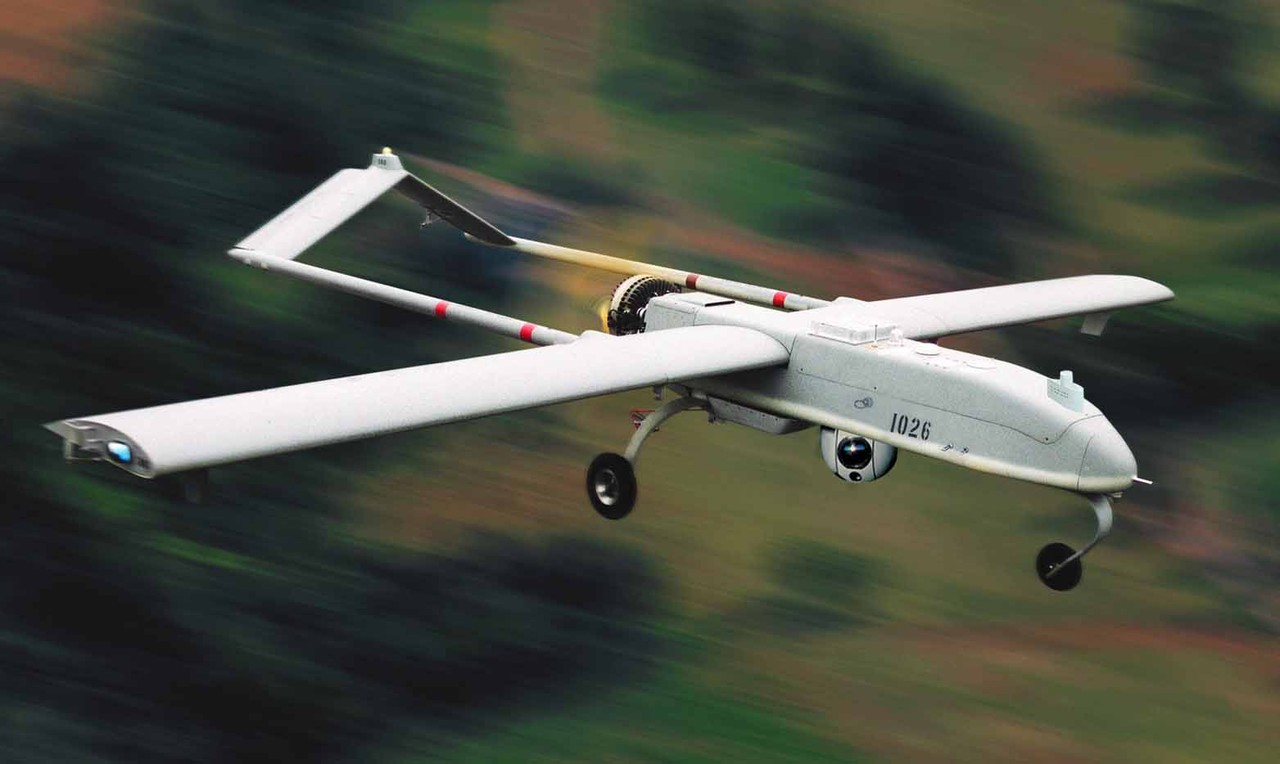
Service History
The RQ-7B Shadow dominated tactical unmanned surveillance for the US military through the peak years of Middle East operations. By August 2012, Shadow aircraft had logged more than 750,000 flight hours across 173,000 missions and 37,000 sorties. The system proved so essential that US Army inventory grew to over 450 aircraft out of more than 550 total units produced. Beyond American forces, the Shadow served with Australia, Italy, Pakistan, Romania, and Sweden, demonstrating its international appeal for tactical reconnaissance.
The aircraft's operational tempo was remarkable - flight hours grew from 200,000 by July 2007 to over 500,000 by May 2010, reaching 709,000 hours by 2011. This intensive use validated the Army's 1999 selection of the Shadow to replace the canceled Alliant RQ-6 Outrider program.
Combat Operations
The Shadow entered combat in January 2004 during Operation Iraqi Freedom, quickly becoming indispensable for brigade-level commanders seeking real-time battlefield imagery. The unmanned aircraft provided continuous surveillance, target acquisition, and battle damage assessment across both Iraq and Afghanistan theaters.
Early deployments revealed significant challenges with engine reliability in harsh Middle East conditions. Heat and sand caused frequent failures of the original AR741-1100 Wankel rotary engine, prompting extensive reliability improvements through both technological upgrades and operational procedures. These fixes proved successful, enabling the Shadow to sustain high operational tempos throughout the conflicts.
The US Marine Corps operated Shadows extensively from October 2007, accumulating 39,000 flight hours over 11 deployments before retiring the type on July 29, 2018, during RIMPAC exercises. The Marines had already transitioned to the RQ-21 Blackjack in 2014, but continued flying Shadows until final retirement.
The Manufacturer
AAI Corporation developed the Shadow at their Hunt Valley, Maryland facilities, building on experience from their earlier RQ-2 Pioneer unmanned aircraft. Founded in 1950, AAI specialized in unmanned systems and became a pioneer in tactical battlefield drones. Textron Inc. acquired AAI in 2007, transforming it into an operating unit called Textron Systems.
Today, Textron Systems continues Shadow production and support under the original company structure. The manufacturer maintains the production line for ongoing upgrades, including the RQ-7B V2 Block III variant introduced in 2021, ensuring the platform remains current with modern battlefield requirements.
Engine and Technical Evolution
The Shadow underwent significant technical evolution between its initial RQ-7A variant and the improved RQ-7B model. Production shifted to the RQ-7B in summer 2004, incorporating larger "wet" wings capable of holding 44 liters of fuel compared to the original design. This modification extended endurance from 4-5.5 hours to 6-7 hours, a crucial improvement for sustained battlefield surveillance.
The RQ-7B featured a redesigned airfoil and tail configuration, plus an upgraded Tactical Common Data Link (TCDL) for improved communication with ground stations. Payload capacity expanded from 60 pounds to 99 pounds, accommodating more sophisticated electro-optical and infrared sensor packages.
Both variants employed Wankel rotary engines, with the RQ-7A using the AR741-1100 model compatible with either 87-octane automotive gasoline or 100LL aviation fuel. The RQ-7B switched to an unspecified heavy-fuel Wankel engine, providing greater fuel flexibility and improved reliability.
Performance Characteristics
The Shadow operates with a two-person ground control team, maintaining speeds up to 126 mph with operational ranges between 68-125 kilometers depending on mission requirements. The aircraft launches via pneumatic catapult and recovers using an arresting hook system, enabling operations from unprepared forward locations.
Dimensionally, the RQ-7A measured 11 feet 2 inches long with a 12-foot 9-inch wingspan and maximum takeoff weight of 327 pounds. The improved RQ-7B expanded the wingspan to 14 feet while increasing payload capacity significantly. Both variants featured high-wing twin-boom configurations optimized for stability during extended loitering operations.
Current Status and Legacy
The Shadow remains operational as of 2021 with continued upgrades ensuring relevance on modern battlefields. The RQ-7B V2 Block III represents the latest evolution, incorporating lessons learned from two decades of combat operations. All original RQ-7A variants have been retired or upgraded to RQ-7B standard.
As the seventh designated reconnaissance unmanned aircraft (hence RQ-7), the Shadow established the template for tactical battlefield surveillance that influenced successor programs like the RQ-21 Blackjack. Its 750,000-plus flight hours in combat operations provided crucial data for developing next-generation unmanned systems, cementing its place in military aviation history as a pioneer of modern drone warfare.