
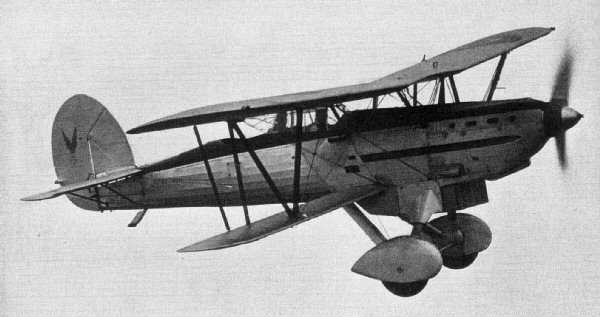
Designed in 1925 by Belgian aircraft designer Marcel Lobelle for the Fairey Aviation Company, the Fairey Fox was a compact, two-bay biplane that fundamentally altered the performance expectations for light bombers. When it entered service with the Royal Air Force (RAF) in June 1926, it increased bomber speeds by approximately 50 mph (80 km/h) compared to its predecessors, making it faster than many of the fighters then in service. This performance was achieved through a clean aerodynamic layout and the use of a high-power inline engine in a tight cowling to reduce drag.
While the original aircraft were built at the Fairey Aviation Company's Hayes factory in Middlesex, England, the type saw extensive licensed production in Belgium. In 1930, the Belgian Aéronautique Militaire sought a replacement for the Bréguet 19 and evaluated the Fox IIM. After an initial batch of 12 Fox II aircraft was produced at Hayes, manufacturing was transferred to Avions Fairey at Gosselies. This Belgian subsidiary produced approximately 191 Foxes, including two delivered to the Swiss Troupe d’Aviation.
Technical specifications varied by mark. The Belgian Fox IIIC, for example, typically utilized the Rolls-Royce Kestrel IIS liquid-cooled V-12 piston engine producing 480 hp, achieving a maximum speed of about 304 km/h at 5,000 m. A later version of the IIIC featured the fully supercharged Rolls-Royce Kestrel V engine, which provided 640 hp and an estimated maximum speed of 350 km/h. The IIIC was armed with two 7.62 mm FN-Browning machine guns for forward fire, one 7.62 mm FN-Browning in a rear flexible mount, and a bomb load of four 25 kg bombs.
In Belgian service, the Fox operated in various roles, including light bomber, observation, and army co-operation, and was later used as a two-seat fighter by the Défence Aérienne du Territoire (D.A.T.). Despite being technologically obsolete, the Fox remained in front-line service during the German invasion of Belgium in May 1940. On May 10, 1940, a formation of nine Belgian Foxes engaged six Messerschmitt Bf 109s; during this fight, Lieutenant Étienne Dufossez reportedly hit a Bf 109 before his own aircraft was shot down. No examples of the Fairey Fox are known to have survived in museums or private collections.