
Development and Competition
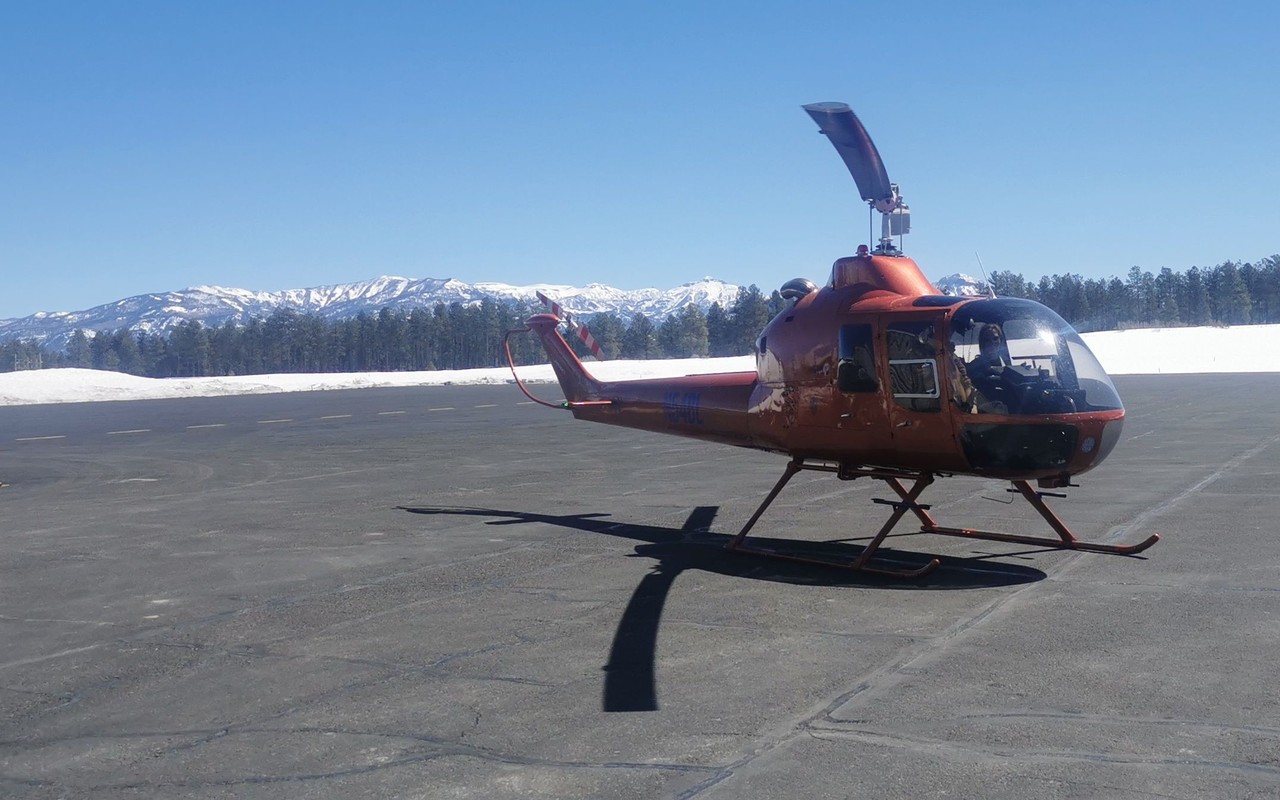
The FH-1100's origins traced back to Hiller Aircraft's ambitious entry into the U.S. Army's Light Observation Helicopter program in 1961. Stanley Hiller Jr.'s California-based company designed the Model 1100 as one of three winning submissions, earning the military designation YOH-5 in May 1961. The prototype conducted extensive testing at Fort Rucker, Alabama, where Army evaluators discovered the aircraft possessed superior performance and handling characteristics compared to its primary competitor, the Hughes YOH-6 Cayuse.
Despite technical superiority, the Army awarded the production contract to Hughes in 1965 based purely on cost considerations. Hiller's formal protest proved unsuccessful, forcing the company to pivot toward civilian and international military markets for their advanced turbine helicopter.
Corporate Transformation
The aircraft's development coincided with dramatic changes in American helicopter manufacturing. In 1964, Maryland-based Fairchild Engine and Airplane Corporation acquired Hiller Aircraft, creating Fairchild-Hiller and relocating primary operations. Stanley Hiller Jr. departed shortly after the merger, ending his direct involvement with the company he had founded.
Under Fairchild ownership, engineers discontinued older rotorcraft projects to concentrate resources on the Model 1100, now redesignated FH-1100 for civilian production. The Federal Aviation Administration certified the aircraft in November 1966, enabling commercial sales to begin.
Technical Innovation
The FH-1100 represented significant technological advancement in light helicopter design. Engineers powered the aircraft with the revolutionary Allison Model 250 turboshaft engine, which would become one of aviation's most successful helicopter powerplants. Initial production models utilized the 250-C18 variant producing 317 shaft horsepower, though later aircraft received the improved 250-C20B engine.
This turbine installation provided dramatic performance improvements over piston-powered contemporaries. The helicopter achieved maximum takeoff weights of 2,750 pounds while maintaining cruise speeds of 110 knots and operational ranges extending 300 nautical miles. Single-pilot operation enabled four-passenger capacity, making the FH-1100 competitive in the emerging commercial helicopter market.
Production and Service
Fairchild-Hiller manufactured the first production FH-1100 in June 1966, with approximately 60 aircraft completed by mid-1967. Production continued through 1973, when declining orders forced manufacturing cessation. Total production reached between 246 and 253 aircraft during this seven-year period.
International customers provided crucial early sales, with Cyprus acquiring a single FH-1100 in 1967 for government transport duties. The aircraft served various civilian operators in utility, executive transport, and training roles throughout the 1970s and 1980s.
Engine Challenges and Solutions
Early FH-1100 operators encountered significant powerplant reliability issues with the Allison 250-C18 engine. While failure rates proved lower than the competing Bell 206A JetRanger, engine problems damaged the aircraft's market reputation during crucial early sales periods. Subsequent engine improvements and the introduction of the 250-C20B variant addressed many reliability concerns, but market confidence had already shifted toward other manufacturers.
Revival Attempts
Rogerson Aircraft Corporation acquired Hiller assets in April 1984, establishing Rogerson Hiller Helicopters to resume limited production. Between 1984 and 1987, the company manufactured five additional FH-1100s, demonstrating continued demand for the design. However, small-scale production proved economically unsustainable without larger order volumes.
In 2000, FH1100 Manufacturing Corporation of Century, Florida, purchased the Type Certificate, maintaining support capabilities for existing operators. This arrangement ensures continued airworthiness for surviving aircraft while preserving the possibility of future production runs.
Legacy and Historical Significance
The FH-1100 holds distinction as the final helicopter design bearing Stanley Hiller Jr.'s engineering influence, ending a remarkable career that began in the 1940s with pioneering rotorcraft development. The aircraft demonstrated American helicopter manufacturers' technical capabilities during the crucial transition from piston to turbine power.
While commercial success remained limited, the FH-1100's advanced design influenced subsequent light helicopter development. The Allison 250 engine installation proved the viability of turbine power in smaller rotorcraft, paving the way for the modern helicopter industry's widespread adoption of turboshaft propulsion.
Today, surviving FH-1100s continue operating in various roles worldwide, supported by parts availability and maintenance expertise maintained by type certificate holders. The Hiller Aviation Museum preserves examples and documentation of this significant aircraft, ensuring future generations can study this important chapter in American rotorcraft development.