
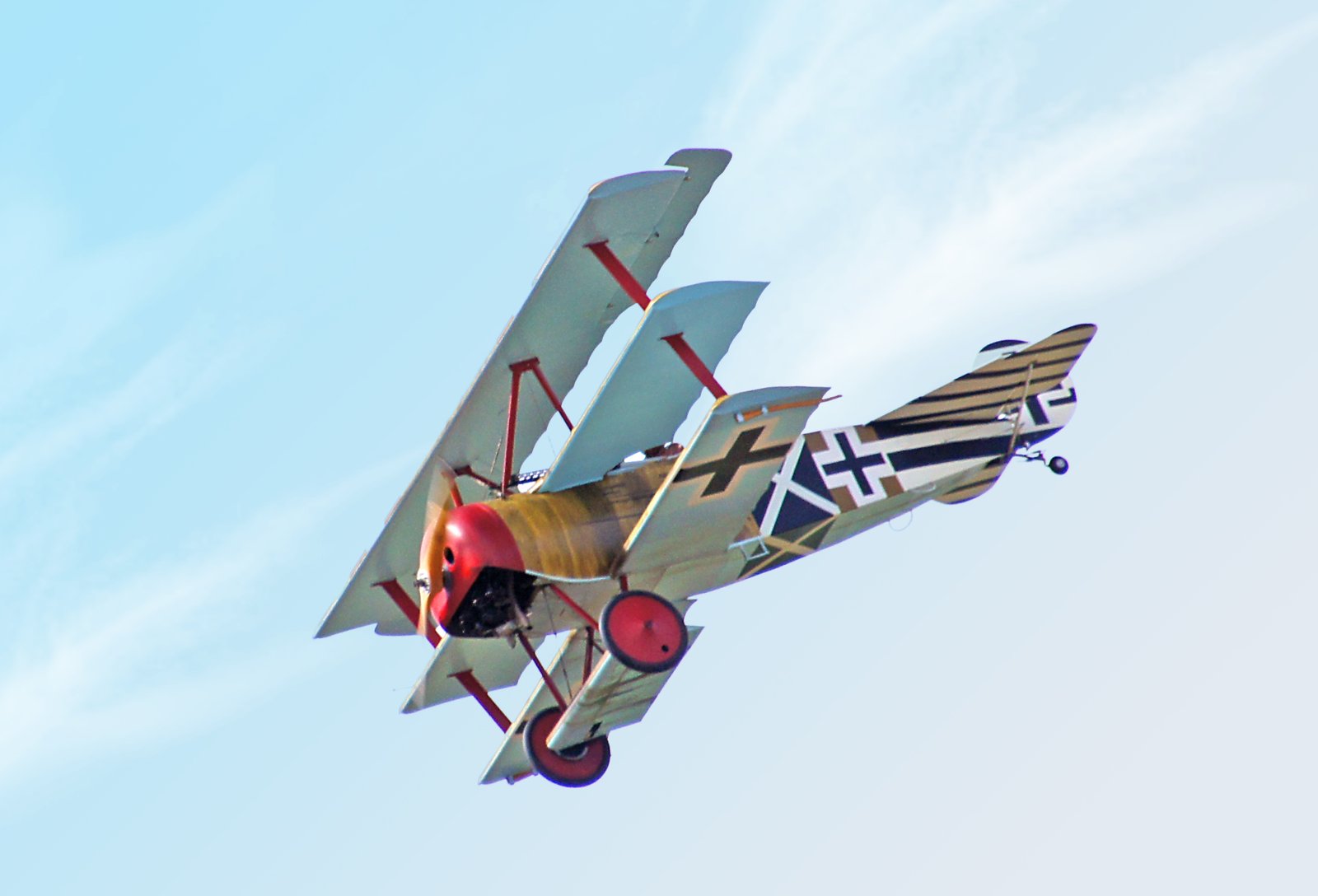
Designed by Reinhold Platz, the Fokker Dr.I was a German single-seat fighter developed by Fokker-Flugzeugwerke during World War I. The aircraft first flew on 5 July 1917, featuring a distinctive three-wing triplane layout inspired by the combat success of the Sopwith Triplane. This configuration, combined with thick airfoil section wings and a steel tubular frame, provided the Dr.I with superior climb performance and extreme maneuverability, making it one of the most recognizable aircraft of the conflict.
Powering the Dr.I was the Oberursel Ur.II, a 9-cylinder air-cooled rotary piston engine producing 82 kW (110 hp). While some references mention a Thulin-built Le Rhône rotary engine of similar power, the Oberursel Ur.II served as the primary production powerplant. The aircraft was armed with two 7.92 mm Maschinengewehr 08 “Spandau” machine guns. In terms of performance, the Dr.I could reach a maximum speed of 180 km/h at an altitude of 2,600 m, with a stall speed of 72 km/h. It possessed a service ceiling of 6,100 m and an operational range of 300 km. The airframe measured 18 ft 11 in in length with a wingspan of 23 ft 7 in, weighing just over 800 lb empty and 1,291 lb at maximum takeoff weight.
Production began in 1917 and concluded in May 1918, with a total of 320 examples built. The aircraft saw widespread service with the Luftstreitkräfte starting in the spring of 1918, equipping approximately 14 or 15 Jastas, including Jasta 11, which received the pre-production units. The Dr.I is inextricably linked to Manfred von Richthofen, who achieved his final 17 victories in the production model before being killed in one on 21 April 1918. Another notable ace, Josef Jacobs, recorded 30 confirmed kills using the type. Despite its agility, the Dr.I's combat career was relatively short; production was limited by engine reliability issues and a lack of speed compared to newer Allied fighters.
Today, the Fokker Dr.I remains a symbol of early aerial warfare. While original surviving airframes are rare, replicas continue to be produced, including a functional example completed by the National Warplane Museum in 2020. Historical records also reference the specific aircraft 127/17 flown by Richthofen.