
Service History
The Fleet 7B dominated Canadian military flight training from its introduction in 1931 through the end of World War II. When Canada entered the war in 1939, 43 Fleet Model 7B and 7C aircraft formed the core of RCAF elementary pilot instruction. The type continued serving until 1947, training thousands of aircrew under the British Commonwealth Air Training Plan alongside its successor, the Fleet Finch.
Beyond military service, 12 civil-registered Model 7B aircraft were distributed to flying clubs across Canada through the Department of National Defence. One notable example, registered ZK-AGC with construction number 126, was exported to New Zealand's Marlborough Aero Club in 1938 but was destroyed in a night training accident at Wigram, Christchurch on April 30, 1938.
Wartime Operations
The Fleet 7B served exclusively as the RCAF's Fawn Mk I primary trainer, never seeing combat roles. Its mission focused entirely on elementary pilot instruction, where student pilots learned basic flying skills before advancing to more complex aircraft. Under the British Commonwealth Air Training Plan, the type played a crucial role in preparing Allied aircrew for operational duties, though specific casualty statistics from training operations remain undocumented.
The aircraft's rugged construction and forgiving flight characteristics made it ideal for novice pilots. Its aerobatic capabilities allowed instructors to teach advanced maneuvers while building student confidence in challenging flight regimes.
The Manufacturer
Fleet Aircraft of Canada operated from the late 1920s through the 1930s as a subsidiary of Buffalo, New York-based Fleet Aircraft Inc. The Canadian company established its manufacturing facility in Fort Erie, Ontario, where it produced trainers from 1929 to 1936. In 1934, the parent company was absorbed into Consolidated Aircraft Corporation, founded by Reuben Fleet.
The Canadian operation continued limited production into World War II to support the British Commonwealth Air Training Plan but ceased independent aircraft manufacturing after the war. Fleet Aircraft of Canada is no longer in business under its original name, with its assets and designs eventually absorbed into larger entities including Consolidated, which later became Convair.
Engine & Technical Details
The Fleet 7B's powerplant was the reliable 125-horsepower Kinner B-5, a five-cylinder air-cooled radial engine manufactured by Kinner Airplane & Motor Corporation in Glendale, California. Early production aircraft offered an alternative 80-horsepower Armstrong Siddeley Genet five-cylinder radial, but the more powerful Kinner became the preferred installation for its superior aerobatic performance.
The aircraft featured innovative construction combining a welded steel tube fuselage with fabric covering and wooden cockpit sections. Metal panels protected the forward fuselage area. The single-bay equal-span wings utilized one-piece spruce spars in the upper wing, with ailerons mounted only on the lower wings. Various configuration options included float installations, enclosed coupe canopies, tail skids or wheels, and auxiliary fuselage fuel tanks for extended range operations.
Design Philosophy
Fleet Aircraft's engineering team designed the Model 7B as an evolution of the earlier Fleet Model 2, itself derived from the unproduced Consolidated Model 14 Husky Junior. Design objectives centered on creating a rugged, affordable primary trainer that would inspire confidence in novice pilots while providing excellent aerobatic capability. The tandem seating arrangement placed instructor and student in open cockpits, though enclosed canopies were available as options.
Later production aircraft incorporated a broader chord tail fin based on operational experience. The aircraft's forgiving handling characteristics and robust construction made it particularly suitable for the demanding requirements of military flight training.
Production & Legacy
Fleet produced exactly 32 Model 7B aircraft alongside 31 examples of the improved Model 7C variant, totaling 63 Fawn trainers from the Model 7 series. Production occurred primarily between 1931 and 1938, with the type serving Canadian military aviation for over 16 years.
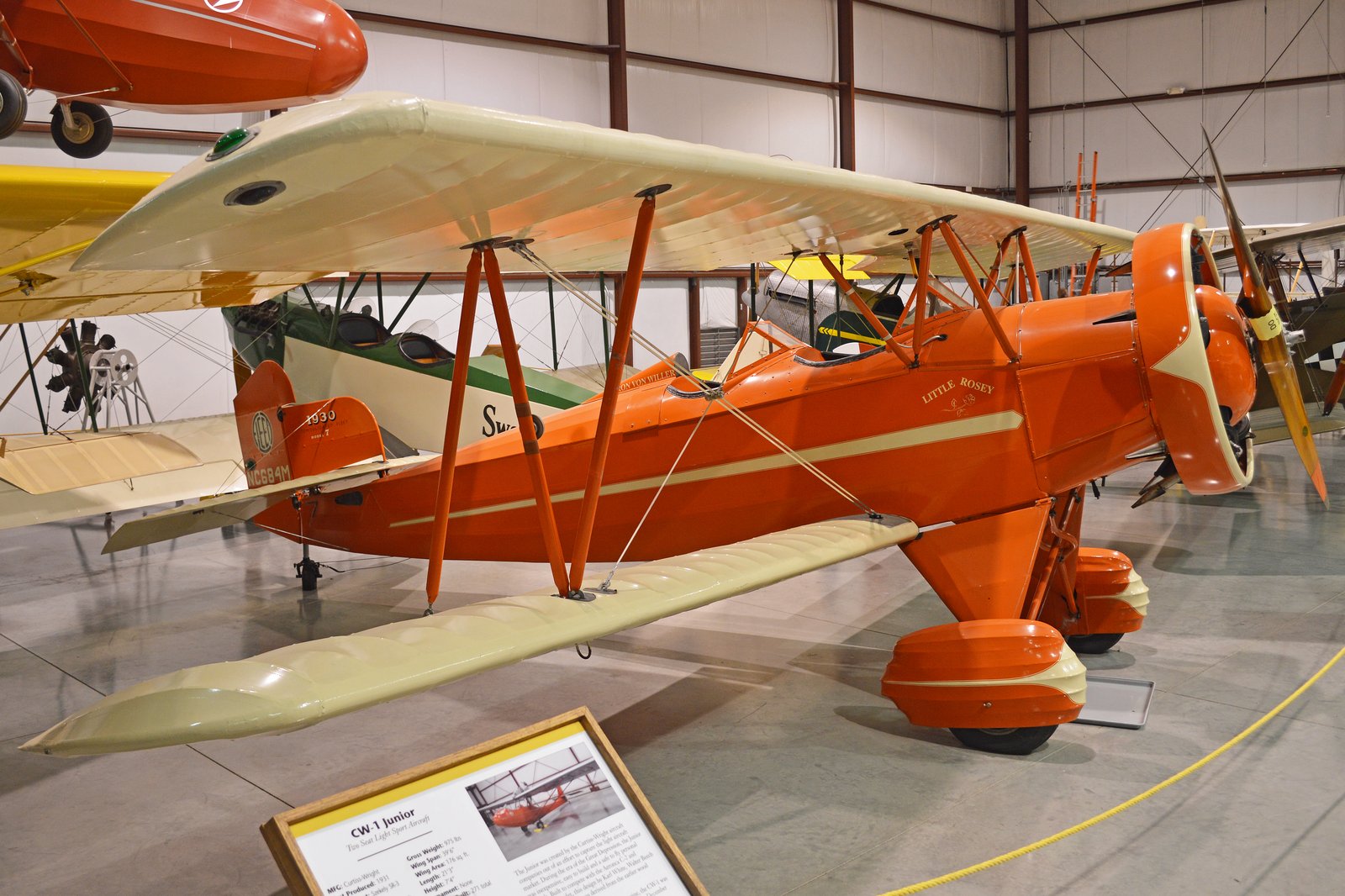
At least three Fleet 7 series aircraft survive today. The Reynolds-Alberta Museum in Wetaskiwin, Alberta displays Fleet Fawn Mk II CF-CHF, while the Yanks Air Museum at Chino Airport, California exhibits a Model 7B. A related Model 16B flies in New Zealand as ZK-AGC², imported in 2004 to replace the original aircraft lost in 1938.
The Fleet 7B's legacy extends beyond its modest production numbers. As a foundational trainer that prepared Canadian and Commonwealth aircrew for World War II service, it contributed significantly to Allied victory through its role in pilot preparation. The aircraft represents an important chapter in Canadian aviation manufacturing and military flight training history.