
Development and Design Philosophy
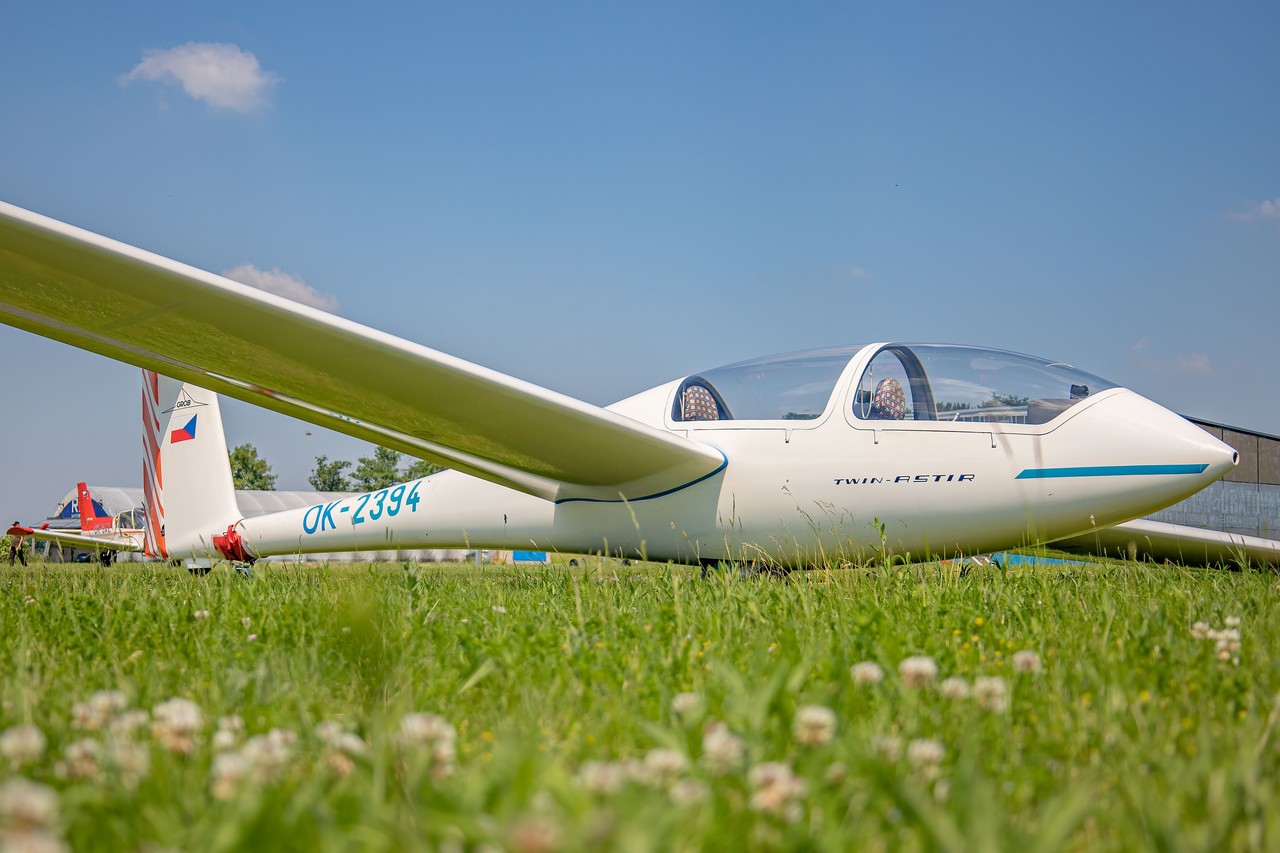
The G-103C Twin 3SL emerged from Grob Aircraft AG's successful sailplane lineage, building upon the company's expertise developed through the Twin Astir series that began production in 1976. The motorized 3SL variant addressed a specific need in the gliding community: the ability to launch independently without requiring ground support equipment or tow aircraft, while maintaining the exceptional soaring characteristics that made the G-103 family renowned among pilots.
Technical Innovation
The Twin 3SL incorporates Grob's advanced triple-trapezoidal wing design, constructed primarily of glass-reinforced plastic for optimal strength-to-weight ratio. The aircraft's 18-meter wingspan generates a wing area of 17.5 square meters, achieving an aspect ratio of 17.1 that contributes to its impressive 38:1 maximum glide ratio. The T-tail configuration positions the horizontal stabilizer above the propeller wash, maintaining clean airflow during both powered and soaring flight phases.
The integration of the 43-horsepower piston engine transforms the aircraft's operational capabilities while preserving its sailplane DNA. Upper surface air brakes provide precise descent control, essential for accurate approaches whether landing with engine power or in traditional glider configuration. The non-retractable tricycle landing gear simplifies ground operations compared to conventional sailplanes with single main wheels.
Performance Characteristics
Measuring 8.18 meters in length with a height of 1.55 meters, the Twin 3SL demonstrates impressive performance parameters. The aircraft's never-exceed speed reaches 280 kilometers per hour, with a maneuvering speed of 185 kilometers per hour. Structural limits allow +6/-4g loading, enabling basic aerobatic maneuvers while maintaining adequate safety margins for training operations.
The dual-seat configuration accommodates one pilot and one passenger or student, making the aircraft valuable for instruction and recreational flights. Maximum gross weight of 600 kilograms provides sufficient payload for extended cross-country flights while maintaining the performance characteristics essential to effective soaring.
Grob Aircraft AG Legacy
Grob Aircraft AG established itself as a premier sailplane manufacturer through innovative design and construction techniques. The company's total production exceeded 2,099 aircraft across all variants, with the G-103 family representing a significant portion of this output. The Twin III series, including the 3SL variant, succeeded the Twin II model in 1989, incorporating lessons learned from nearly two decades of sailplane development.
LTB Lindner currently holds the type certificate for Grob sailplanes, ensuring continued support for the existing fleet. This transition reflects the consolidation common in specialized aviation markets while preserving the technical heritage of successful designs.
Operational Service
The G-103C Twin 3SL serves primarily with gliding clubs and private owners who value the combination of self-launching capability and high-performance soaring characteristics. Unlike conventional sailplanes requiring ground support teams and specialized launch equipment, the 3SL enables pilots to operate independently from suitable airports.
Documented service records demonstrate the aircraft's durability and utility. Individual examples have accumulated thousands of flight hours and launch cycles, testament to the robust construction and reliable powerplant integration. The ability to launch under power, then shut down the engine for silent soaring flight, provides operational flexibility unmatched by pure sailplanes or conventional powered aircraft.
Safety Record and Lessons
Operational experience has revealed both the capabilities and limitations of the Twin 3SL configuration. The complexity of managing both powered and soaring flight phases requires specialized training, particularly in emergency procedures where engine availability affects decision-making processes. Pilots must maintain proficiency in both power-off gliding techniques and engine management procedures.
The aircraft's design allows for normal sailplane operations when the engine is not required, maintaining the pure soaring experience that attracts pilots to gliding while providing powered backup for safety or convenience.
Contemporary Role
Today, the G-103C Twin 3SL occupies a specialized niche within general aviation, serving pilots who demand both soaring performance and self-sufficiency. The design philosophy pioneered by this aircraft influenced subsequent self-launching sailplane development, establishing performance benchmarks and operational procedures that continue to guide the category.
The combination of proven sailplane aerodynamics with reliable powerplant integration represents a mature approach to motorized glider design, balancing the conflicting requirements of soaring efficiency and powered flight capability in a package accessible to appropriately trained pilots.