
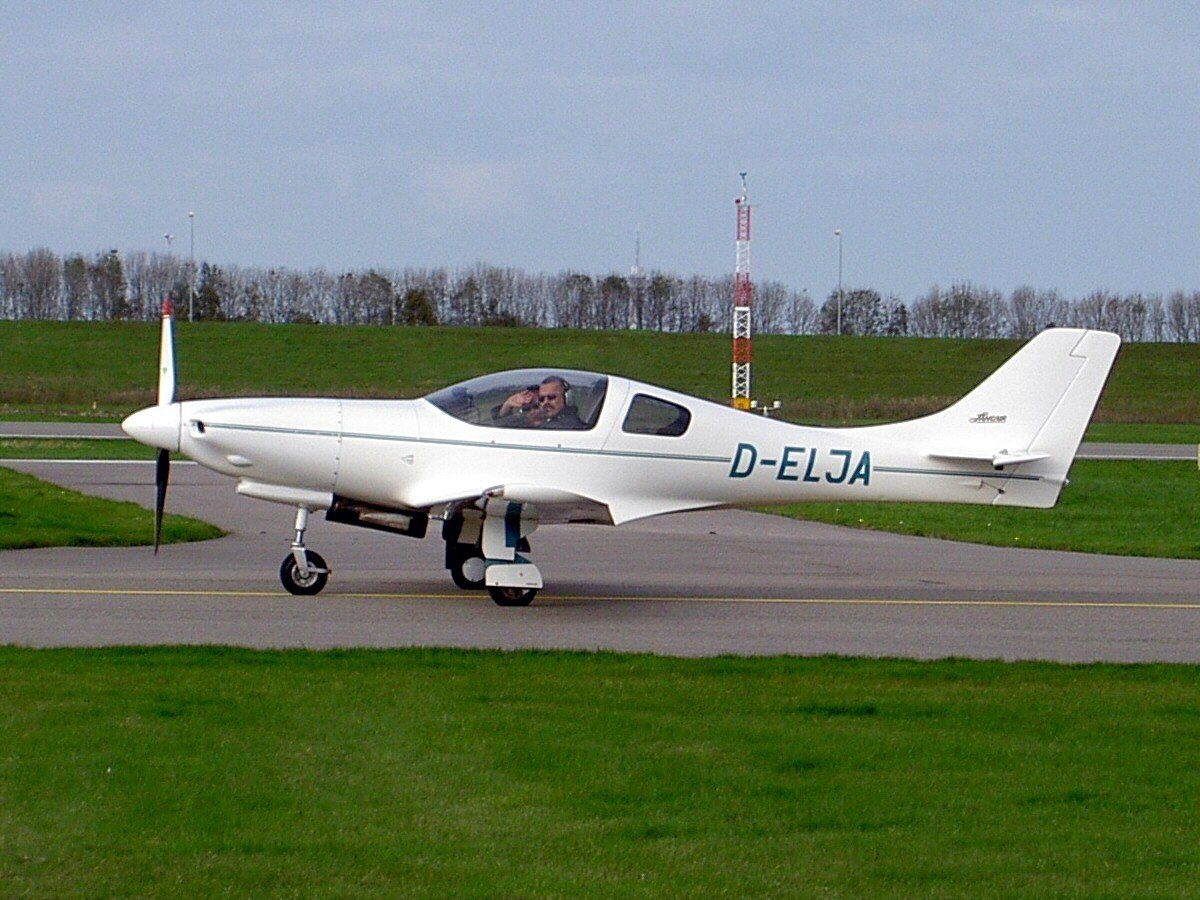
Design and Development
Aerobatic pilot and designer John Giles developed the G-200 series in the mid-1990s with a specific objective: creating the highest-performing aerobatic aircraft possible using a four-cylinder engine. The design incorporated several innovative features, including a cantilever low-wing configuration with the specialized Mort airfoil, full-span ailerons without flaps, and carbon fiber reinforced composite construction. The bubble canopy provided excellent visibility during aerobatic maneuvers, while the fixed conventional landing gear with wheel pants balanced simplicity with aerodynamic efficiency.
The prototype, registered as N5296E, made its public debut in 1994. Following successful testing, the first kit-built G-200 took to the skies on May 26, 1996, marking the beginning of limited production. The aircraft's design enabled it to withstand 10G loads and achieve a remarkable roll rate of 400 degrees per second, making it exceptionally capable for unlimited aerobatic competition.
The Manufacturer
AkroTech Aviation of Scappoose, Oregon, brought the Giles G-200 to market during the homebuilt aircraft boom of the 1990s. The company offered the aircraft both as quick-build kits, requiring an estimated 1,000 hours of construction time, and as complete ready-to-fly aircraft. Despite signing agreements to establish supplemental type certificates for the Giles line, AkroTech Aviation eventually ceased operations, ending production of the G-200 series.
By 1998, the company had sold 26 kits with only one aircraft flying, indicating the challenges faced by specialized aerobatic kit manufacturers. The company's closure left existing owners without factory support, though the relatively simple design and use of standard Lycoming engines helped maintain serviceability.
Engine and Performance
The G-200's powerplant was the proven Lycoming IO-360, a four-cylinder, air-cooled, horizontally-opposed engine producing 200 horsepower. This engine choice provided the ideal balance of power and weight for the aircraft's aerobatic mission. Paired with a three-bladed constant-speed propeller, the combination delivered exceptional performance across the flight envelope.
With an empty weight of just 750 pounds and a maximum gross weight of 1,150 pounds, the G-200 achieved impressive performance figures. Maximum speed reached 255 mph, while cruise speed was 215 mph. The aircraft stalled at 66 mph and offered a range of 750 miles with its standard 36-gallon fuel capacity. Optional wing tanks could extend the fuel load to 140 liters total, though aerobatic flying typically required much less fuel capacity.
Pilot Experience
Aerobatic pilot Mike Goulian praised the G-200's handling characteristics, highlighting its responsiveness and precision in aerobatic maneuvers. The aircraft's 400-degree-per-second roll rate placed it among the most agile single-engine aerobatic aircraft available to civilian pilots. The single-seat configuration eliminated the weight and complexity of a second seat, allowing the design to optimize around pure aerobatic performance.
One G-200 builder earned recognition with a Bronze Lindy award at EAA Oshkosh, demonstrating both the aircraft's capabilities and the quality achievable by dedicated homebuilders. The aircraft's competition in aerobatic contests showcased its design objectives, with pilots appreciating the predictable handling and robust construction that could withstand the stresses of unlimited aerobatic sequences.
Variants and Production
AkroTech Aviation developed the two-seat G-202 variant alongside the single-seat G-200. The G-202 prototype, registered N50AL, first flew on December 22, 1995, and debuted at EAA Oshkosh that same year. The two-seat version featured a slightly longer wingspan of 22 feet compared to the G-200's 20 feet, and a higher maximum takeoff weight of 1,600 pounds.
The G-202 accommodated engine options ranging from 150 to 220 horsepower, providing flexibility for different mission requirements. While still capable of aerobatic flight, the two-seat variant served training and recreational flying roles where the single-seat G-200 focused purely on competition aerobatics.
Legacy and Current Status
Production numbers remained limited throughout the G-200's brief manufacturing run. By December 2013, only 10 aircraft remained registered in the United States, with 2 additional aircraft having been deregistered. One G-200 was registered in Canada, bringing the known total to 11 active aircraft. International examples included registrations in New Zealand and Australia, indicating modest global interest in the design.
The G-200's significance in aviation history lies in its demonstration that homebuilt aircraft could achieve professional-level aerobatic performance. As composite construction techniques became more accessible to homebuilders during the 1990s, the G-200 represented the cutting edge of what dedicated builders could accomplish. While production ceased with AkroTech Aviation's closure, the few flying examples continue to showcase the potential of specialized aerobatic design in the experimental aircraft category.