
Service History
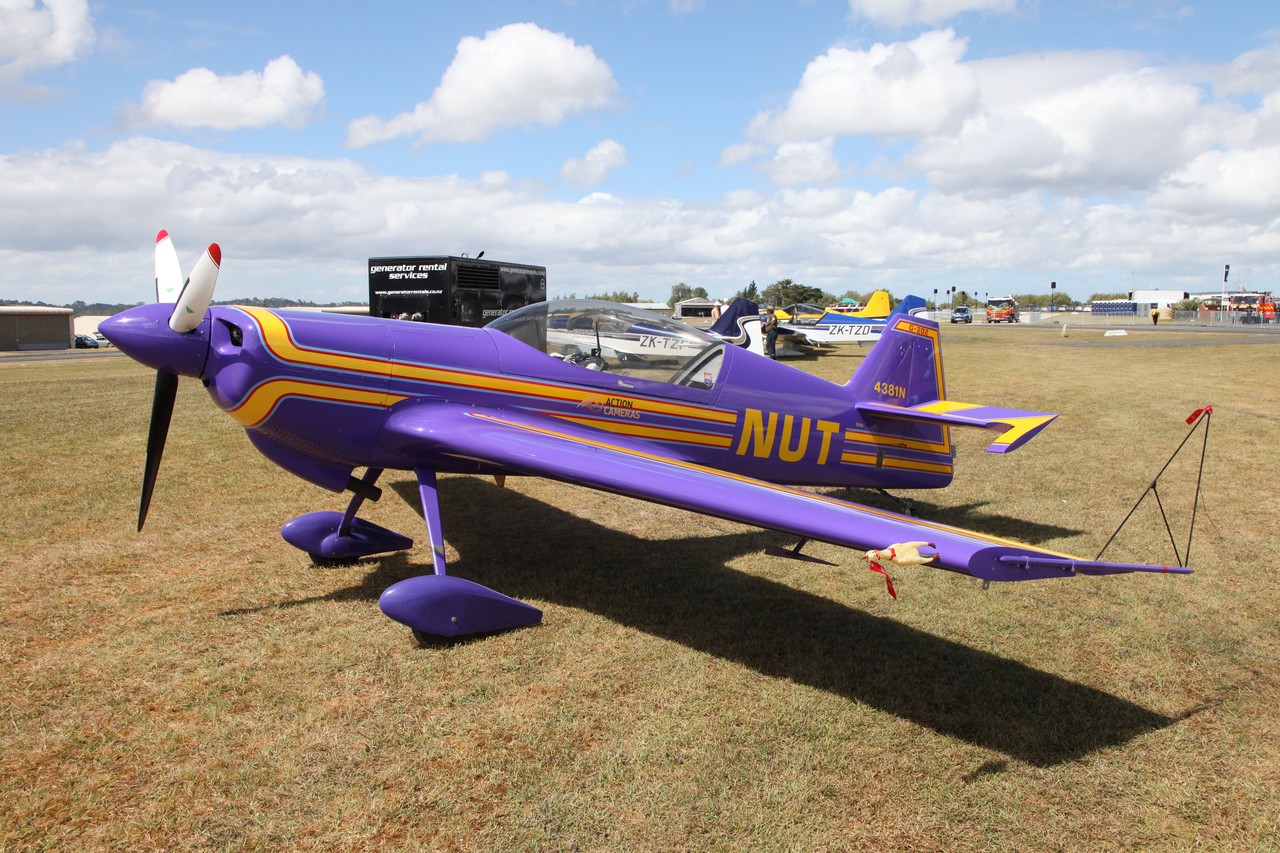
The Giles G-202 served exclusively in the civilian aerobatic community, where its extraordinary performance capabilities made it a prized mount for airshow performers and competition pilots. Only 26 examples were ever completed from kits, making it one of the rarest high-performance aerobatic aircraft in existence. The type's scarcity was matched by its reputation for uncompromising performance, with examples finding their way to aerobatic communities in Australia and New Zealand, including notable aircraft ZK-NUT registered in Auckland on September 24, 1998, and prototype VH-YLF shipped to Australia in May 2005.
The Manufacturer
AkroTech Aviation Inc. operated from Troutdale and later Scappoose, Oregon, during the 1990s and early 2000s. The company focused exclusively on high-performance aerobatic kit aircraft, producing both the single-seat G-200 and the tandem G-202. AkroTech's limited production run reflected the specialized nature of unlimited aerobatic aircraft and the narrow market for such extreme-performance machines. The company licensed a modified version of their design to Avions Mudry in France as the CAP 222, but AkroTech itself ceased operations and no longer exists today, making support for existing aircraft dependent on the owner community.
Design Innovation
Richard Giles designed the G-202 with a singular focus on maximum aerobatic performance from a four-cylinder engine platform. The aircraft featured carbon fiber composite construction throughout, a material choice that was relatively uncommon in kit aircraft during the mid-1990s. The wing planform incorporated a swept-back leading edge with a straight trailing edge, a design borrowed from radio-controlled pattern aircraft that contributed to the exceptional roll rate. This configuration, combined with the lightweight composite structure, enabled the G-202 to achieve roll rates exceeding 420 degrees per second, substantially higher than contemporaries like the Extra 300 or CAP 232.
Engine and Technical Specifications
The G-202 was powered by the Lycoming AEIO-360-A1E, a fuel-injected four-cylinder horizontally-opposed engine specifically designed for aerobatic flight. This engine, manufactured by Textron Lycoming, produced 200 horsepower and featured inverted oil and fuel systems essential for sustained inverted flight and high-G maneuvers. The aircraft's fuel system accommodated various mission profiles, carrying 15.8 imperial gallons for standard operations or up to 25 imperial gallons with optional wing tanks for extended flights.
Performance Characteristics
The G-202's performance envelope was specifically tailored for unlimited aerobatic competition. With an empty weight of just 500 kilograms and a maximum takeoff weight varying from 540 kilograms for competition flying to 726 kilograms for cross-country work, the aircraft offered exceptional power-to-weight ratios. Its cruise speed of 161 mph and never-exceed speed of 258 mph were secondary to its aerobatic capabilities, which included structural limits of +/-10g and that remarkable roll rate that exceeded 420 degrees per second.
Notable Achievements and Incidents
The G-202's most famous moment came in 1999 when airshow pilot Wayne Handley used the aircraft to set a world record of 78 consecutive flat spins, a record that stood until 2014 when Spencer Suderman achieved 81 spins in a Pitts Special. This achievement highlighted the aircraft's controllability and structural integrity under extreme conditions. However, the type's demanding nature and high-performance envelope contributed to several fatal accidents, including incidents in 2015 at Stewart International Airport in New York, 2019 in Wasilla, Alaska, and 2022 near Ulm, Germany.
Legacy and Current Status
Today, fewer than 26 G-202s remain in existence, with an unknown number still airworthy. The aircraft's legacy extends beyond its limited production numbers through its influence on aerobatic design and its popularity in radio-controlled scale modeling, where the design has found broader acceptance than the full-scale version ever achieved. The G-202 represents the pinnacle of 1990s composite kit aircraft technology, demonstrating that small manufacturers could produce aircraft with performance rivaling factory-built unlimited aerobatic machines. Its rarity and extreme performance capabilities ensure its place in aerobatic aviation history, even as finding flying examples becomes increasingly difficult.