
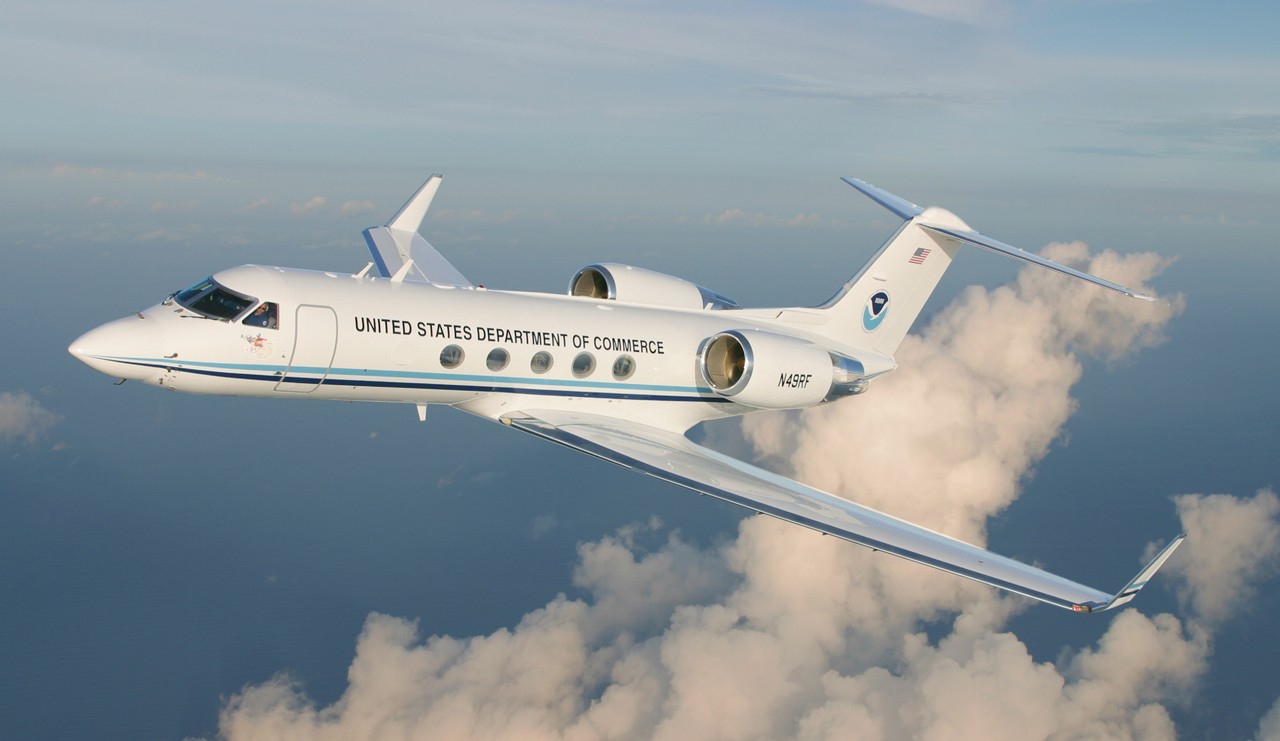
Market Positioning and Development
Gulfstream Aerospace conceived the G350 as a strategic response to competitive pressures in the large-cabin business jet segment. Launched at the National Business Aviation Association convention in Orlando in May 2002, the aircraft represented company President Bryan Moss's vision of delivering G450-level luxury at a $5 million discount, with a list price of $27.5 million. The design philosophy centered on combining the proven G400 fuselage and powerplant with the G450's advanced cockpit technology and liquid crystal displays.
The aircraft emerged from Gulfstream's established GIV family lineage, which began development in March 1983 through collaboration with Grumman. This heritage provided a solid foundation of engineering experience, with the original GIV-SP achieving first flight on September 19, 1985, and certification on April 22, 1987. The G350's development team leveraged this proven platform to create what they positioned as a cost-effective alternative to competitors like the Dassault Falcon 2000EX and Bombardier Challenger 604.
The Manufacturer's Evolution
Gulfstream Aerospace Corporation traces its origins to the late 1950s when Grumman Aircraft Engineering Company developed the original Grumman Gulfstream I at its Bethpage, New York facilities. The company's transformation into an independent entity occurred in 1985 when American businessman Allen Paulson orchestrated a management buyout from Grumman, establishing Gulfstream Aerospace Corporation. General Dynamics acquired the company in 1999, maintaining its status as a wholly-owned subsidiary operating from Savannah, Georgia headquarters.
Since 1958, Gulfstream has delivered more than 2,000 aircraft, establishing itself as a dominant force in business aviation. The company's manufacturing expertise centered in Savannah, where all 11 G350 aircraft were assembled between 2004 and 2012. This facility represented the culmination of decades of aerospace manufacturing evolution, from the company's origins as a Grumman division to its position as General Dynamics' premium business jet subsidiary.
Technical Specifications and Performance
Powering the G350 were two Rolls-Royce Tay turbofan engines from the RB.183 series, the same powerplant configuration that had proven successful across the Gulfstream IV family. These engines enabled the aircraft to achieve a service ceiling of 45,000 feet while supporting coast-to-coast range capabilities throughout North America. The aircraft could execute transcontinental routes such as New York to any North American destination, or international segments like Rio de Janeiro to Miami and Sydney to Singapore.
The cabin configuration typically accommodated 12-14 passengers in executive seating arrangements, with maximum capacity reaching 16 passengers depending on layout specifications. Baggage compartments provided storage for 12 standard suitcases, supporting extended travel requirements for corporate and private operators. The larger cockpit inherited from the G450 featured modern avionics and liquid crystal displays that enhanced pilot situational awareness compared to earlier generation business jets.
Limited Commercial Success
Despite its technical capabilities and competitive pricing strategy, the G350 achieved only marginal commercial success. Production totaled exactly 11 aircraft over its eight-year manufacturing period, representing one of Gulfstream's most limited production runs. This minimal output stood in stark contrast to the broader Gulfstream IV family, which accumulated over 900 deliveries across all variants.
Notable operators included General Motors, which placed a substantial order relative to the aircraft's limited production, and the Mexican National Police, demonstrating the type's versatility for both corporate and government applications. The low production numbers reflected market challenges in differentiating the G350 from its G450 sibling, as customers perceived only marginal improvements despite the significant price reduction.
Operational Legacy
The G350's brief production history highlighted the complexities of targeting niche segments within business aviation. While the aircraft successfully delivered on its promise of large-cabin comfort with mid-range operating economics, market acceptance proved insufficient to sustain long-term production viability. The type never entered military service, unlike other Gulfstream IV family variants that served the U.S. Armed Forces and agencies including the National Oceanic and Atmospheric Administration.
As of recent assessments, few G350 aircraft remain in active service due to the extremely limited production base. The type's rarity has made it a footnote in Gulfstream's otherwise successful product line, serving as a reminder that even well-engineered aircraft require clear market differentiation to achieve commercial viability. The G350's experience influenced Gulfstream's subsequent product development strategies, emphasizing the importance of substantial performance or capability improvements to justify new model introductions in the competitive business jet marketplace.