
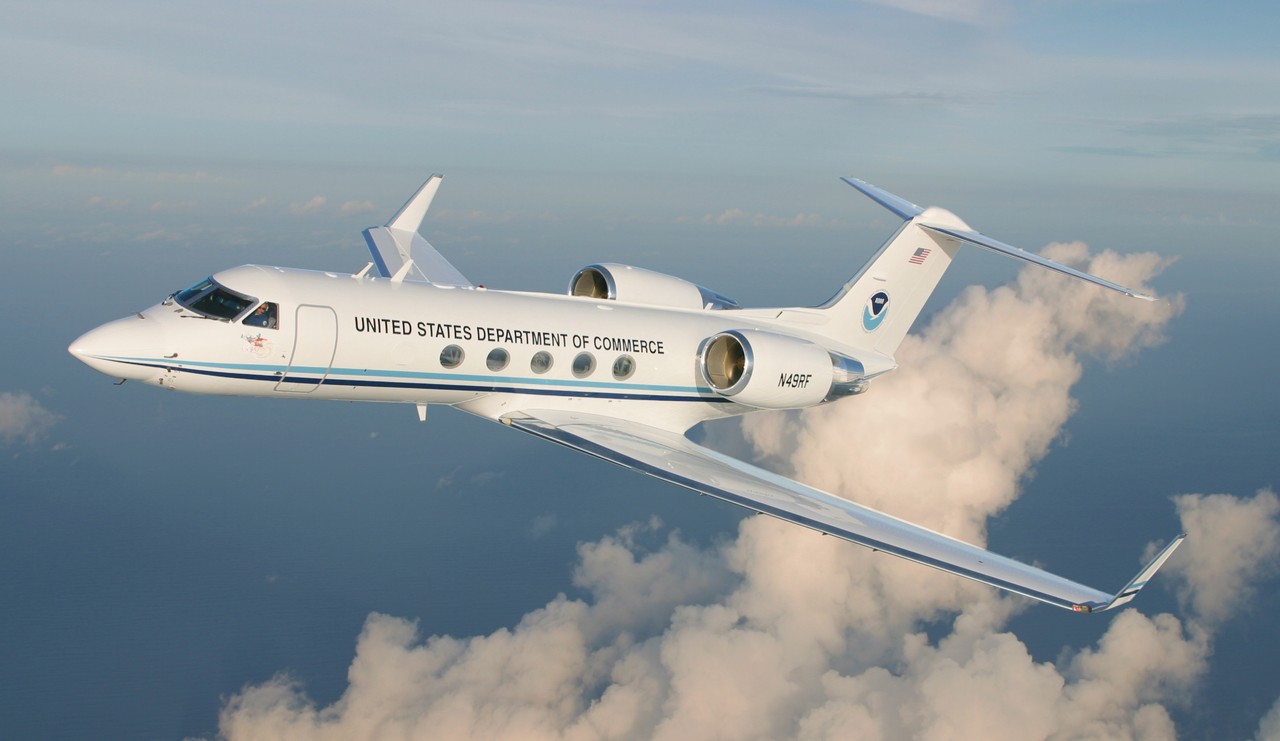
Service History
The G450 dominated the large-cabin business jet market during its 14-year production run, with exactly 365 aircraft delivered between October 2004 and January 19, 2018. As of 2021, 354 G450s remained in active service worldwide, operated primarily by private owners, corporations, charter companies, and fractional ownership programs. The aircraft filled a crucial role in transcontinental business aviation, replacing the aging G400 fleet and setting new benchmarks for range and efficiency in its class.
Unlike smaller business jets confined to regional routes, the G450's 4,328 nautical mile NBAA IFR range with eight passengers enabled non-stop flights across major international routes. Its 1,525 cubic foot cabin provided the spaciousness demanded by corporate executives and high-net-worth individuals for long-haul missions.
The Manufacturer
Gulfstream Aerospace Corporation traces its lineage to 1958 with the original Gulfstream I turboprop, recognized as the world's first purpose-built business aircraft. The company initially collaborated with Grumman Aircraft Engineering Corporation in the 1960s before establishing independence. In 1999, General Dynamics Corporation acquired Gulfstream for $4.8 billion, and since 2001, the company has operated as a wholly-owned subsidiary of General Dynamics.
Headquartered in Savannah, Georgia, Gulfstream has maintained continuous operations for over six decades. The company's manufacturing facility in Savannah produced all 365 G450 aircraft, representing a significant portion of Gulfstream's large-cabin jet output during the 2000s and 2010s.
Engine & Technical Innovation
Two Rolls-Royce Tay MK 611-8C turbofan engines power the G450, each generating 13,850 pounds of thrust. These high-bypass turbofans incorporate Full Authority Digital Engine Control (FADEC) systems, delivering exceptional reliability and fuel efficiency of 401 gallons per hour combined consumption. The Tay engine series, which entered production in the 1980s, accumulated over 30 years of service with more than 7,000 engines built across all variants.
Gulfstream's engineering team designed the G450 as an evolution of the Gulfstream IV family, utilizing the G400 airframe with a G550 nose section and a 12-inch fuselage extension. This represented the first time Gulfstream concurrently developed two new models, sharing advanced systems like the revolutionary PlaneView cockpit between the G450 and G550 programs.
The PlaneView cockpit featured four 14-inch liquid crystal displays and an optional Head-Up Display (HUD), replacing traditional analog instruments with digital flight management systems. Redesigned thrust reversers, nacelles, and pylons improved aerodynamic efficiency while enhancing short-field performance capabilities.
Performance Characteristics
Pilots praised the G450's handling characteristics and operational flexibility. The aircraft achieved a maximum cruise speed of 476 knots (882 km/h) and a long-range cruise speed of 459 knots (850 km/h). Standard crew complement consisted of two pilots, though the spacious cockpit design accommodated extended missions with reduced pilot fatigue.
The G450's performance envelope enabled operations from shorter runways than competing large-cabin jets, expanding airport accessibility for business aviation operators. Advanced avionics reduced pilot workload during complex instrument approaches and weather penetration, contributing to the type's reputation for operational reliability.
Development Timeline
Gulfstream's engineering team began G450 development in the early 2000s, with the first prototype completing its maiden flight on April 30, 2003. The Federal Aviation Administration granted type certification in August 2004, enabling the first customer delivery in May 2005. This compressed development timeline of approximately four years from first flight to service entry demonstrated Gulfstream's engineering maturity and manufacturing efficiency.
The G450 program benefited from lessons learned during G550 development, as both aircraft shared common systems and design philosophies. This parallel development approach reduced costs and accelerated certification schedules for both models.
Production Legacy
With 365 aircraft produced over 14 years, the G450 concluded a remarkable 30-year production run that began with the original Gulfstream IV in the mid-1980s. Combined GIV family production exceeded 900 units, establishing one of business aviation's most successful large-cabin platforms.
New G450 prices ranged from $15 million to $32 million depending on configuration and options. Production ceased in January 2018 as Gulfstream transitioned to next-generation fly-by-wire designs like the G500 and G600, which incorporated technologies pioneered on the G450.
Today, the surviving G450 fleet continues operating worldwide, with many aircraft expected to remain in service for decades due to their robust construction and ongoing support from Gulfstream. The type's legacy lies in bridging traditional business aviation with modern digital cockpit technology, establishing the foundation for contemporary large-cabin jet design.