
Service History
The Fiat G.46 filled a critical role in rebuilding Italy's aviation capabilities following the devastation of World War II. The Italian Air Force (Aeronautica Militare) operated 141 aircraft across multiple variants, using them as primary and intermediate trainers from 1947 until 1958. During this period, the G.46 served as the backbone of Italian pilot training, preparing a new generation of aviators for both military service and civilian aviation careers.
Beyond Italy's borders, the G.46 achieved notable export success. Argentina's Air Force acquired 70 G.46-2B aircraft delivered between 1949 and 1951, while Syria purchased approximately 12 aircraft for their training programs. Austria later operated 5 ex-Italian G.46-4B aircraft starting in 1958, extending the type's operational life across multiple nations.
The Manufacturer
Fabbrica Italiana Automobili Torino (Fiat) established its aviation division in the early 1900s, becoming one of Italy's premier aircraft manufacturers through both world wars. The company produced notable designs including the G.50 fighter during World War II, demonstrating resilience by resuming production immediately after 1945 despite wartime bombing damage to their Turin facilities.
The G.46 represented Fiat's first new single-engine aircraft design in the post-war era, showcasing the company's commitment to peaceful aviation development. Fiat's aviation operations continued until 1969, when the division merged with Aerfer to form Aeritalia. This entity later became Alenia Aeronautica in 1990, ultimately integrating into Leonardo S.p.A. (formerly Finmeccanica) in 2016. Leonardo continues operating today as a major international aerospace corporation.
Design and Development
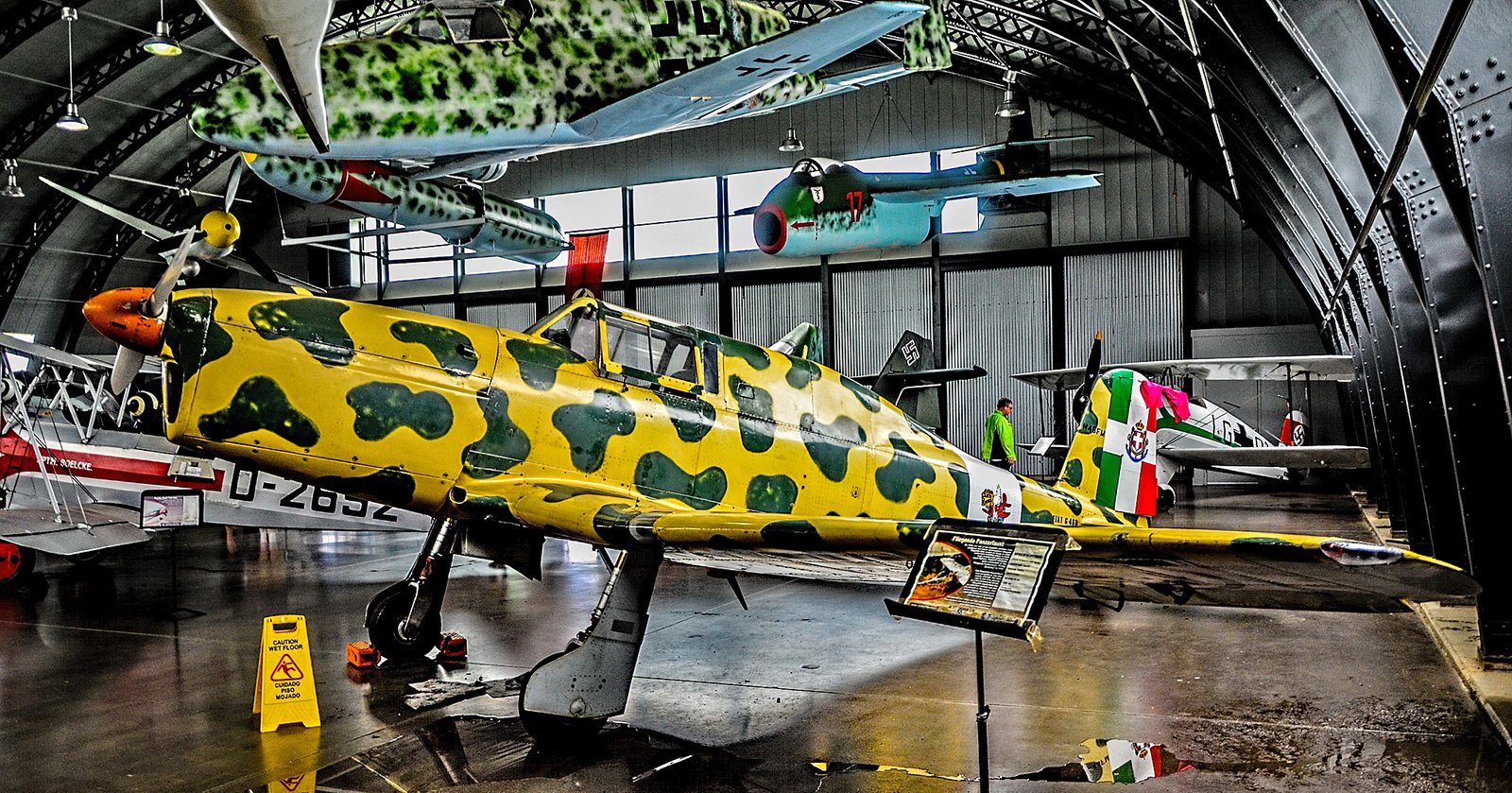
Giuseppe Gabrielli led the G.46's design team, creating an aircraft specifically intended as Italy's first all-metal post-war trainer. The design objectives emphasized safety, excellent visibility, and aerobatic capability suitable for military training requirements. Gabrielli's team developed an innovative cantilever low-wing monoplane with inward-retracting landing gear and a distinctive tandem glazed canopy providing exceptional visibility for both student and instructor.
The first prototype (G.46-1, serial MM52000) completed its maiden flight on June 25, 1947, with test pilot Vittore Catella at the controls. The G.46-3B variant, representing the refined production standard, first flew on October 15 of the same year, incorporating lessons learned from initial flight testing.
Engine and Technical Specifications
The G.46-3B utilized the Alfa Romeo 115ter engine, an inverted six-cylinder liquid-cooled inline powerplant producing 225 horsepower. This engine represented a refined post-war development of Alfa Romeo's aviation engine series, providing reliable power with excellent power-to-weight characteristics essential for training aircraft performance.
Alternative powerplants included the earlier Alfa Romeo 115bis producing 195 horsepower in initial variants, and the de Havilland Gipsy Queen Series 30 generating 250 horsepower for export models. The Gipsy Queen engine, manufactured by de Havilland from the 1930s through 1950s, was renowned for reliability in light aircraft applications.
The G.46-4B variant, representing the ultimate two-seat configuration, achieved a maximum speed of 194 mph and cruising speed of 168 mph. With an empty weight of 2,425 pounds and maximum takeoff weight of 3,109 pounds, the aircraft demonstrated excellent performance characteristics including a service ceiling of 19,850 feet and climb rate of 1,500 feet per minute.
Production and Variants
Fiat manufactured exactly 223 G.46 aircraft between 1947 and 1952 at their Turin facility. Production encompassed multiple variants: 35 G.46-1B aircraft (25 for Italy, 10 for Syria), 82 G.46-2B export models (70 for Argentina, 12 for Syria), 25 G.46-3B aircraft for Italian service, 55 G.46-4B refined trainers, 35 single-seat G.46-4A variants, and one G.46-5B navigation trainer prototype.
The variety of configurations demonstrated the design's flexibility, accommodating different engine installations and operational requirements while maintaining commonality in basic airframe structure and systems.
Legacy and Preservation
Following military retirement in 1958, surviving Italian G.46 aircraft transitioned to civilian aero clubs, continuing training and aerobatic operations. This peaceful second career extended the type's operational life while introducing countless civilian pilots to aviation.
Today, at least one G.46-3B (serial MM52801, built in 1950) remains in civilian hands, having carried multiple registrations including I-AEHU, G-BBII, D-ECCA, and I-GIGE through 2019. Notable museum examples include a G.46-3B displayed at Imperial War Museum Duxford in the United Kingdom and another preserved at Volandia Parco e Museo del Volo in Italy.
The G.46's significance extends beyond mere numbers, representing Italy's successful transition from wartime destruction to peaceful aviation development. As Fiat's first post-war design, it bridged the gap between propeller-driven training aircraft and the emerging jet age, establishing Italy's credibility in international aviation markets through successful exports to four nations.