
Design Innovation and Development
Design work on the Mallard began in December 1944 as Grumman Aircraft Engineering Corporation sought to capitalize on the success of their smaller amphibious aircraft like the Goose and Widgeon. The company's engineers aimed to create a larger commercial transport capable of harbor-to-city operations along routes such as the U.S. eastern seaboard, carrying regional airline passengers in comfort and style.
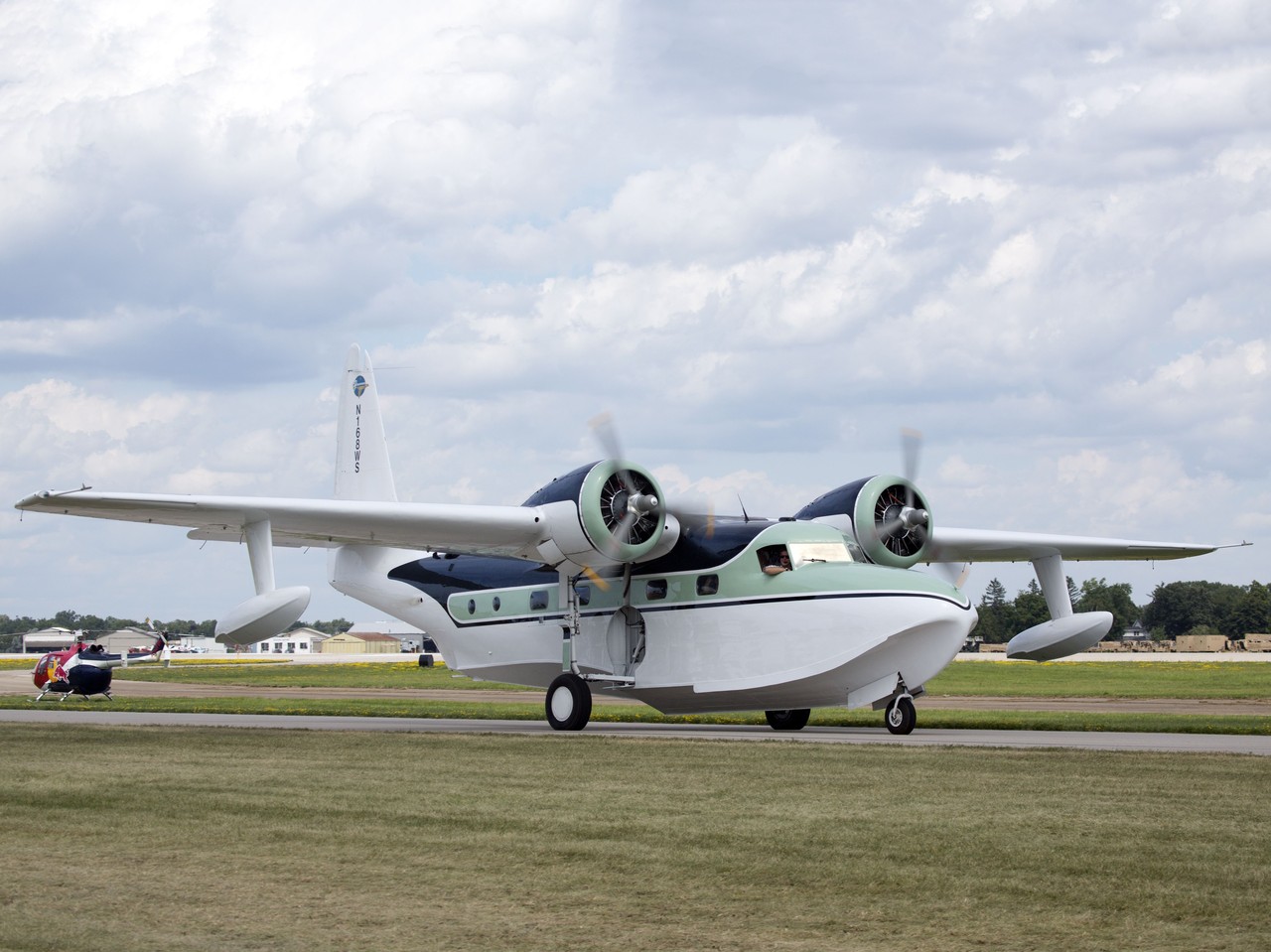
The prototype, registered NX41824, incorporated several groundbreaking features that distinguished it from earlier amphibians. Most notably, the Mallard featured tricycle retractable landing gear instead of the conventional tailwheel arrangement used by its predecessors. The aircraft employed stressed-skin all-metal semi-monocoque construction with flush-riveted alclad sheeting, creating a sleek profile enhanced by a two-step hull design for improved water handling.
Production and Manufacturing
Grounded in wartime experience building rugged naval aircraft, Grumman manufactured all 59 Mallards at their Bethpage, Long Island facility between 1946 and 1951. Each aircraft received construction numbers from J-1 through J-59, representing a relatively small production run that reflected the limited postwar market for amphibious transports.
Grumman Aircraft Engineering Corporation, founded in 1929, had earned the nickname "Iron Works" during World War II for producing exceptionally durable fighters including the F4F Wildcat, TBF Avenger, and F6F Hellcat. The company operated under this name until 1976, when it became Grumman Aerospace Corporation, eventually merging with Northrop in 1994 to form today's Northrop Grumman.
Powerplant and Performance
Each Mallard was powered by two Pratt & Whitney R-1340-S3H1 Wasp H nine-cylinder air-cooled radial engines, each producing 448 kilowatts (600 horsepower). These exceptionally reliable powerplants, which had entered production in the 1920s, contributed significantly to the Mallard's strong reputation among pilots. The R-1340 series remained in production for over three decades, with tens of thousands manufactured for various aircraft from the Boeing P-26 Peashooter to early commercial airliners.
The aircraft's high-wing configuration incorporated underwing floats for stability on water, while wingtip fuel tanks provided extended range for regional operations. This combination delivered the versatility operators needed for short-haul services connecting waterfront cities with conventional airports.
Operational Service
Unlike many postwar aircraft, the Mallard found limited success in scheduled airline service due to competition from surplus military transports. Instead, most examples served in executive, corporate, and specialized commuter roles. The first delivery occurred on September 27, 1946, when Porcupine Mills of Canada took delivery of CF-BKE.
Trans Australia Airlines acquired VH-TGA in 1963 for planned 'Coralair' services connecting Mackay to Brampton Island, Queensland, though regulatory approval was never obtained. More successful operations included Utah Williamson Burnett's use of ZK-CDV for hydro project transport in New Zealand, and Texaco's corporate transport designated "Texaco 76" operating from Houma, Louisiana.
Paspaley Pearling of Darwin, Australia, operated three Mallards well into the 1990s, demonstrating the type's longevity in specialized roles. These aircraft served the company's remote pearl farming operations, accessing locations where conventional aircraft could not operate.
Military Applications
The Mallard saw virtually no military service, having been designed specifically for civilian operations. Only two examples were delivered to military operators: both went to the Egyptian Air Force Royal Flight for VIP transport duties. One reportedly became King Farouk's preferred aircraft, though both served essentially civilian roles despite their military ownership.
Turboprop Conversions and Modern Legacy
Starting in 1967, Frakes Aviation began converting Mallards to turboprop power using Pratt & Whitney Canada PT6A engines. Twelve aircraft received certification as G-73T Turbo Mallards, with additional conversions completed in Australia. These modifications increased passenger capacity to as many as 17 while dramatically improving performance and reliability.
As of early 2017, only four Mallards remained registered in Australia, with three still operated by Paspaley Pearling. Approximately 32 examples remained on the U.S. register, many having received turboprop conversions that extended their operational lives well beyond the original piston-powered configuration.
In 2014, Mallard Aircraft Company of Cleburne, Texas, proposed restarting production as the G-73T with PT6A engines configured for 9 to 17 passengers, though this ambitious plan did not materialize. The surviving aircraft serve as testament to Grumman's reputation for structural integrity, with many examples rebuilt after severe damage and returned to service.
The Mallard represents Grumman's only venture into purely civilian aviation, bridging the gap between the smaller Goose and larger Albatross in the company's lineup of "aquatic birds." While production numbers remained modest, the type's successful adaptation to turboprop power demonstrates the fundamental soundness of its 1940s design philosophy.