
Service History
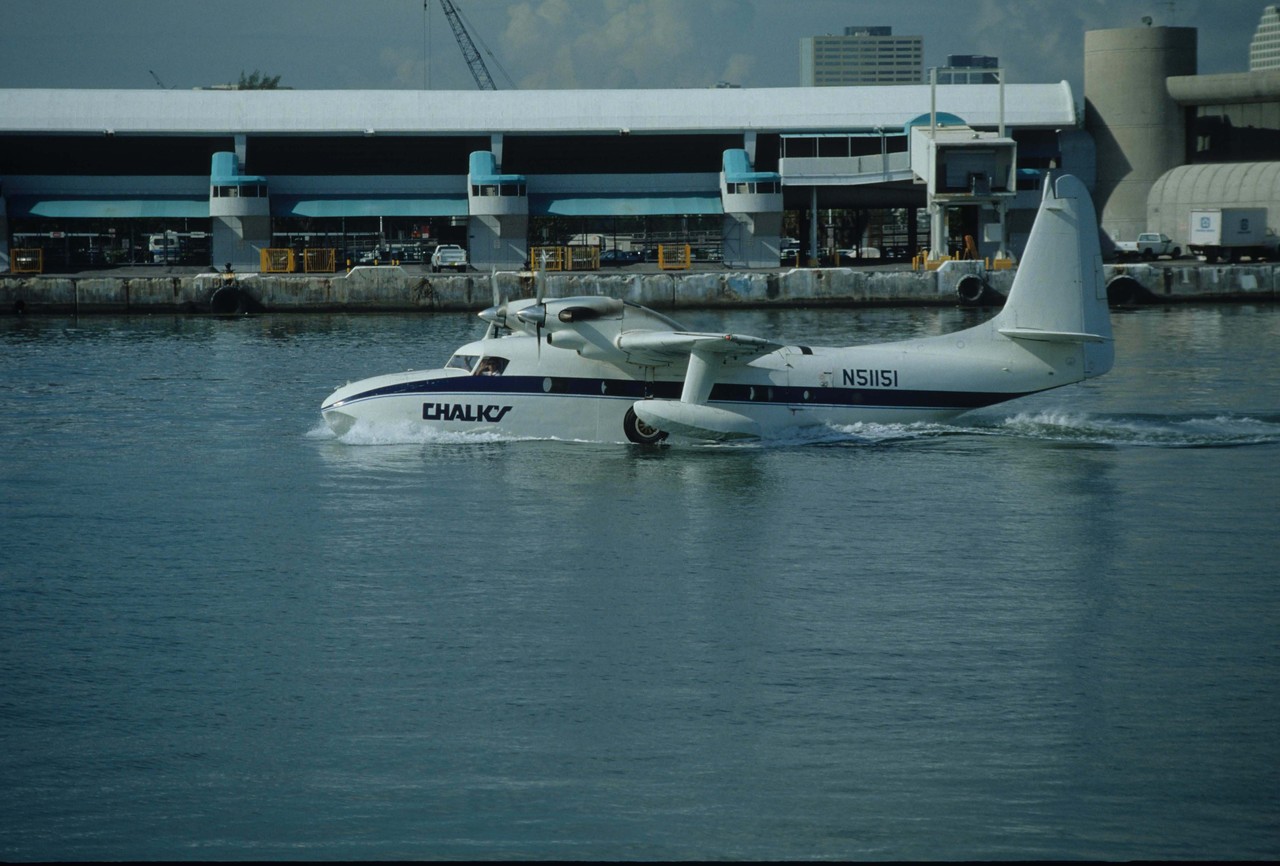
While Grumman's original G-73 Mallard production ended in 1951 after just 59 aircraft, the type found renewed purpose through turboprop conversion programs that began two decades later. Frakes Aviation of Cleburne, Texas, led this revival by converting 12 Mallards to G-73T standard, while Chalk's Airlines modified three additional aircraft in the early 1980s under FAA supplemental type certificate SA2323WE. These conversions increased passenger capacity from the original 10 to 17 seats, extending the operational life of aircraft that had primarily served corporate flight departments rather than the regional airline market originally envisioned.
The Manufacturer
Grumman Aircraft, known during wartime as the "Iron Works" for their rugged construction methods, began developing the Mallard in December 1944 as the largest of their amphibious aircraft family. The company had established expertise with smaller amphibians like the Goose and Widgeon, but the Mallard represented their most ambitious civilian design. Grumman's robust engineering philosophy proved prescient, as many Mallards survived serious damage throughout their service lives, enabling the restoration and conversion programs that would follow decades later. The company's reputation for durability became a key factor in the aircraft's longevity and continued operation well into the 21st century.
Engine & Technical Innovation
The transformation from piston to turbine power marked the most significant change in the G-73T's development. Original Mallards employed two Pratt & Whitney R-1340 radial engines producing 600 horsepower each, but the Turbo Mallard conversions utilized Pratt & Whitney PT6A-34 turboprops generating 750 shaft horsepower per engine. This powerplant upgrade increased maximum gross weight from 12,750 to 14,000 pounds while providing superior performance at altitude and enhanced reliability over the aging radial engines.
Grumman's original design incorporated several advanced features for 1946, including tricycle landing gear, stressed-skin construction, and a sophisticated two-step hull optimized for water operations. Unlike their smaller amphibians, the Mallard featured wingtip fuel tanks and underwing floats positioned beneath the high-mounted wings, creating a stable platform for both land and water operations.
Pilot Perspective
Pilots praised the original R-1340 engines for their proven reliability, a reputation that transferred to the turboprop conversions with even greater enthusiasm. The PT6A engines provided smoother operation, reduced maintenance requirements, and consistent power delivery across varying altitudes and weather conditions. The aircraft's tricycle gear configuration simplified ground handling compared to conventional tailwheel amphibians, while the two-step hull design enabled predictable water takeoffs and landings.
Operational pilots noted the Mallard's forgiving flight characteristics and robust construction, traits inherited from Grumman's military aircraft experience. The high-wing configuration provided inherent stability, while the amphibious capability offered operational flexibility unavailable to conventional aircraft of similar size and capacity.
Production & Legacy
With only 59 original aircraft manufactured between 1946 and 1951, the Mallard represented a limited production run that reflected post-war market realities. Surplus military transports and the rapid expansion of conventional airports reduced demand for expensive amphibious aircraft in commercial service. The type found its primary market among corporate operators who valued the flexibility of land-and-water operations.
Today, approximately 32 Mallards remain on the United States registry, with additional examples operating internationally. The turboprop conversion programs of the 1970s and 1980s provided many aircraft with extended service lives, transforming aging piston-powered transports into modern turbine aircraft capable of competing with contemporary designs.
The G-73T conversions proved that specialized modification programs could successfully modernize classic designs for continued service. Frakes Aviation's engineering work demonstrated the viability of turboprop conversions for aging piston aircraft, a concept later applied to numerous other types. The Mallard's continued operation decades after production ceased reflects both Grumman's original engineering excellence and the effectiveness of modern powerplant upgrades in extending aircraft service lives.
The surviving fleet serves diverse roles from corporate transport to specialized cargo operations, with the amphibious capability remaining valuable for accessing remote locations unavailable to conventional aircraft. This operational flexibility, combined with the reliability improvements provided by turboprop conversion, ensures the G-73T Turbo Mallard's continued relevance in specialized aviation markets.