
Design and Development
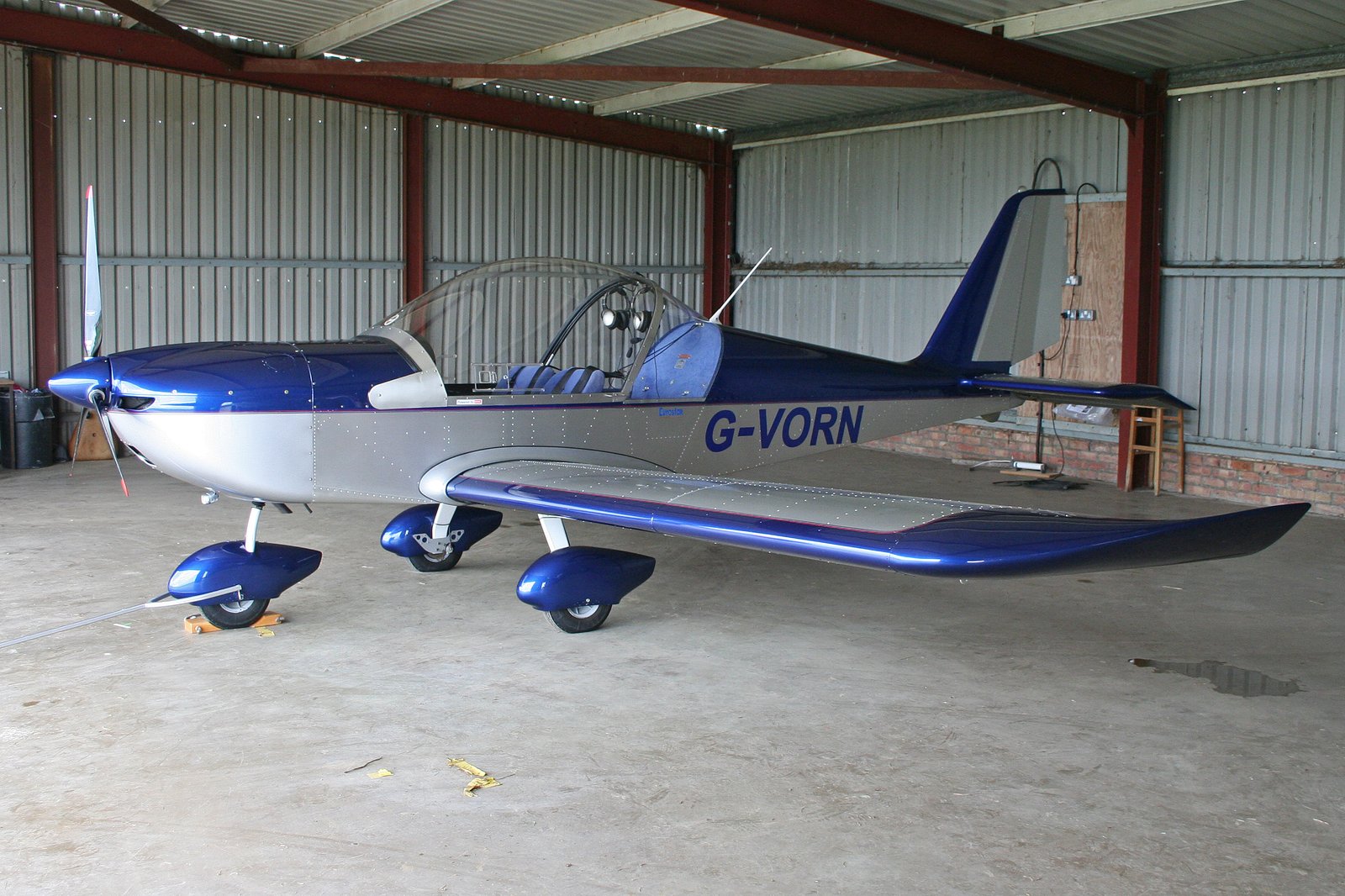
Designed by Stefan Kohl, the G-97 Spotter was conceived as a high-visibility observation aircraft capable of operating as either an ultralight kit or a certified light aircraft. Design work commenced in June 1997, with the prototype's construction beginning in November of that year. The prototype first flew in June 1998, powered by a 47.8 kW (64.1 hp) Rotax 582 engine. To maximize utility for surveillance, the aircraft features a side-by-side two-seat cockpit with an all-transparent nose section and a pusher propeller, which eliminates forward obstructions and reduces cabin noise. The airframe is predominantly all-metal, though the elevator and rudder utilize composite or non-metal construction. Its cantilever wing design further enhances aerodynamics and visibility by removing external bracing.
Production and Manufacturer History
The aircraft was produced by S.A.I. Aeronautica s.r.l. in Italy. Production of the first series aircraft began in September 2000. A certified lightplane version, the G-97V, made its public debut at Aero ’01 in Friedrichshafen in April 2001, subsequently completing its first flight on May 15, 2001. Manufacturing in Italy was limited, with approximately 30 airframes delivered by mid-2003 to operators in Italy, Spain, the United States, South Africa, and South America. Italian production ceased in the early 2000s, and the design lineage subsequently evolved into the Kohl Mythos, German Aircraft Sky-Maxx, and OMM M-7 Servator.
Technical Specifications and Powerplants
The standard G-97V is powered by a BRP-Rotax GmbH & Co. KG Rotax 912 UL, a four-cylinder, four-stroke horizontally-opposed engine producing 59.6 kW (79.9 hp), paired with a 1.44 m Tonini two-blade wooden propeller. Later variants offered increased power through the Rotax 912S (73.5 kW / 98.6 hp) or the Hirth 3701ES (74.0 kW / 99 hp), with some aircraft utilizing a three-blade Helix propeller. The aircraft has a wingspan of 8.2 to 8.25 meters and a maximum take-off weight of 500 kg. Early models featured two wing leading-edge integral fuel tanks with a 70-liter capacity (66 liters usable), which was increased to 90 liters in later versions. According to ICAO Doc 8643, the aircraft is capable of a maximum range of 430 nautical miles.
Service and Legacy
While not intended for military use, the G-97 was targeted at police and civil protection agencies for aerial surveillance, as well as private users for flight training and recreational flying. Its legacy persists through its derivatives, which are used for cattle mustering, forestry, and agricultural research. Although no official census of surviving aircraft exists, records from the Aviation Safety Network indicate that G-97 Spotters remained active in Italy as late as February 2020.