
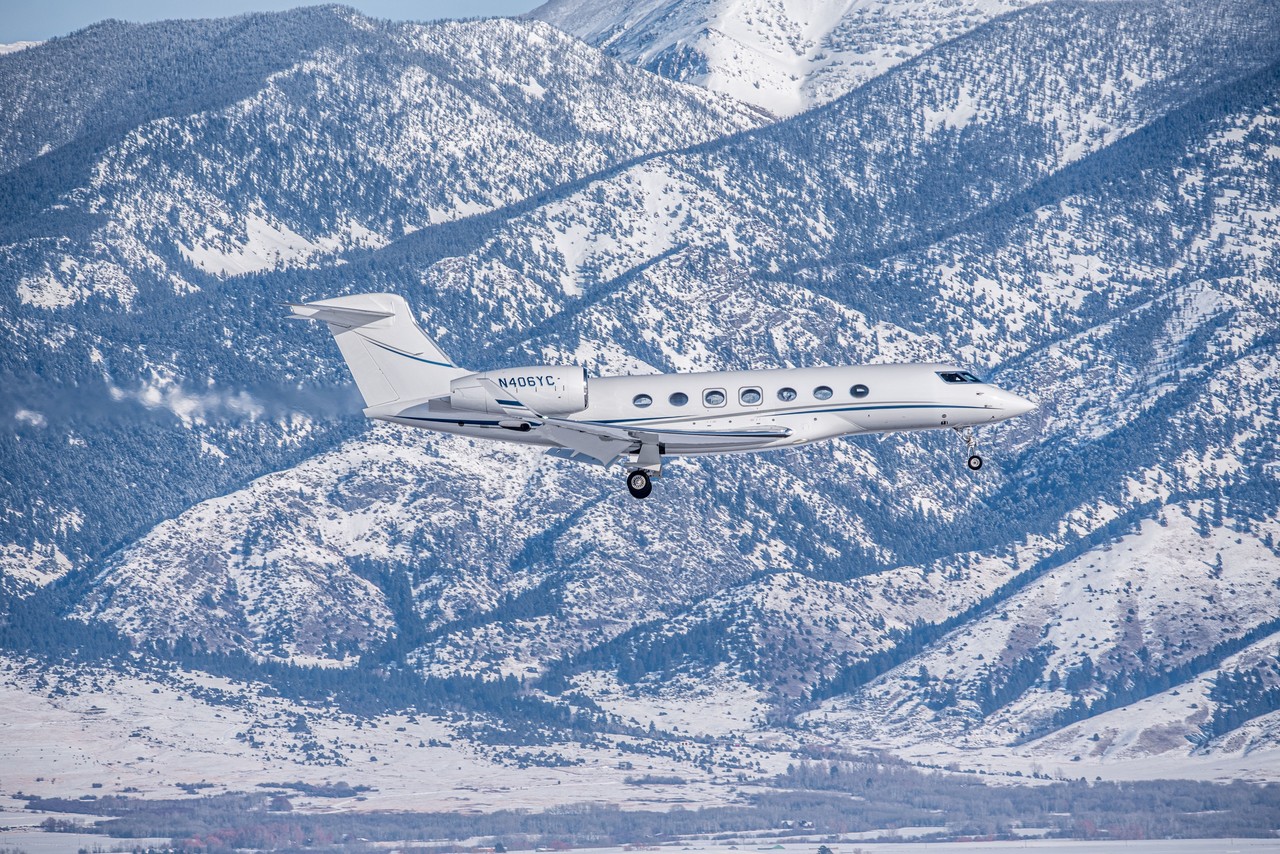
Revolutionary Business Aviation
The G500 emerged as Gulfstream's answer to growing demands for longer range and higher speed in the large-cabin business jet market. When unveiled on October 14, 2014, the aircraft promised to bridge the gap between mid-size and flagship jets, offering airlines and private operators unprecedented performance in its class.
Service History
Since entering service with its first delivery on September 27, 2018, to a Savannah-based customer, the G500 has captured significant market share among ultra-high-net-worth individuals and charter operators. TAG Aviation Malta Ltd operates multiple examples, including 9H-MRV delivered in 2018, representing the aircraft's strong presence in European charter markets. Qatar Airways expressed acquisition interest in July 2019, highlighting the type's appeal to commercial operators seeking premium passenger service capabilities.
With at least 60 aircraft built by 2022, production continues at steady rates, indicating sustained market demand for the G500's combination of speed, range, and passenger capacity. The aircraft serves primarily private owners and charter companies, with no military variants developed.
The Manufacturer
Gulfstream Aerospace Corporation traces its heritage to the Grumman Gulfstream I, the world's first purpose-built business jet that achieved first flight in 1958. The company established its Savannah, Georgia manufacturing facility on September 29, 1967, initially employing 100 workers for Gulfstream II production, later expanding to 1,700 employees.
The corporate lineage includes acquisition by American Jet Industries in 1982, followed by LTV Aerospace in 1985, before General Dynamics purchased the company in 1985. Since 1999, Gulfstream has operated as a General Dynamics subsidiary, maintaining its position as a leading business jet manufacturer. The company produced 200 Gulfstream I aircraft over 11 years, establishing the foundation for subsequent models including the G500.
Engine & Technical Innovation
Pratt & Whitney Canada PW814GA high-bypass turbofans power the G500, representing the latest evolution in fuel-efficient business jet propulsion. These engines enable the aircraft's impressive performance envelope, including Mach 0.905 high-speed cruise capability over 4,500 nautical miles and maximum speeds reaching Mach 0.925.
The G500 introduced several technological firsts to Gulfstream's lineup, including active control side-sticks, advanced touchscreen avionics, and enhanced cabin environmental systems providing complete air renewal every two minutes. The aircraft achieved service ceiling capability of Flight Level 530, placing it among the highest-performing business jets in operation.
Five prototype aircraft accumulated more than 4,955 flight test hours during development, with one test aircraft achieving Mach 0.995 during high-speed trials. This extensive testing program validated the aircraft's structural integrity and performance characteristics across its operational envelope.
Pilot Perspective
The G500 requires a two to three-person crew, depending on mission requirements and operator preferences. Pilots appreciate the aircraft's fly-by-wire flight controls, representing Gulfstream's first implementation of this technology, which reduces pilot workload and enhances safety margins.
Cruise performance varies with mission profile: high-speed cruise delivers 4,500 nautical mile range at Mach 0.905, while long-range cruise extends capability to 5,200 nautical miles at Mach 0.85. The aircraft's operational ceiling of 51,000 feet allows efficient flight above most weather and airline traffic.
Advanced Enhanced Flight Vision Systems enable approaches to 1,000-foot visibility minimums, expanding operational flexibility compared to conventional business jets. The spacious cabin accommodates up to 19 passengers across three distinct living areas, providing airline-level comfort for transcontinental and transoceanic missions.
Production & Legacy
The G500 achieved a significant aviation milestone by receiving simultaneous FAA type certificate and production certificate approval on July 20, 2018, streamlining the certification process for future Gulfstream models. This regulatory achievement demonstrated the aircraft's design maturity and manufacturing readiness.
Serial numbers beginning with "7" distinguish current G500 production from an earlier, unrelated G-500 model produced from 2006 to 2008. That previous aircraft, a reduced-fuel-capacity G550 variant, achieved only nine deliveries before cancellation due to poor market reception.
The modern G500's success stems from its optimal positioning between Gulfstream's mid-size and flagship offerings, providing G600 and G700-level technology in a more accessible package. Its advanced systems and performance capabilities established the foundation for Gulfstream's current large-cabin jet family, ensuring continued relevance in the competitive business aviation market.
All G500 aircraft manufactured at Gulfstream's Savannah facility continue the company's four-decade Georgia manufacturing tradition, supporting local employment while serving global markets. The aircraft's ongoing production reflects sustained demand for high-performance business jets among corporations and private operators worldwide.