
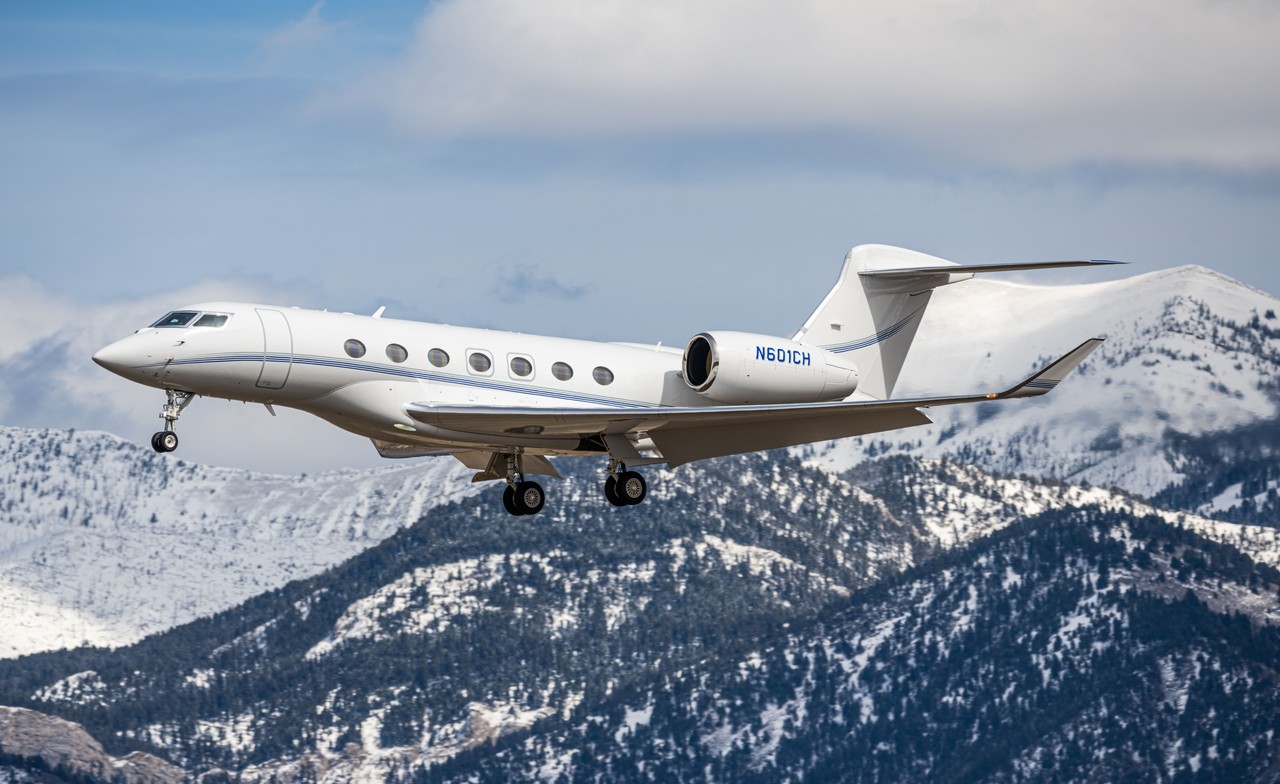
Market Dominance and Service History
Since entering service in August 2019, the G600 has captured a significant portion of the ultra-long-range business jet market, with approximately 188 aircraft delivered to corporate operators worldwide. Major operators include Enterprise Rent-A-Car, The Coca-Cola Company, Altria, and Jet Aviation, demonstrating the aircraft's appeal across diverse business sectors. The G600's ability to connect city pairs like New York to Dubai at near-supersonic speeds while maintaining exceptional fuel efficiency has revolutionized executive travel, reducing flight times compared to its predecessors while cutting operational costs.
The Manufacturer
Gulfstream Aerospace traces its origins to 1958 as Grumman Gulfstream, when it began developing high-speed business jets with the original Gulfstream I. The company evolved through strategic acquisitions, with General Dynamics purchasing it in 1999 for $4.8 billion before selling it to a consortium led by The Carlyle Group in 2001. General Dynamics reacquired Gulfstream in 2023, maintaining its position as a leading manufacturer of ultra-long-range business aircraft. All G600 production takes place at Gulfstream's advanced manufacturing facility in Savannah, Georgia, where the company has invested heavily in automated production systems.
Engine and Technical Innovation
The G600's twin Pratt & Whitney Canada PW815GA turbofan engines each deliver 15,144 pounds of thrust, featuring advanced technologies including a 10-stage high-pressure compressor and single-annular pre-swirl combustor for reduced emissions. These engines incorporate full-authority digital engine control (FADEC) systems for enhanced reliability and reduced pilot workload. Initially, engine nacelles were supplied by Nordam until Gulfstream acquired the company following its bankruptcy on October 1, 2018, bringing critical supply chain components in-house.
The aircraft's Gulfstream Symmetry Flight Deck represents a significant advancement in business aviation avionics, featuring active control sidesticks and advanced flight management systems. The G600 became the first business jet certified for Enhanced Flight Vision System (EFVS) approaches to 1,000-foot runway visual range using only visual cues, achieved after completing 50 test landings during certification trials.
Design Excellence and Performance
Gulfstream's engineering team designed the G600 as a clean-sheet aircraft to replace the G450 and G550 models, emphasizing improved range, efficiency, and passenger comfort. The aircraft's highly efficient wing design enables sustained cruise speeds of Mach 0.90, placing it among the fastest business jets in its class. The spacious cabin measures 45 feet 2 inches in length, 7 feet 7 inches in width, and 6 feet 2 inches in height, configured in four distinct zones to accommodate up to 19 passengers in various seating arrangements.
Operating at altitudes up to 51,000 feet, the G600 can overfly most commercial traffic and adverse weather, contributing to its exceptional dispatch reliability. The aircraft's 6,600-nautical-mile range enables nonstop flights between major business centers worldwide, including routes like London to Singapore or Los Angeles to Geneva.
Certification and Production Legacy
The Federal Aviation Administration granted type and production certification on June 28, 2019, following an extensive flight test program that began with the first flight of test aircraft N600G from Savannah/Hilton Head International Airport. The European Aviation Safety Agency certified the first G600 for European operations in December 2020, with delivery to an Austrian operator marking the aircraft's international expansion.
Continued production through 2024 and beyond demonstrates sustained market demand, with recent data indicating approximately 5 percent of the active fleet available for resale, suggesting strong residual values. The G600's technological innovations, particularly in avionics and engine efficiency, have influenced the design of subsequent Gulfstream models including the G400 and G500, cementing its role as a cornerstone of modern business aviation development.