
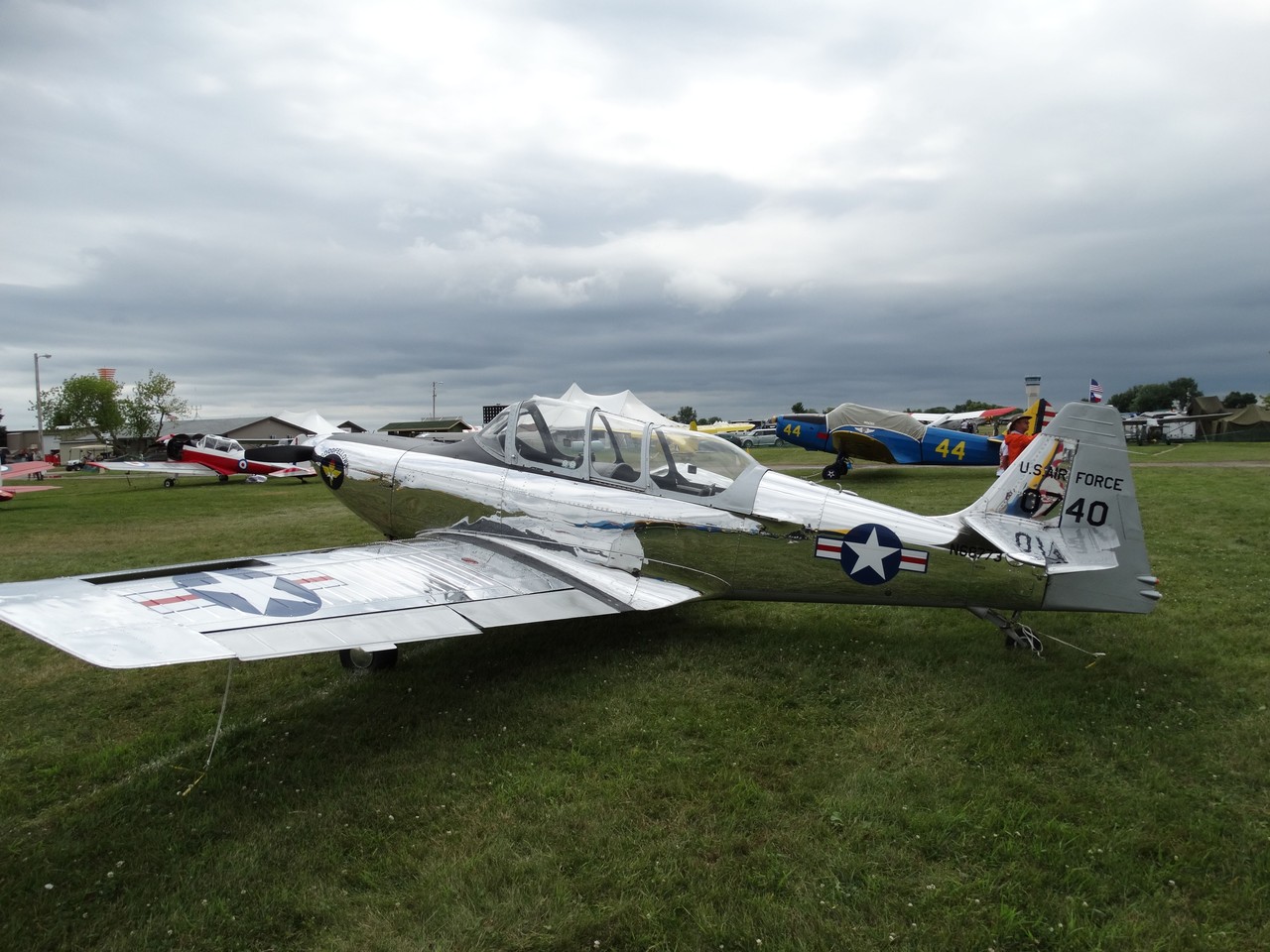
Design Innovation and Development
The Swift emerged from the visionary leadership of K.H. "Bud" Knox, who spearheaded the redesign of this all-metal aircraft at Globe Aircraft Corporation. Founded by Fred N. Kennedy in Fort Worth, Texas, Globe targeted the anticipated post-war boom in civilian aviation with orders exceeding one million dollars. The prototype GC-1A represented a significant departure from typical fabric-covered aircraft of the era, featuring an all-metal monocoque fuselage and hydraulically retractable tricycle landing gear that folded inward into the fuselage.
The aircraft's most distinctive features included butterfly doors that provided access to an unusually spacious 42-inch-wide cockpit, far exceeding the cramped quarters typical of contemporary two-seat aircraft. Engineers incorporated oleo-pneumatic shock absorption and a full-swiveling tailwheel, advanced features that distinguished the Swift from its competitors. However, an angular fuselage break positioned aft of the cockpit, while accelerating production processes, inadvertently increased aerodynamic drag.
Production History and Market Challenges
Globe received certification for the GC-1A variant on May 7, 1946, immediately beginning production of 408 units powered by the 85-hp Continental C85-8 four-cylinder engine. The improved GC-1B variant followed with certification on September 22, 1946, featuring the more powerful 125-hp Continental C125 six-cylinder horizontally opposed engine. This upgrade addressed performance shortcomings in short-field operations and ground handling that had plagued the original design.
More than 40 dealers lined up to sell the Swift, reflecting enormous enthusiasm for the sleek design. Globe produced 503 GC-1B aircraft before financial difficulties overwhelmed the company. The post-war aviation market, initially flush with optimism and capital, quickly became oversaturated as manufacturers overestimated demand. By late 1946, unsold aircraft accumulated in lots across the country, and Globe entered insolvency by late 1947.
TEMCO Acquisition and Continued Production
Texas Engineering & Manufacturing Company (TEMCO), Globe's largest creditor, acquired the type certificate, manufacturing tooling, parts inventory, and production rights for $328,000 in 1947. TEMCO relocated production to their Grand Prairie, Texas facility and achieved remarkable manufacturing efficiency, producing up to 15 aircraft per day during peak production periods in 1947. The company manufactured 329 GC-1B aircraft during this intensive six-month period.
TEMCO continued Swift production until 1951, adding another 260 GC-1B units to bring total production to approximately 1,093 GC-1B aircraft. Combined with the original 408 GC-1A models, total Swift production reached 1,501 aircraft. TEMCO eventually ceased production due to persistent market oversupply, mounting financial losses, and a broader slowdown in the general aviation sector that had begun shortly after the war's end.
Technical Specifications and Performance
The GC-1A variant achieved a cruise speed of 120 mph despite its modest 85-hp Continental C85-8 powerplant, demonstrating exceptional aerodynamic efficiency for its era. The aircraft carried a gross weight of 1,570 pounds and featured the then-uncommon retractable tricycle landing gear configuration. The GC-1B's upgraded 125-hp Continental C125 engine improved both cruise performance and climb capability while increasing gross weight to 1,710 pounds.
Both variants utilized Continental's reliable horizontally opposed piston engines, manufactured by Continental Motors (later Teledyne Continental Motors). These engines powered thousands of training and civilian aircraft from the 1930s through the 1970s, earning reputations for dependability in light aircraft applications. The GC-1B incorporated additional improvements including hydraulic brakes, a high-low pitch propeller, and a steerable tailwheel that enhanced ground operations.
Notably, neither Swift variant received approval for intentional spins, limiting their utility for aerobatic training despite otherwise impressive performance characteristics.
Legacy and Preservation
Following TEMCO's withdrawal from Swift production, the type certificate passed through several hands, eventually reaching Universal Aircraft Industries (later Univair), which manufactured spare parts until 1979. The Swift Museum Foundation, under the leadership of Charlie Nelson, acquired the type certificate in 1979 and continues supporting the remaining fleet through parts production and technical expertise.
The Swift's legacy reflects both the innovative spirit and harsh commercial realities of post-World War II general aviation. While the aircraft demonstrated that exceptional performance could be achieved with modest power through careful aerodynamic design, it also illustrated the manufacturing risks inherent in overestimating market demand. An active enthusiast community continues preserving and operating surviving examples, maintaining the Swift's presence at airshows and fly-ins nationwide.
Neither Globe Aircraft Corporation nor TEMCO exists as independent entities today. TEMCO merged into larger aerospace corporations and shifted focus to military contracts during the Korean War period, while Globe simply ceased operations following its insolvency. The Swift remains a testament to ambitious engineering constrained by economic realities, representing both the promise and perils of the immediate post-war aviation boom.