
Service History
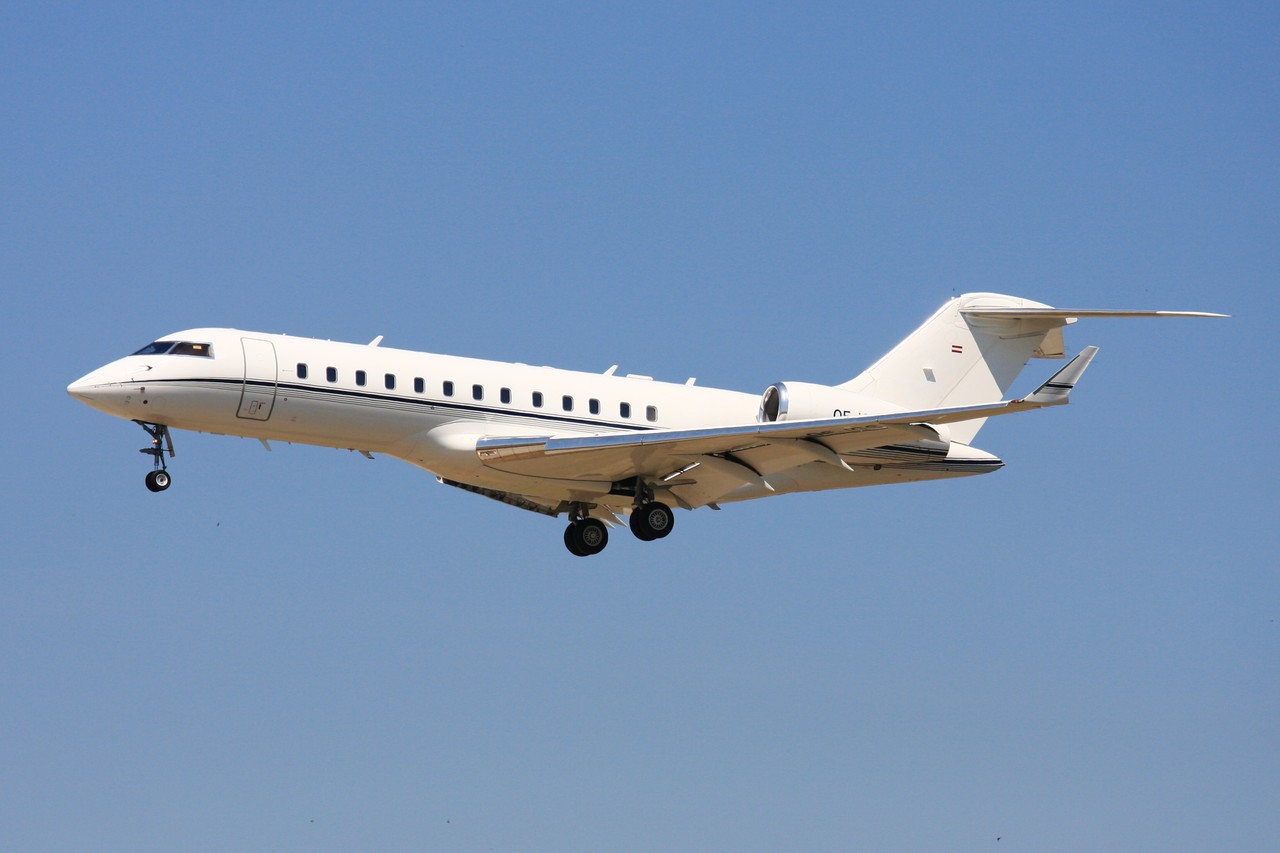
The Global 6000 transformed business aviation by enabling nonstop 12-hour flights connecting previously unreachable city pairs, such as direct routes between North and South America or Europe to Southeast Asia and Australia. With 338 aircraft built since production began in 2012, the type captured significant market share in the ultra-long-range business jet segment. As of 2024, 329 aircraft remain operational worldwide, with half registered in North America, primarily in the United States, while others operate from bases in the Isle of Man, Cayman Islands, Europe, Asia, and South Africa.
Private owners, charter companies, and corporations utilize the Global 6000 for intercontinental missions that would otherwise require fuel stops or airline connections. The aircraft's ability to maintain productivity during long flights, combined with its exceptionally quiet cabin, made it the preferred choice for executives conducting business across multiple time zones.
The Manufacturer
Bombardier Aerospace developed the Global 6000 as part of its evolution from a snowmobile manufacturer into a major aerospace company. Under Laurent Beaudoin's leadership beginning in 1966, Bombardier went public and pivoted after the 1970s oil crisis, securing contracts for Montreal and New York City subway systems. The company entered aviation in 1989 with the Canadair Regional Jet, which received certification in 1992, and subsequently acquired Learjet in 1990 and de Havilland in 1992.
Despite facing financial challenges that led to the sale of its commercial aviation division, Bombardier continues operating its business jet division under the original company name. The Toronto, Ontario manufacturing facility produces the Global series, building on decades of experience in advanced composite construction and fly-by-wire systems.
Engine & Technical Innovation
Two Rolls-Royce BR710A2-20 turbofan engines power the Global 6000, each providing the thrust necessary to achieve the aircraft's impressive performance specifications. These engines feature 8,000-hour overhaul intervals and operating costs of approximately $400 per hour per engine, contributing to the aircraft's operational efficiency. The powerplants enable cruise speeds of Mach 0.90 and provide exceptional performance in turbulent conditions.
The Global 6000's design incorporated advanced wing technology optimized for smooth rides in rough air, combined with improved acoustical insulation that creates one of the quietest cabins in business aviation. The Honeywell Primus 2000 XP glass cockpit reduces pilot workload while providing comprehensive flight management capabilities. Bombardier achieved the longest maintenance intervals among competitors in this class, reducing operational disruptions for owners and operators.
Cabin Configuration & Performance
The aircraft accommodates 13 to 19 passengers in a three-zone cabin measuring 48 feet 35 inches in length, 8 feet 17 inches in width, and 6 feet 25 inches in height. Front and rear lavatories serve passengers during long flights, while the spacious interior permits various seating configurations including conference areas, sleeping quarters, and entertainment zones.
With a maximum takeoff weight of 99,500 pounds and useful load of 47,520 pounds, the Global 6000 requires 6,476 feet for takeoff while needing only 2,670 feet for landing. The aircraft maintains its 6,000-nautical-mile range at Mach 0.85 cruise speed, with a service ceiling exceeding 25,000 feet. Typical crew requirements include two to three pilots depending on flight duration and regulatory requirements.
Production Legacy
The Global 6000 evolved from the original Global Express announced in October 1991 and represented a significant upgrade over the Global Express XRS, which saw 163 units delivered between 2004 and 2012. Bombardier announced the Global 6000 improvements in May 2011, focusing on enhanced range, reduced noise, and increased passenger comfort.
Production ceased around 2021 as Bombardier transitioned to the next-generation Global 6500, which achieved first flight on January 31, 2018, and received certification in 2019 with more efficient Rolls-Royce Pearl engines. The Global Express family, including all variants, accumulated more than 400 deliveries, establishing Bombardier as a leader in ultra-long-range business aviation.
Current market values for Global 6000 aircraft range from $17.9 million to $33.9 million, with approximately 4 percent of the fleet available for sale at any given time. The type's significance lies not in museum preservation but in its continued operational service, connecting business centers worldwide and maintaining Bombardier's reputation for building aircraft capable of the longest nonstop flights in business aviation.