
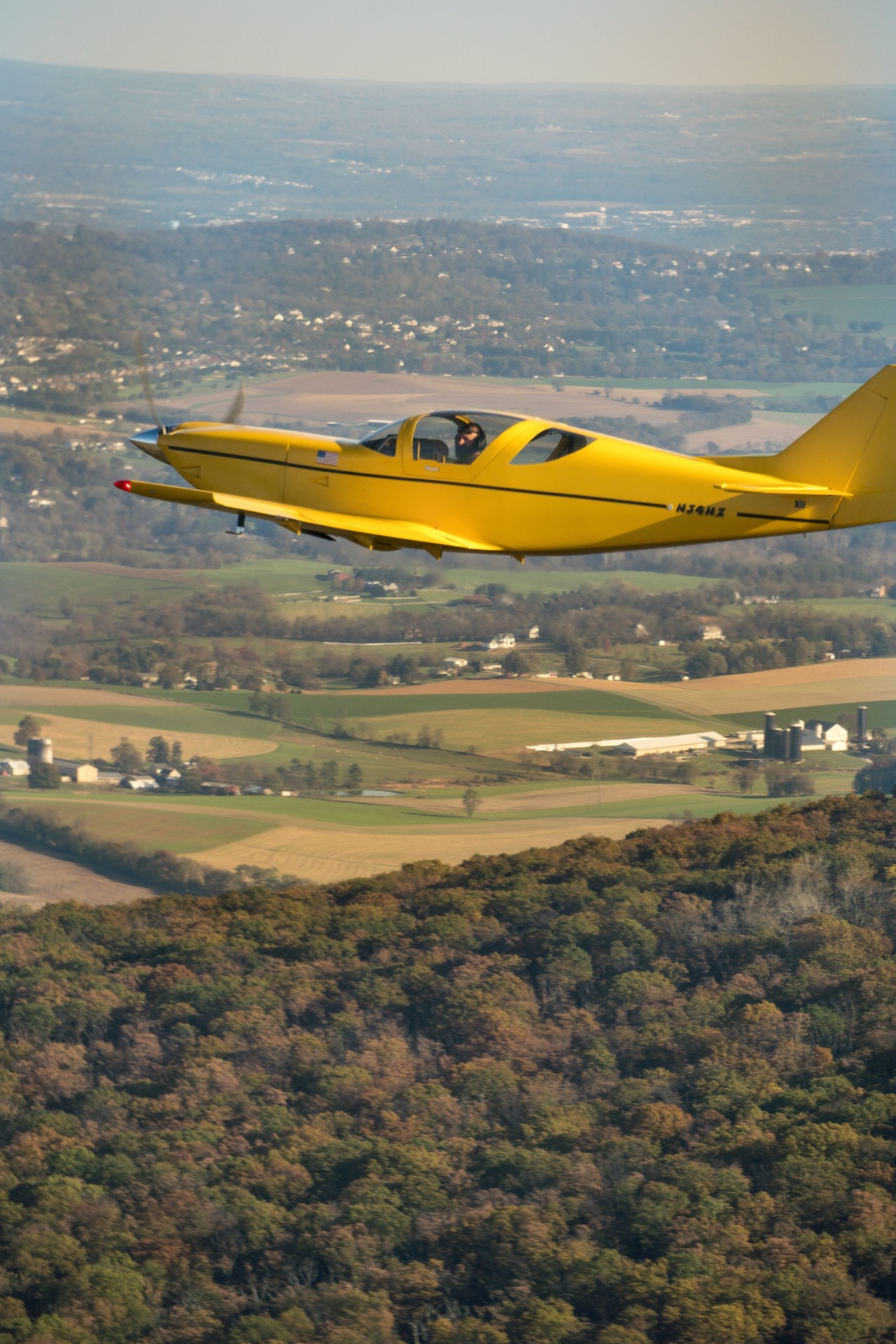
Revolutionary Design Philosophy
Tom Hamilton's design breakthrough came from recognizing that traditional scratch-built aircraft construction deterred many potential homebuilders. His solution, debuted at the 1980 EAA Oshkosh convention, featured factory-manufactured gel-coated composite halves that builders could assemble rather than fabricate from raw materials. This innovation reduced construction time dramatically while delivering professional-quality surface finishes previously unattainable in amateur-built aircraft.
The original Glasair TD (taildragger) configuration prioritized pure performance, achieving speeds that rivaled certified aircraft costing many times more. Hamilton's engineering team developed a composite sandwich construction technique that provided exceptional strength-to-weight ratios while maintaining the smooth surfaces essential for high-speed flight.
Production Success and Evolution
Storddard-Hamilton Aircraft's production run from 1979 to 2001 demonstrated the market's hunger for high-performance kit aircraft. The Glasair I series, including both taildragger and tricycle-gear FT variants, found 807 customers willing to tackle the demanding construction process. The 1986 introduction of the Glasair II addressed earlier cockpit width complaints while maintaining the performance characteristics that defined the series.
The Glasair II became the most successful variant, with 1,200 kits delivered. The stretched II-S version, introduced in 1989, provided additional cabin space without compromising the aerodynamic efficiency that enabled cruise speeds approaching 250 mph. This model particularly appealed to builders seeking cross-country capability in their homebuilt aircraft.
Peak performance arrived with the Glasair III, launched in 1986 alongside the II series. Despite producing only 500 kits, the III variant established new standards for amateur-built aircraft performance. The turbocharged version, introduced in 1990, achieved cruise speeds exceeding 300 mph and could operate at flight levels typically reserved for commercial aircraft.
Manufacturing Excellence
Storddard-Hamilton's commitment to quality extended beyond aircraft kits through their sister company, Stoddard International, established in 1989. This operation produced composite components for Boeing's 737, 747, 757, 767, and 777 programs, achieving the rigorous D1-9000 quality certification. This commercial aerospace experience directly benefited Glasair construction techniques and quality standards.
The company's Arlington, Washington facility became a center of composite aircraft innovation, with manufacturing techniques that influenced the broader homebuilt aircraft industry. Hamilton's team developed specialized tooling and processes that ensured consistent quality across thousands of kit deliveries.
Engine and Performance Specifications
Glasair aircraft typically employed Lycoming's proven O-320 series engines, with power ranging from 150 to 160 horsepower in early variants. The Glasair II-S utilized engines producing up to 200 horsepower, while the Glasair III standardized on 200-horsepower configurations that enabled its exceptional performance figures.
The most exotic variant emerged in 1994 when experimenters fitted a 450-shaft-horsepower Allison 250 turboprop to a Glasair III airframe, creating the Turbine 250/III. This installation demonstrated the basic airframe's structural integrity while exploring turbine power's potential in amateur-built aircraft.
Corporate Transition and Legacy
Storddard-Hamilton's 2001 bankruptcy threatened to end Glasair production permanently. Thomas W. Wathen's timely acquisition preserved the designs and customer support infrastructure, establishing Glasair Aviation to continue the tradition. Advanced Aero Components assumed responsibility for Glasair II and III assets in September 2017, ensuring continued parts availability for the substantial fleet of completed aircraft.
Pilot Experience and Handling
Pilots consistently praised Glasair aircraft for their honest handling characteristics and impressive performance. The low-wing configuration provided stability in cruise flight while maintaining responsive control authority. Construction quality often exceeded that of factory-built aircraft, with many examples displaying fit and finish rivaling certified aircraft costing significantly more.
The two-seat side-by-side configuration appealed to pilots seeking to share their flying experience, while the spacious cockpit accommodated pilots of various sizes comfortably. Cross-country capability made these aircraft practical transportation rather than merely recreational vehicles.
Industry Impact
The Glasair series fundamentally changed amateur aircraft construction by proving that composite materials could be successfully employed by non-professional builders. Hamilton's pre-molded approach influenced numerous subsequent kit designs, establishing composite construction as a viable alternative to traditional aluminum fabrication methods.
Today, many of the original 2,500+ Glasair kits remain active, testament to their sound design and construction quality. The series established performance benchmarks that continue influencing modern kit aircraft development, while demonstrating that amateur builders could achieve professional-level results with proper engineering and quality components.