
Market Revolution
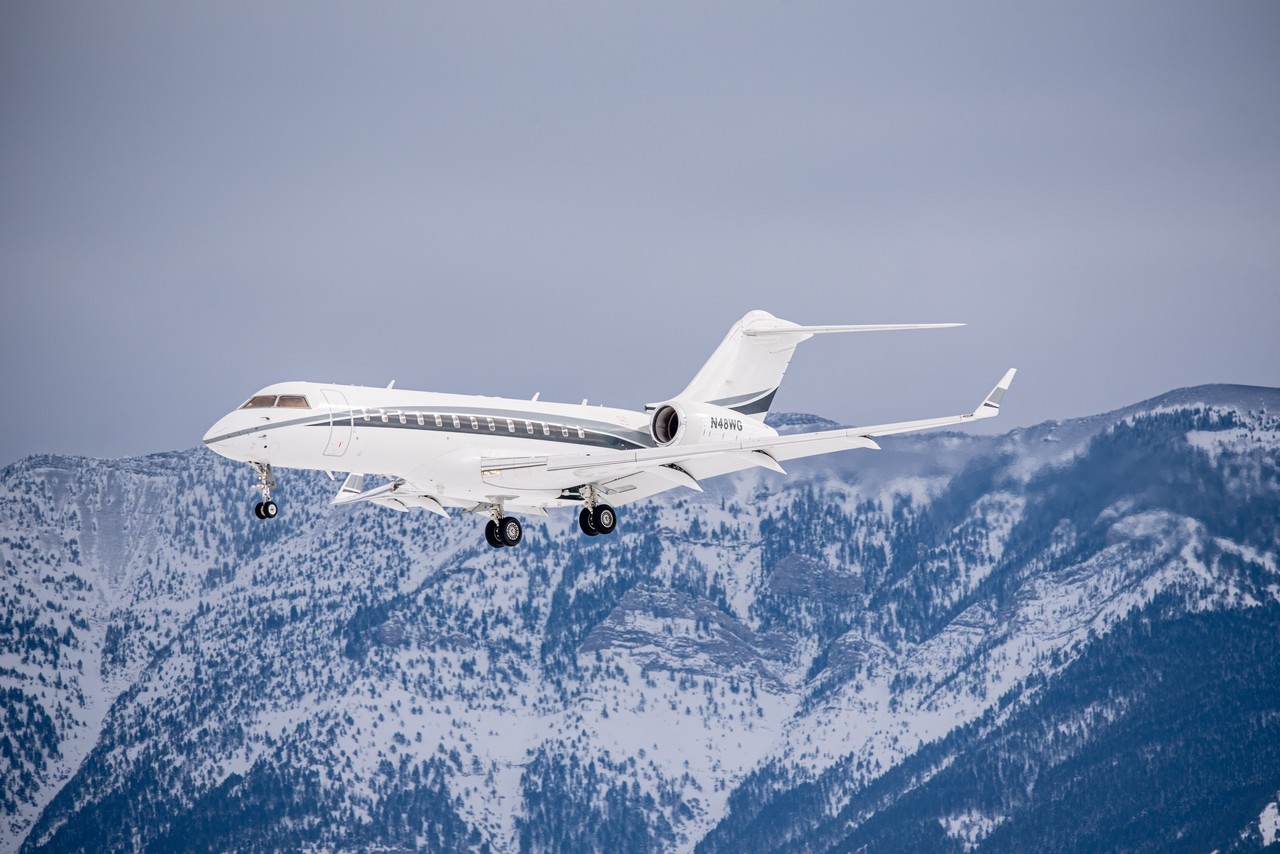
The Global Express transformed executive aviation by enabling truly global nonstop flights previously impossible in the business jet category. Routes like Montreal to Tokyo, Los Angeles to Sydney, and Paris to Johannesburg became routine single-leg journeys, eliminating fuel stops that had constrained corporate travel for decades. By 2018, the Global Express family had captured significant market share with 816 aircraft delivered across all variants, demonstrating the sustained demand for ultra-long-range capability.
Bombardier's Engineering Achievement
A multinational engineering team based in Montreal developed the Global Express, incorporating expertise from Mitsubishi Heavy Industries and BMW Rolls-Royce partnerships. The design team adapted the proven Canadair Regional Jet fuselage cross-section while developing an entirely new supercritical wing with 35-degree sweep and advanced winglets. Engineers deliberately chose conventional flight controls over fly-by-wire systems after customer feedback indicated concerns about maintenance costs and complexity in remote locations.
The prototype, constructed at Bombardier's Toronto facility in 1995, achieved first flight on October 13, 1996, reaching 11,000 feet during a 2-hour 46-minute initial test flight. Canadian certification followed on July 31, 1998, with US and European approvals completed by November 1998, enabling customer deliveries to begin in the first quarter of 1999.
Bombardier Aerospace Legacy
Bombardier Inc. traced its aviation heritage to the 1986 acquisition of Canadair for $1 billion, transforming founder Joseph-Armand Bombardier's 1942 snowmobile company into a global aerospace manufacturer. The company had already established rail transportation leadership with contracts including 423 cars for Montreal's subway system and the landmark $1 billion New York City Transit order in 1982.
The Global Express represented Bombardier's "crown jewel" project, launched at the 1991 National Business Aviation Association show with an $800 million development investment. This marked the first all-new large-cabin business jet design in its category, positioning Bombardier directly against established competitors Gulfstream and emerging rivals from Airbus Corporate Jets and Boeing Business Jets.
Bombardier maintained aircraft production through 2021, when the company sold its commercial aviation division to Spirit AeroSystems, refocusing entirely on rail transportation under the Bombardier Transportation brand.
Rolls-Royce BR710 Powerplant
Twin Rolls-Royce BR710-A2-20 turbofan engines, each generating 14,750 pounds of thrust, provided the Global Express with its exceptional range capability. These high-bypass turbofans, derived from military engine technology, consumed 486 gallons per hour combined while maintaining the reliability standards essential for over-water operations.
Rolls-Royce developed the BR710 family specifically for long-range business and regional jets, with production exceeding 5,000 engines across multiple aircraft applications. The engine's 99.5 percent reliability rating proved crucial for operators flying extended routes over remote terrain where alternate airports remained hundreds of miles away.
Operational Excellence
The Global Express cabin accommodated up to 19 passengers in high-density configurations, though typical executive layouts seated 8 to 13 passengers with crew quarters for 2 to 4 flight personnel. The pressurized cabin maintained sea-level comfort at cruising altitudes, while 15 suitcases could be stored in compartments accessible during flight.
Early operators included Unicorp National Developments of Orlando, Florida, along with numerous Fortune 500 corporations and charter operators worldwide. The aircraft's ability to maintain Mach 0.85 cruise speeds while carrying maximum fuel loads enabled consistent scheduling for time-sensitive executive missions.
Design Innovation Impact
Bombardier engineers achieved their ambitious performance targets through innovative component integration and manufacturing techniques. The supercritical wing design optimized fuel efficiency at high-altitude cruise conditions, while the T-tail configuration improved aerodynamic efficiency and reduced cabin noise.
Minimal parts count philosophy guided the entire design process, resulting in the industry-leading 99.5 percent reliability rate that became a Global Express trademark. This approach reduced maintenance requirements and parts inventory costs for operators, particularly important for aircraft spending extended periods at international destinations.
Production and Continuing Legacy
Approximately 150 original Global Express aircraft rolled off production lines at Bombardier's Montreal and Toronto facilities between 1998 and 2006. As of 2018, 148 of these original aircraft remained in active service, demonstrating exceptional durability and continued operator confidence.
Production evolved into advanced variants including the Global Express XRS, Global 5000, Global 6000, and current-generation Global 5500 and 6500 models. These successors incorporated updated avionics, improved engines, and refined cabin systems while maintaining the fundamental ultra-long-range capability that established the Global Express as the benchmark for intercontinental business aviation.