
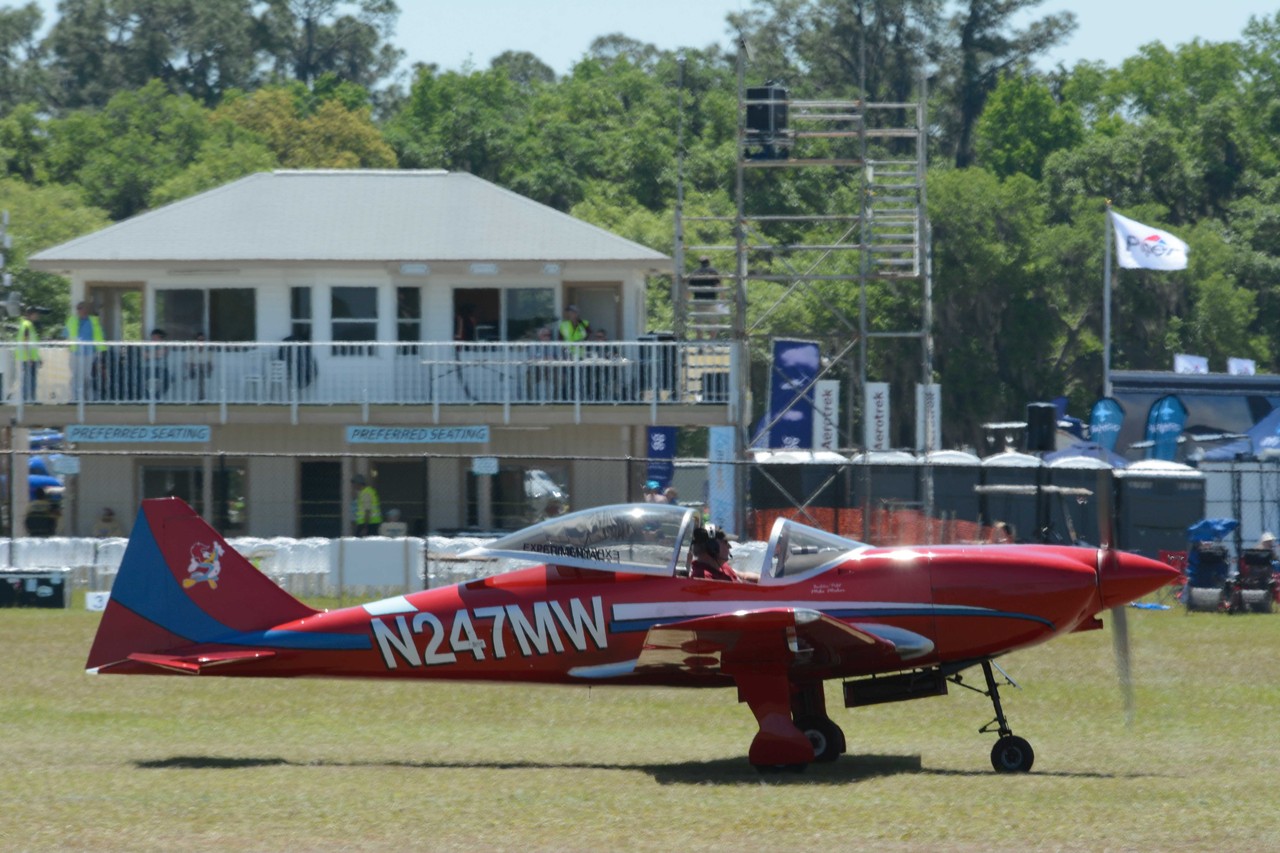
Design Philosophy and Development
George Pereira conceived the GP-4 as his fourth aircraft design with ambitious performance goals that would challenge conventional homebuilt capabilities. His objective was creating a cross-country machine capable of 1,100-mile range at 240 mph cruise speed, figures that rivaled certified aircraft of the era. The design emphasized drag reduction through careful airfoil selection, utilizing a laminar flow 63-series wing section, and featured all-wood construction stressed to withstand +8/-6G loads at gross weight.
The prototype initially employed manual gear retraction, but Pereira later developed an electric hydraulic system in response to builder feedback. This innovation, along with the aircraft's sophisticated single-spar wing design, demonstrated the designer's commitment to both performance and practicality. The GP-4's development represented a significant advancement in homebuilt aviation, proving that amateur-built aircraft could achieve airline-like cruise speeds.
Manufacturing and Distribution
Osprey Aircraft of Sacramento, California, began marketing GP-4 plans and kits in the early 1980s, with distribution continuing into at least 2005 when a quick-build kit option was introduced. The company operated under George Pereira's guidance, focusing on high-performance wooden homebuilts including the GP-4 and the Osprey II amphibian. Aircraft Spruce & Specialty Co. eventually assumed rights to distribute kits, while Osprey Aircraft retained control of plans distribution.
The manufacturing approach reflected the homebuilt market's evolution, offering builders various levels of completion to match their skills and available time. However, the GP-4 remained a demanding project, requiring 3,000 to 5,000 hours of construction time due to its complex wooden structure and sophisticated systems integration.
Performance and Technical Achievement
Powered by the proven Lycoming IO-360-A1A engine producing 180-200 horsepower, the GP-4 delivered remarkable performance figures that challenged many certified aircraft. At 75 percent power, the aircraft cruised at 240 mph while maintaining a service ceiling of 20,000 feet and achieving a rate of climb exceeding 2,200 feet per minute. The never-exceed speed of 255 mph provided substantial margin above cruise speeds.
The aircraft's fuel capacity of 54 gallons enabled the designed 1,100-mile range, making true cross-country flights practical without intermediate fuel stops. Takeoff performance was equally impressive, requiring only 600 feet of runway, though landing distances stretched to 1,200 feet due to the aircraft's clean aerodynamics and relatively high approach speeds.
Builder Community and Recognition
The GP-4 achieved significant recognition within the experimental aircraft community when it won Grand Champion Custom Built and Outstanding New Design awards at the 1984 EAA AirVenture Oshkosh. This acknowledgment validated Pereira's design philosophy and attracted serious builders willing to undertake the substantial construction commitment.
Builder experiences, documented in company newsletters, revealed both the aircraft's potential and its challenges. John Reinhart's five-year, 5,000-hour construction project, culminating in an uneventful first flight in 2005, exemplified the dedication required. Builder innovations included adaptations like the Subaru SVX liquid-cooled engine installation with reduction gearbox and four-blade propeller, demonstrating the design's flexibility for powerplant experimentation.
Operational Characteristics and Safety
Pilot reports described the GP-4 as a responsive aircraft with neutral stability characteristics requiring active pilot input. The design exhibited high control sensitivity and distinctive handling traits, including a sharp wing drop during power-on stalls at 70 mph indicated airspeed. Clean configuration stall speed was recorded at 70 mph, dropping to 62 mph in landing configuration.
Safety considerations included careful attention to gear retraction procedures and airspeed management during critical phases of flight. At least one fatal accident was attributed to loss of control during low-speed flight, highlighting the importance of thorough pilot familiarization with the aircraft's handling characteristics.
Global Distribution and Current Status
Production records indicate serial numbers reaching at least c/n 615, registered to VH-SAA in New South Wales, Australia, in May 2014. International examples included ZK-JPE (c/n 386) in New Zealand, lost in March 2011, and multiple Australian registrations such as VH-XGP (c/n 351) and VH-JQE (c/n 574).
The GP-4's legacy lies in demonstrating that homebuilt aircraft could achieve professional-level performance through careful engineering and construction. While exact numbers of flying examples remain unknown, the design's complexity and extensive build time have limited total completions. Nevertheless, the GP-4 established benchmarks for wooden homebuilt performance that influenced subsequent designs and proved that amateur builders could create aircraft rivaling certified counterparts in speed and range capabilities.