
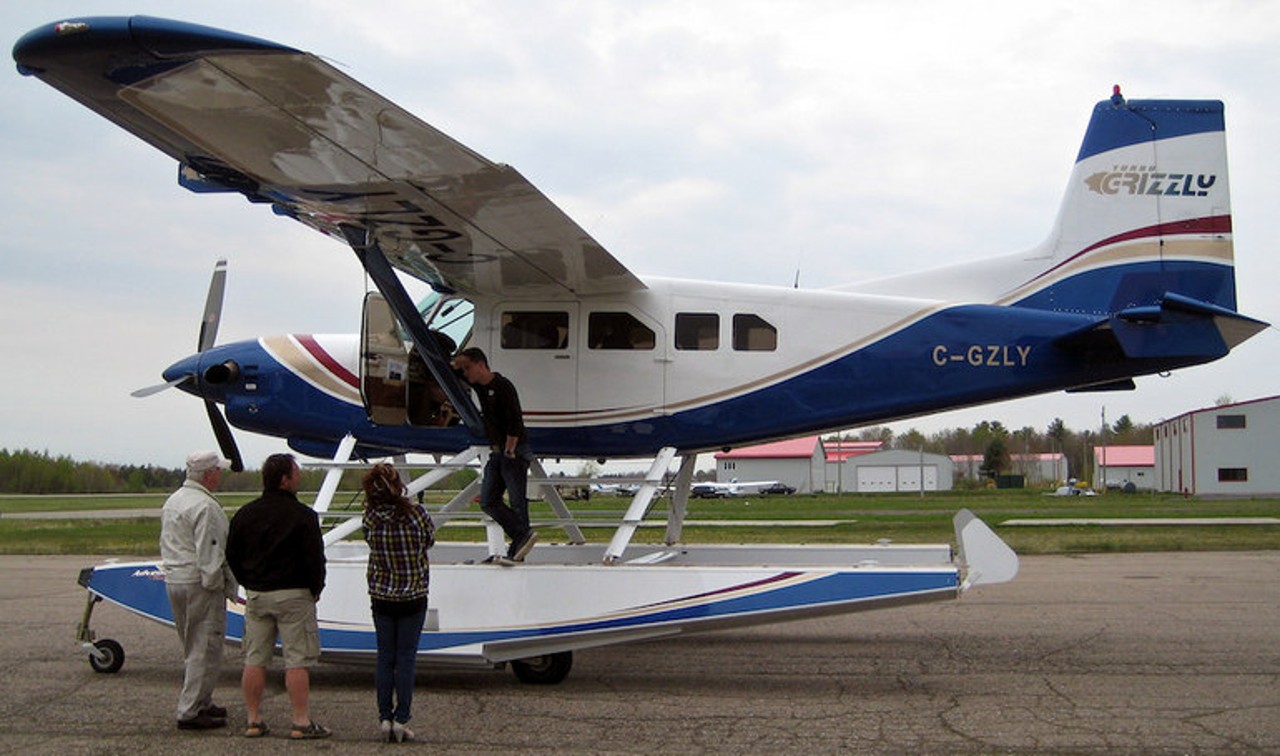
Design Philosophy and Market Position
The Turbo Grizzly emerged from a clear market need identified by Aerotek Aviation Inc.: providing turbine-powered bush aircraft performance without the premium pricing typically associated with such capabilities. Vincent Pouliot, serving as Aerotek's President, spearheaded the development with the specific goal of matching the renowned de Havilland Turbo Beaver's useful load, performance, and structural integrity while delivering these capabilities at approximately 50 percent of the cost.
The design team drew inspiration from two proven aircraft configurations: the Lockheel AL-60 (also manufactured in Mexico as the LASA 60) and the legendary DHC-2 Beaver. This hybrid approach allowed engineers to incorporate time-tested structural concepts while optimizing for modern turbine powerplant integration and contemporary operational requirements.
Powerplant and Performance
At the heart of the Turbo Grizzly lies a Pratt & Whitney PT6A turbine engine generating 550 shaft horsepower, driving a Hartzell 93-inch three-bladed constant-speed propeller with full-feathering and reversible pitch capabilities. The engine selection reflects both performance requirements and economic realities of the experimental aircraft market. Aerotek utilizes military surplus PT6A-20 engines that lack civilian certification pedigrees, restricting the aircraft to experimental category operations while significantly reducing acquisition costs.
The PT6A powerplant delivers exceptional reliability with a 5,000-hour Time Between Overhaul interval, dramatically reducing long-term operating expenses compared to piston-powered alternatives. Pilots benefit from reduced workload through simplified engine management, beta control for precise taxi operations, and reverse thrust capability enabling the aircraft to back away from parking positions without ground assistance.
Performance figures demonstrate the aircraft's bush flying credentials convincingly. In landplane configuration, the Turbo Grizzly requires only 850 feet for takeoff and 1,500 feet to clear a 50-foot obstacle. When equipped with Wipline-style all-aluminum amphibious floats rated for 5,500 pounds buoyancy, water runs require merely 10 to 15 seconds. The aircraft maintains a climb rate of 1,200 feet per minute at maximum gross weight under International Standard Atmosphere conditions.
Operational Capabilities and Versatility
With a maximum gross weight of 5,500 pounds and empty weights of 2,850 pounds on wheels or 3,600 pounds with amphibious floats, the Turbo Grizzly provides substantial useful load capacity. The aircraft carries 180 US gallons of fuel internally, enabling a practical range of nearly 600 statute miles with Visual Flight Rules reserves while transporting approximately 1,100 pounds of payload.
Stall characteristics remain docile at 52 knots with full flaps deployed and 65 knots in clean configuration. Cruise performance reaches 125 knots indicated airspeed at 75 percent power at sea level with amphibious floats installed, increasing to 130 knots true airspeed at 3,500 feet altitude. Wing loading of 20.4 pounds per square foot across the 46.5-foot wingspan contributes to excellent short-field performance and low-speed handling qualities.
The aircraft's operational flexibility extends beyond passenger transport. Aerotek designed the airframe to accommodate agricultural spraying equipment, parachute jumping operations, and ski installations for winter operations. All variants can operate from unpaved strips or forest clearings as short as 1,000 feet, making the aircraft suitable for remote area access where conventional aircraft cannot venture safely.
Avionics and Certification
Despite its experimental certification, the Turbo Grizzly incorporates full Instrument Flight Rules capability through Electronic Flight Information System displays featuring synthetic three-dimensional vision technology. This advanced avionics suite enables all-weather operations when pilot qualifications and regulatory requirements permit, expanding the aircraft's utility beyond fair-weather bush flying.
Construction follows FAR 23 certification standards despite experimental classification, ensuring structural integrity meets commercial aircraft requirements. This approach provides operators with confidence in the aircraft's engineering while maintaining the cost advantages of experimental certification.
Manufacturing and Recognition
Aerotek Aviation Inc., headquartered in Quebec, Canada, continues active production of the Turbo Grizzly alongside turbine conversion services for DHC-2 Beavers. The company's firewall-forward conversion package, priced at $144,500, includes the PT6A engine, propeller, electrical systems, fuel system components, and all accessories required for installation.
Industry recognition came through multiple Best in Class awards at major North American aviation gatherings, including Sun 'n Fun and EAA AirVenture Oshkosh. These accolades validate the design's achievement in delivering professional-grade turbine aircraft capabilities within the experimental aircraft market segment.
The aircraft maintains active registration status with both Federal Aviation Administration (type designator GRIZ) and International Civil Aviation Organization databases, confirming its operational status in contemporary aviation. Current production continues serving customers seeking cost-effective turbine power for demanding bush flying applications where reliability and performance cannot be compromised.