
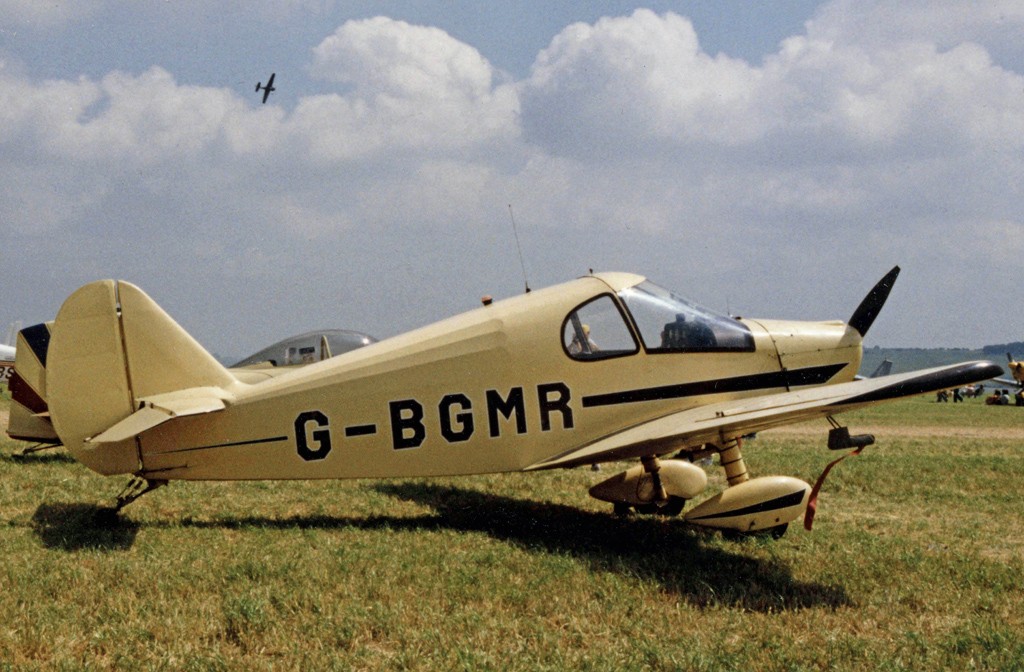
Development and Design Philosophy
Yves Gardan conceived the GY-30 Supercab as the natural evolution of his highly successful GY-20 Minicab design. While the original GY-20 had first taken to the skies on February 1, 1949, and proven popular with both manufacturers and homebuilders, Gardan envisioned a more sophisticated variant that would appeal to pilots seeking enhanced performance and modern features. His design philosophy centered on creating aircraft that were affordable, manageable, and maintainable while offering homebuilders realistic construction projects.
The Manufacturer's Brief History
Constructions Aéronautiques du Béarn (CAB) emerged in 1948 through the partnership of Yves Gardan, Max Lapoerte, and M. Dubouts. The company established itself in the immediate post-war aviation boom, focusing on light aircraft for the civilian market. Between 1949 and 1955, CAB manufactured approximately 65 Minicabs across the GY-20 and GY-201 variants, establishing a modest but respected presence in the French general aviation sector. However, the company's operations remained limited, and production ceased entirely in 1955, coinciding with the end of the original Minicab production run.
Following CAB's closure, Arthur Ord-Hume acquired the design rights in the United Kingdom. He anglicized the technical drawings and implemented minor improvements specifically tailored for homebuilders, ensuring the design's survival beyond its original manufacturer's demise.
Technical Innovations and Improvements
The GY-30 represented a substantial advancement over the GY-20's basic configuration. The most significant enhancement was the manually-operated retractable main undercarriage, a feature that dramatically improved the aircraft's aerodynamic efficiency and cruise performance. Where the GY-20 achieved a respectable 124 mph maximum speed, the GY-30 reached 170 mph, representing a 37 percent performance increase.
Gardan equipped the Supercab with fixed tip tanks, substantially increasing fuel capacity and extending range capabilities. The aircraft featured a greater wingspan than its predecessor, incorporating slotted flaps that improved low-speed handling characteristics. The strengthened airframe permitted limited aerobatic maneuvers, expanding the aircraft's operational envelope beyond simple touring duties.
The powerplant upgrade from the GY-20's 65-horsepower Continental A-65 to the 90-horsepower Continental C-90 provided the additional thrust necessary to exploit these aerodynamic improvements. Continental Motors' inline piston engines had established excellent reliability records in post-war general aviation applications, making them logical choices for Gardan's designs.
Construction and Engineering
The GY-30 retained the conventional ribbed timber construction methodology that made the GY-20 accessible to homebuilders. The center section featured plywood sheeting along with the flaps, while wings and ailerons received traditional linen covering. This mixed-material approach balanced structural integrity with construction simplicity, though the retractable gear mechanism increased complexity considerably compared to the fixed tailwheel configuration of earlier variants.
Commercial Failure and Limited Production
Despite its technical superiority, the GY-30 achieved only minimal commercial success. CAB completed merely five examples during the aircraft's production run from 1954 onwards, making it a stark commercial disappointment compared to the GY-20's relative success. The increased complexity and cost associated with the retractable landing gear system likely deterred potential buyers who found the simpler, more affordable GY-20 adequate for their requirements.
The timing may have contributed to the GY-30's poor reception. By 1954, the immediate post-war aviation boom was moderating, and the market for sophisticated touring aircraft remained limited in Europe. Additionally, the aircraft's advanced features appealed primarily to experienced pilots, a smaller market segment than the broader audience attracted to basic training and touring aircraft.
International Distribution Attempts
Efforts to expand the GY-30's market reach included marketing in North America as the Halt BM4 through Miranda Aircraft of Canada. Kits reached New Zealand, where additional aircraft were constructed from plans, though specific numbers remain undocumented. These international distribution efforts failed to generate sufficient demand to sustain meaningful production levels.
Legacy and Comparison
The GY-30's legacy pales beside that of the GY-20 Minicab, which inspired approximately 55 homebuilt examples beyond the original 65 factory-produced aircraft. In 1951, a Minicab established a class world distance record of approximately 1,800 kilometers, demonstrating the design's fundamental soundness. Various American companies later produced variants including the Minicab Hawk, Minihawk, Hawk, and Cavalier, testament to the basic design's enduring appeal.
The GY-30 Supercab ultimately serves as an example of how technical advancement alone cannot guarantee commercial success. While Gardan's engineering improvements were genuine and substantial, the increased complexity and cost positioned the aircraft beyond the reach of its intended market, relegating it to historical footnote status rather than the commercial triumph its capabilities might have suggested.