
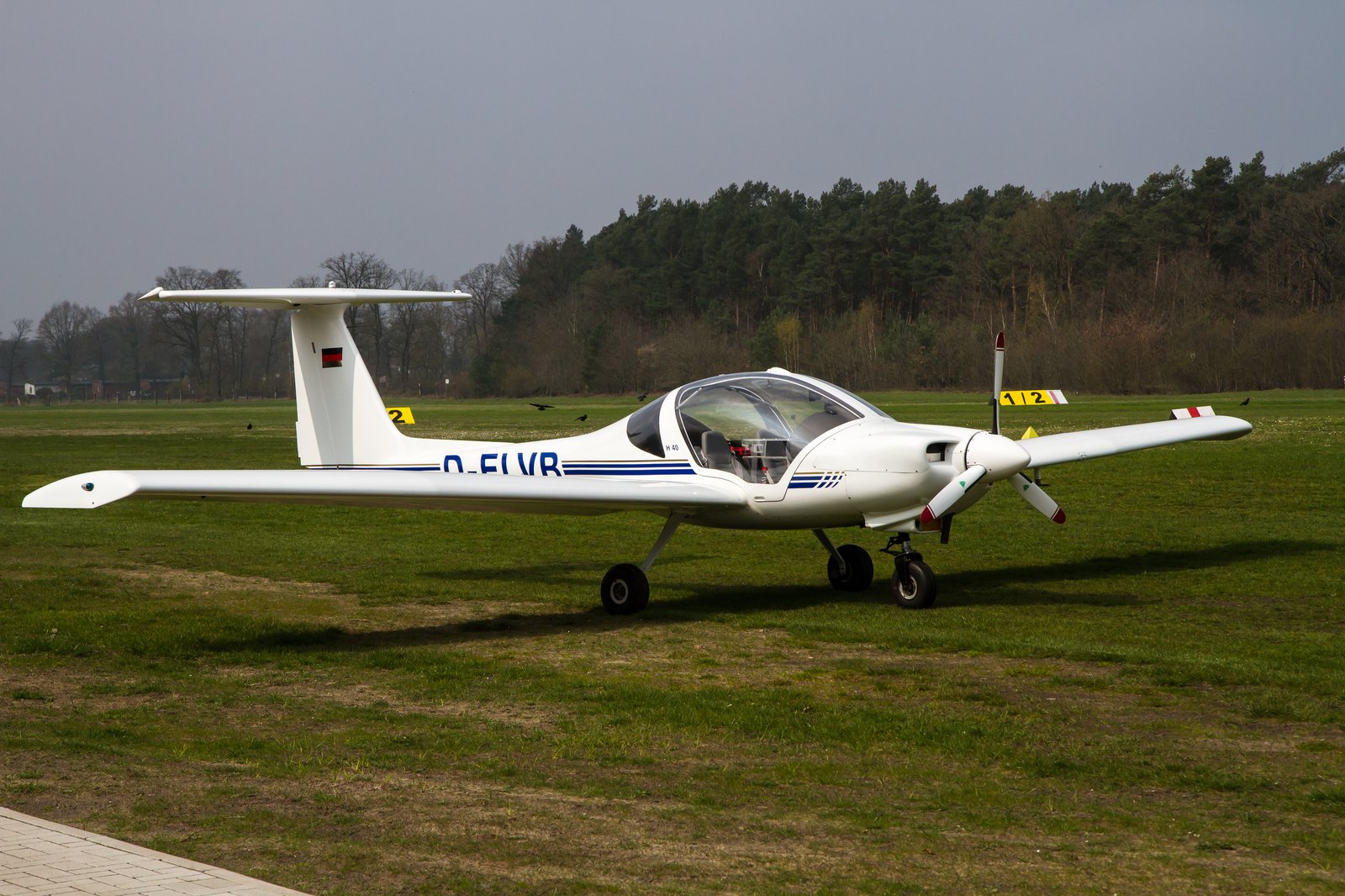
Development and Design Philosophy
The Hoffmann H-40 emerged during a pivotal period for Austrian aircraft manufacturer Hoffmann Flugzeugbau, as the company sought to diversify its product line beyond the successful H36 Dimona motor glider that had established their reputation. Founded in 1981 by aircraft designer Wolf Hoffmann, the company had quickly gained recognition in the European general aviation market for innovative design approaches that emphasized aerodynamic efficiency and structural integrity.
Development of the H-40 occurred during the mid-1980s, a time when the general aviation market was experiencing significant growth in demand for modern, efficient light aircraft. Hoffmann's design team approached the H-40 project with the same engineering principles that had made the Dimona successful, focusing on clean aerodynamic lines and practical operational characteristics that would appeal to both private owners and flight training organizations.
Manufacturing and Production
Production of the H-40 was integrated into Hoffmann's manufacturing facilities in Austria, where the company had established efficient production methods for composite and conventional aircraft construction. The aircraft appeared in production documentation as early as 1988, indicating active manufacturing during the late 1980s period when Hoffmann was expanding their market presence throughout Europe.
The H-40 represented one component of Hoffmann's total production output, which encompassed 175 aircraft across all models during the company's operational period under the Hoffmann name. This production figure reflected the company's position as a specialized manufacturer serving niche markets rather than competing directly with major general aviation producers like Cessna or Piper.
The Hoffmann Legacy
Hoffmann Flugzeugbau's approach to aircraft design emphasized innovative engineering solutions and attention to operational efficiency that would later influence the broader light aircraft industry. Wolf Hoffmann's design philosophy centered on creating aircraft that combined excellent flight characteristics with practical maintenance requirements, establishing principles that would carry forward through the company's evolution.
The company's trajectory took a significant turn in 1998 when Hoffmann Flugzeugbau transformed into Diamond Aircraft Industries, marking a new chapter in the organization's development. This transition represented more than a simple name change, as it coincided with expanded production capabilities and an enlarged product portfolio that would establish Diamond as a major force in modern general aviation.
Under the Diamond nameplate, the company continued Wolf Hoffmann's original vision while expanding into new markets and technologies. The engineering expertise developed during the Hoffmann era, including experience gained through projects like the H-40, provided the foundation for Diamond's later success with aircraft such as the DA40 and DA42, which became popular choices for flight training organizations worldwide.
Technical Characteristics
The H-40's design reflected Hoffmann's commitment to aerodynamic efficiency and structural integrity that characterized all aircraft produced during the company's independent period. Like other Hoffmann designs, the H-40 incorporated engineering solutions aimed at optimizing performance while maintaining reasonable operating costs for owners and operators.
The aircraft's configuration followed conventional general aviation design principles while incorporating specific innovations that distinguished Hoffmann products from competitors. These design elements reflected the company's experience in both motor glider and powered aircraft development, creating aircraft that appealed to pilots seeking efficient cross-country performance.
Market Position and Operational History
The H-40 entered service during a period when European general aviation was experiencing growth in both private ownership and commercial training operations. Hoffmann positioned the aircraft to serve markets that valued efficiency and reliability over maximum performance, appealing to operators who prioritized operating economics and maintenance simplicity.
European operators formed the primary customer base for the H-40, with the aircraft serving various roles including private transportation and flight training applications. The model's operational characteristics aligned with European aviation requirements, where fuel efficiency and compact dimensions often took precedence over raw performance numbers.
Contemporary Significance
Today, the H-40 represents an important chapter in the development of what would become Diamond Aircraft Industries, one of the most successful light aircraft manufacturers of the modern era. While specific examples of airworthy H-40 aircraft remain undocumented in readily available sources, the engineering principles and manufacturing expertise developed through this program contributed directly to Diamond's later achievements.
The aircraft serves as a bridge between Hoffmann's early success with the Dimona motor glider and the company's eventual emergence as Diamond Aircraft Industries. Understanding the H-40's role in this evolution provides insight into how specialized aircraft manufacturers can successfully transition between market segments while maintaining core engineering competencies that ensure long-term success.