
Service Dominance
The CH-53D Sea Stallion revolutionized heavy-lift operations for the U.S. Marine Corps, becoming the backbone of helicopter assault transport during the Vietnam conflict. Marine Aircraft Group 16 alone transported 11,550 tons of cargo in the first quarter of 1969, conducting 47,346 sorties monthly during peak operations. The aircraft's unprecedented lifting capacity allowed Marines to position 105mm howitzers and vehicles in previously inaccessible jungle locations, fundamentally changing tactical operations.
Vietnam War Operations
The first CH-53A variants arrived in Vietnam in January 1967, with the improved CH-53D entering service in March 1969. Marine Heavy Helicopter Squadrons like HMH-463 operated under MAG-16, using the Sea Stallion for troop transport, cargo resupply, and aircraft recovery missions. The helicopter proved superior to the CH-54 Tarhe in recovering downed aircraft, retrieving more damaged helicopters and fixed-wing aircraft throughout the conflict. The Navy's RH-53D variant, first flown on October 27, 1972, added mine countermeasures capability with .50-caliber machine guns and aerial refueling equipment.
Sikorsky Aircraft Corporation
Sikorsky Aircraft, founded in 1923 by aviation pioneer Igor Sikorsky, designed the CH-53 series at their Stratford, Connecticut facility. Originally a division of United Aircraft Corporation, the company became part of United Technologies Corporation in 1975 before Lockheed Martin acquired it in 2015. The CH-53 design team scaled up the successful S-61R helicopter, incorporating dynamic systems from the heavy-lift S-64 Skycrane to create an entirely new class of assault transport helicopter.
Engineering Excellence
The CH-53D's twin General Electric T64-GE-413 turboshaft engines, each producing 3,925 shaft horsepower, provided exceptional performance in hot and high conditions. The T64 engine family, entering production in the early 1960s, featured improved intake filters specifically designed for the dusty conditions encountered in Southeast Asia. Early CH-53A helicopters received engine upgrades to the T64-GE-413 standard beginning January 27, 1969, bringing them to CH-53D performance levels.
Flight Characteristics
Measuring 88 feet 2½ inches in length with a rotor diameter of 72 feet 2¾ inches, the CH-53D achieved a maximum speed of 196 mph and service ceiling of 21,000 feet. With an empty weight of 23,485 pounds and maximum gross weight of 36,400 pounds, the helicopter required a crew of two pilots and a crew chief. The aircraft's 257-mile range was sufficient for extended operations, while its robust airframe withstood the demanding conditions of jungle warfare.
International Service
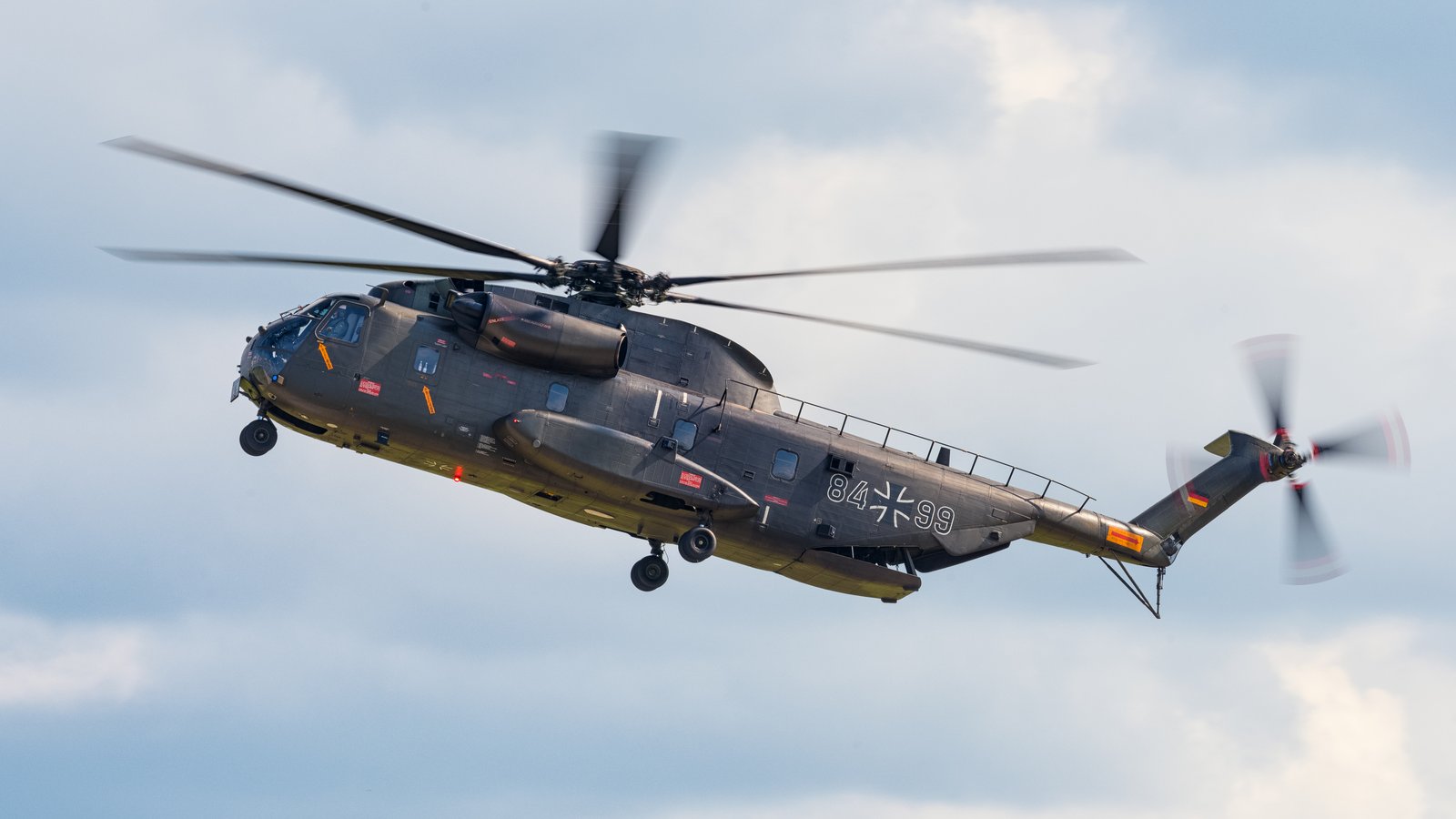
Beyond U.S. military service, the CH-53D family served internationally with notable success. The German Army operated 112 CH-53G variants from 1969, upgrading them to CH-53GA standard through 2013. Iran received six RH-53D helicopters before 1979, operating them alongside 30 similar aircraft built for the U.S. Navy. These international operators demonstrated the helicopter's versatility across different operational environments and mission requirements.
Production Legacy
Sikorsky manufactured exactly 143 CH-53D helicopters between 1969 and the late 1970s, including the specialized RH-53D mine warfare variants. Production of the entire CH-53 family continued from 1964 to 1978, establishing the foundation for the later CH-53E Super Stallion. The U.S. Marine Corps retired its last CH-53D helicopters in August and November 2012, when HMH-362 and HMH-363 transitioned to newer aircraft, though some were retained for 3rd Marine Regiment training purposes.
Museum Preservation
Several CH-53D Sea Stallions are preserved in museums today, including aircraft BuNo 157159 at the National Naval Aviation Museum, delivered in May 1970. The Fort Worth Aviation Museum in Texas displays CH-53A BuNo 153715, a Vietnam veteran delivered in 1967. These preserved aircraft represent the technological achievement that enabled the U.S. military's first true heavy-lift helicopter capability, paving the way for modern rotorcraft like the CH-53K King Stallion.