
Service History
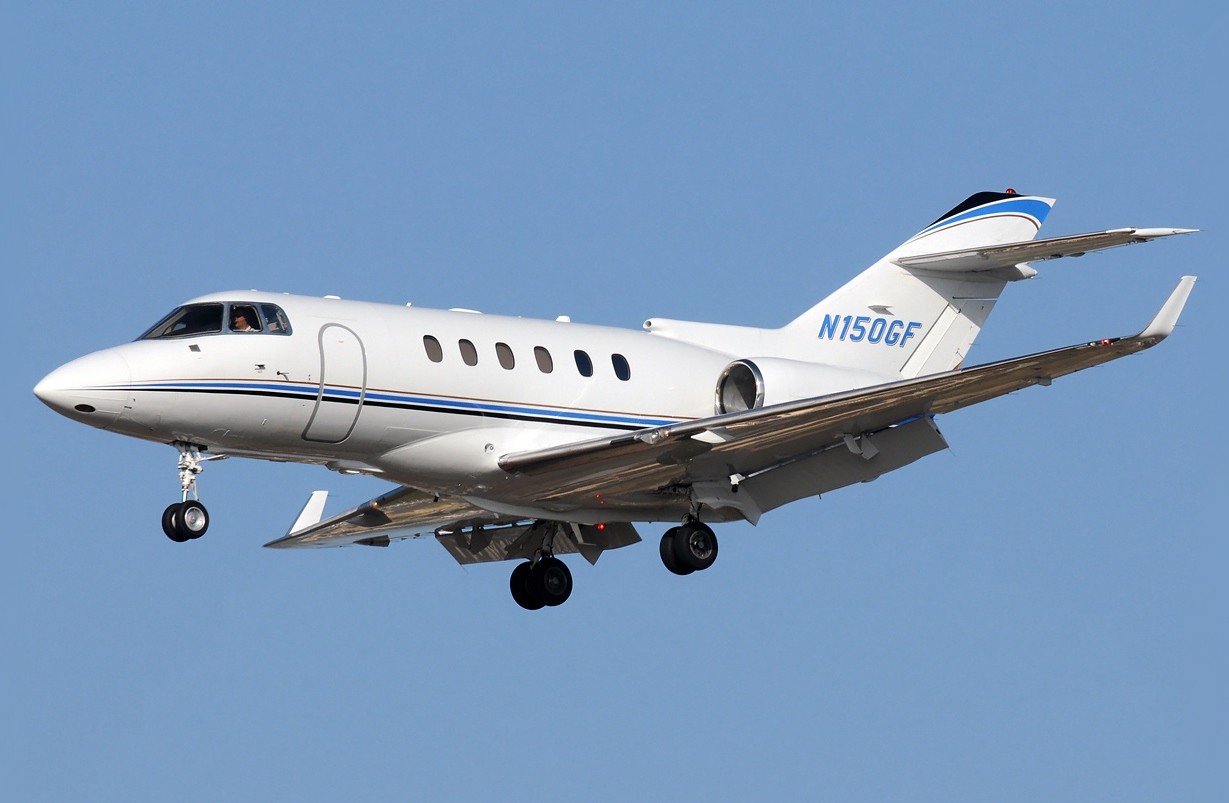
The Hawker 750 occupied a brief but distinctive niche in corporate aviation during its four-year production run from 2008 to 2012. As an exclusively civilian aircraft, it served private individuals, corporations, and charter operators seeking the cabin space of a midsize jet at light jet operating costs. The aircraft's $13 million launch price positioned it strategically below the larger Hawker 850XP while offering superior cabin volume and baggage capacity compared to smaller alternatives. With deliveries beginning in May 2008, the 750 entered service during the global financial crisis, which significantly impacted the business aviation market and contributed to its limited production numbers.
By 2016, approximately 48 of the 49 manufactured aircraft remained in active service worldwide, demonstrating remarkable retention rates. North American operators controlled 63 percent of the fleet, while European owners accounted for 26 percent of the remaining aircraft. The majority—35 aircraft—were owned outright rather than leased, with only 6.2 percent operating under lease agreements.
The Manufacturer
Hawker Beechcraft Corporation represented the culmination of decades of corporate evolution in American aviation manufacturing. The lineage traced back to Walter Beech's founding of Beech Aircraft Corporation in Wichita, Kansas, in 1932. The transformation into a jet manufacturer occurred when Raytheon acquired British Aerospace's corporate jet division in August 1993, merging it with Beechcraft in 1994 to form Raytheon Corporate Jets, later becoming Raytheon Aircraft.
The Hawker Beechcraft era lasted from 2006 to 2013, during which the company operated from Wichita alongside other major manufacturers including Cessna, Learjet, and the historic Stearman operation. Financial difficulties led to bankruptcy filing in 2012, coinciding with the Hawker 750's production suspension. Textron Aviation acquired the commercial aviation assets in 2014, continuing to support the Hawker and Beechcraft product lines under unified management.
Wichita's aviation heritage provided the backdrop for the 750's development, with Beechcraft's legendary Bonanza maintaining continuous production since 1947, representing one of aviation's longest manufacturing runs. This institutional knowledge contributed to the refined engineering and manufacturing quality that characterized the Hawker 750.
Engine & Technical Innovation
The Hawker 750's powerplant consisted of two Honeywell TFE731-5BR turbofan engines, each generating 5,525 pounds of thrust while consuming 270 gallons per hour. Honeywell, formerly Garrett AiResearch, had developed the TFE731 series specifically for business aviation applications beginning in the 1970s. The -5BR variant represented advanced engineering within a proven family that had accumulated over 17,000 units across all variants by 2026.
These engines marked a significant advancement over the Viper turbojets used in earlier HS.125 variants, operating at cooler temperatures for enhanced reliability while delivering the thrust necessary for the 750's 2,111-nautical-mile range capability. The TFE731-5BR's performance enabled the aircraft to cruise at 447 knots maximum speed or 402 knots for long-range missions, providing operators with flexibility based on mission requirements.
The aircraft featured winglets inherited from the 850XP lineage, reducing drag and improving fuel efficiency. Strategic avionics upgrades complemented the propulsion improvements, creating a modern cockpit environment for the standard two-pilot crew configuration.
Design Philosophy and Development
Hawker Beechcraft's design team conceived the 750 as a derivative of the established Hawker 800 series, specifically targeting operators seeking a shorter-range variant of the Hawker 850XP with enhanced cabin volume and baggage capacity. The design philosophy emphasized balancing acquisition price with operational performance, creating an attractive alternative for cost-conscious operators without compromising passenger comfort.
The development program built upon the extensive heritage of the HS.125 family, which originated with the 1962 DH.125 prototype. By the time 750 development commenced, this lineage had produced over 1,365 earlier variants, providing extensive operational data and proven design concepts. The 750's August 23, 2007, first flight preceded FAA certification by six months, with the agency granting approval on February 19, 2008.
Innovations focused on cabin optimization rather than revolutionary changes, reflecting the mature nature of the basic design. The 551-cubic-foot cabin volume accommodated eight passengers in typical configuration, with a rear lavatory and enhanced baggage compartment addressing common operator requirements.
Production Legacy
The Hawker 750's brief production run reflected broader industry challenges rather than design deficiencies. After building 49 aircraft through 2012, production ceased as Hawker Beechcraft navigated financial restructuring. The final production year of 2011 saw only 12 aircraft completed, indicating the severe impact of reduced business aviation demand following the 2008 financial crisis.
This limited production total placed the 750 among the rarer business jet variants, contrasting sharply with the success of earlier family members. The broader Hawker series, including 116 Hawker 900XPs and the various 800-series variants, demonstrated the basic design's viability across different market segments.
Today, the surviving Hawker 750s represent the final chapter in a distinguished aviation lineage spanning five decades. While no examples are known to reside in major aviation museums, the aircraft's significance lies in representing both the evolution and conclusion of one of business aviation's most enduring designs. Their continued operation in private hands maintains the legacy of Wichita's contribution to corporate aviation during a transformative period in the industry.