
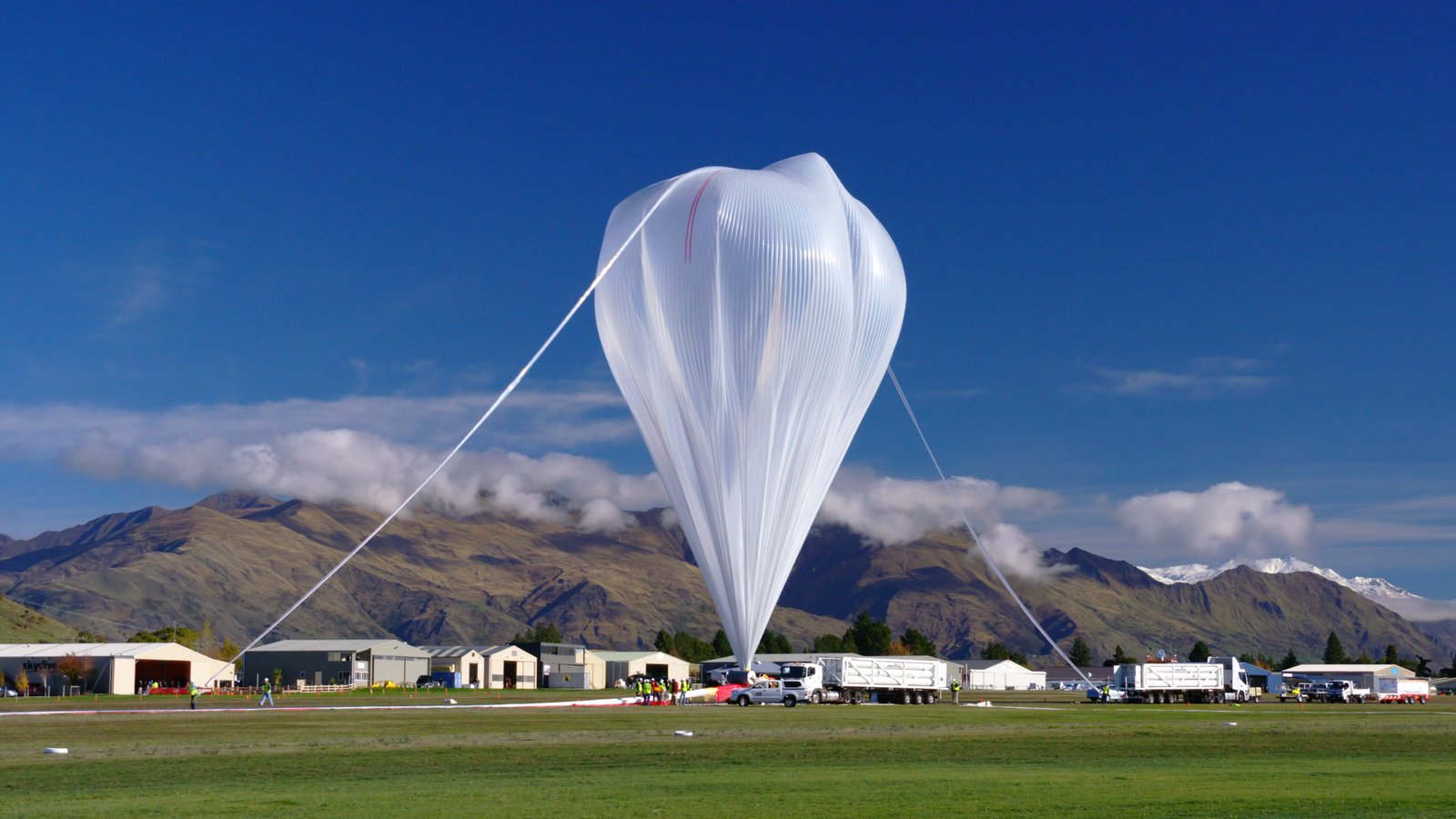
The ICAO type designator HGHL does not represent a specific aircraft model or a single industrial product, but is instead a generic air traffic control (ATC) category used in flight plans and air traffic services. As documented in ICAO Doc 8643 and FAA Order JO 7360.1K, HGHL is a special category entry for high-altitude balloons (HABs) within the LighterThanAir class. Because it is a regulatory code rather than a specific design, there is no single manufacturer, designer, or production run associated with the HGHL designation.
High-altitude balloons as a class are designed to operate in the stratosphere, typically reaching altitudes between 65,000 and 120,000 feet. This allows them to provide low-cost access to "near space," the region situated between the Kármán line and the Armstrong limit. Most HGHL-categorized craft are uncrewed and carry instrument payloads for various missions, including meteorology, Earth observation, and atmospheric science. While the majority are free-floating and lack conventional propulsion—relying on gas expansion, venting, and ballast for vertical movement—some modern platforms incorporate electric propulsion systems on their gondolas to enable limited track control or station-keeping.
Various organizations produce platforms that fall under this category. For example, Aerostar manufactures the Thunderhead stratospheric platforms and previously supplied balloons for the Google Loon telecommunications project. National agencies such as NASA and CNES also contract specialized manufacturers for large stratospheric research balloons.
Beyond scientific use, high-altitude balloons have been employed for military and intelligence purposes. The U.S. Department of Defense reported that the People's Liberation Army (PLA) of China developed a fleet of balloons for surveillance operations, including a specific balloon that traversed U.S. and Canadian airspace in February 2023. U.S. officials assessed that this program targeted over 40 countries and was equipped to collect signals intelligence (SIGINT). Due to the disposable nature of many HABs and the classified status of military programs, there is no unified production count or fleet total for aircraft operating under the HGHL designator.