
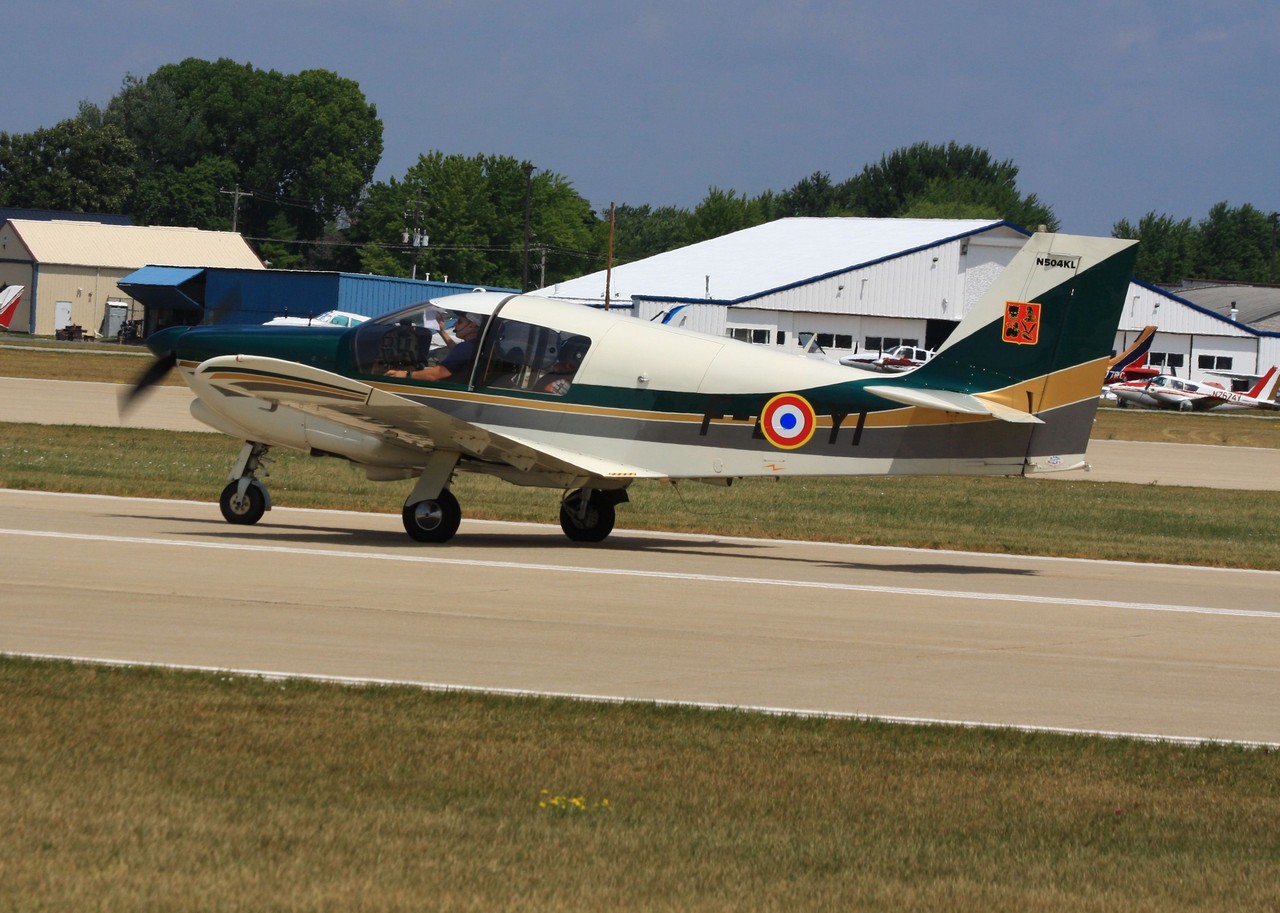
Design Innovation and Development
The HR-100 emerged from Avions Pierre Robin's ambition to modernize French general aviation through advanced metallurgy and aerodynamics. Designer Chris Heintz created the prototype by extensively modifying a Robin DR.253 Regent, replacing its fabric-covered wings with an all-metal design that eliminated the characteristic gull-wing configuration inherited from earlier Jodel designs. This represented the first completely metal aircraft in Robin's lineup and marked a decisive shift toward contemporary construction methods.
The prototype's successful maiden flight on April 3, 1969, validated Heintz's design approach and led to production authorization the following year. Unlike its fabric-winged predecessors, the HR-100 incorporated a NACA 64A515 modified airfoil section across its 15.2 square meter wing area, achieving an aspect ratio of 5.36:1 that optimized both cruise efficiency and handling characteristics.
Production Variants and Powerplants
Robin manufactured the HR-100 in five distinct variants between 1970 and 1976, each differentiated primarily by powerplant selection. The HR-100/180 featured the 180-horsepower Avco Lycoming O-360, while the HR-100/200 utilized the fuel-injected IO-360 producing 200 horsepower. The HR-100/210 increased power to 210 horsepower, and the HR-100/250TR "President" incorporated the 250-horsepower IO-540 engine with retractable landing gear.
The most ambitious variant, the HR-100/285, first flew on November 18, 1972, powered by the revolutionary Teledyne Continental Tiara 6-285B engine producing 285 horsepower. This model became the first Robin aircraft equipped with retractable landing gear and demonstrated the manufacturer's commitment to high-performance touring aircraft. The Tiara engine, though innovative, proved problematic in service and contributed to limited production numbers for this variant.
The Manufacturer's Legacy
Avions Pierre Robin operated as one of the world's smallest aircraft manufacturers from its Dijon facility, having formed in 1957 under the name Centre Est Aeronautique. The company's intimate scale allowed for personalized customer service and specialized modifications, including the HR-100/310/4+2 variant that accommodated four adults and two children in an extended cabin configuration.
Robin's engineering team achieved remarkable diversity within the HR-100 program despite limited resources. The aircraft's fuel capacity of 440 liters provided substantial range for European touring, while the three-bladed Hoffmann wooden constant-speed propeller optimized performance across the engine range. Maximum takeoff weight reached 1,400 kilograms, with an empty weight of 840 kilograms allowing generous payload capacity.
Military and Government Service
The French Air Force recognized the HR-100's capabilities by ordering multiple HR-100/250 aircraft during the mid-1970s for communications and liaison duties. These military variants served with both the Flight Test Centre (CEV) and naval aviation units, demonstrating the design's versatility beyond civilian touring roles. The aircraft's robust construction and reliable Lycoming powerplants made it suitable for demanding military operations.
French military operators appreciated the HR-100's combination of performance and economy, particularly its cruising speed capabilities and instrument flight rules equipment. The retractable landing gear variants provided military pilots with modern training platforms that bridged the gap between basic trainers and high-performance military aircraft.
International Operations
Civilian HR-100 aircraft found homes across multiple continents, with significant populations in Germany and Australia complementing the primary French market. The aircraft's touring capabilities and four-seat configuration appealed to flying clubs and private owners seeking reliable cross-country transportation. European operators particularly valued the type's ability to operate from shorter airfields while maintaining respectable cruise speeds.
Production End and Legacy
Robin ceased HR-100 production in 1976 after completing 178 aircraft, with some sources citing 174 examples. The program's conclusion led directly to development of the R.1180 Aiglon, which incorporated lessons learned from HR-100 operations including revised weight distribution and improved cabin ergonomics. A two-seat trainer derivative, designated HR.200, extended the design's influence into flight training markets.
The HR-100's seven-year production run established important precedents for French general aviation manufacturing, proving that small companies could successfully develop sophisticated all-metal aircraft. Chris Heintz's design innovations, particularly the clean aerodynamics and structural efficiency, influenced subsequent Robin designs and contributed to the company's reputation for engineering excellence in the competitive European market.