
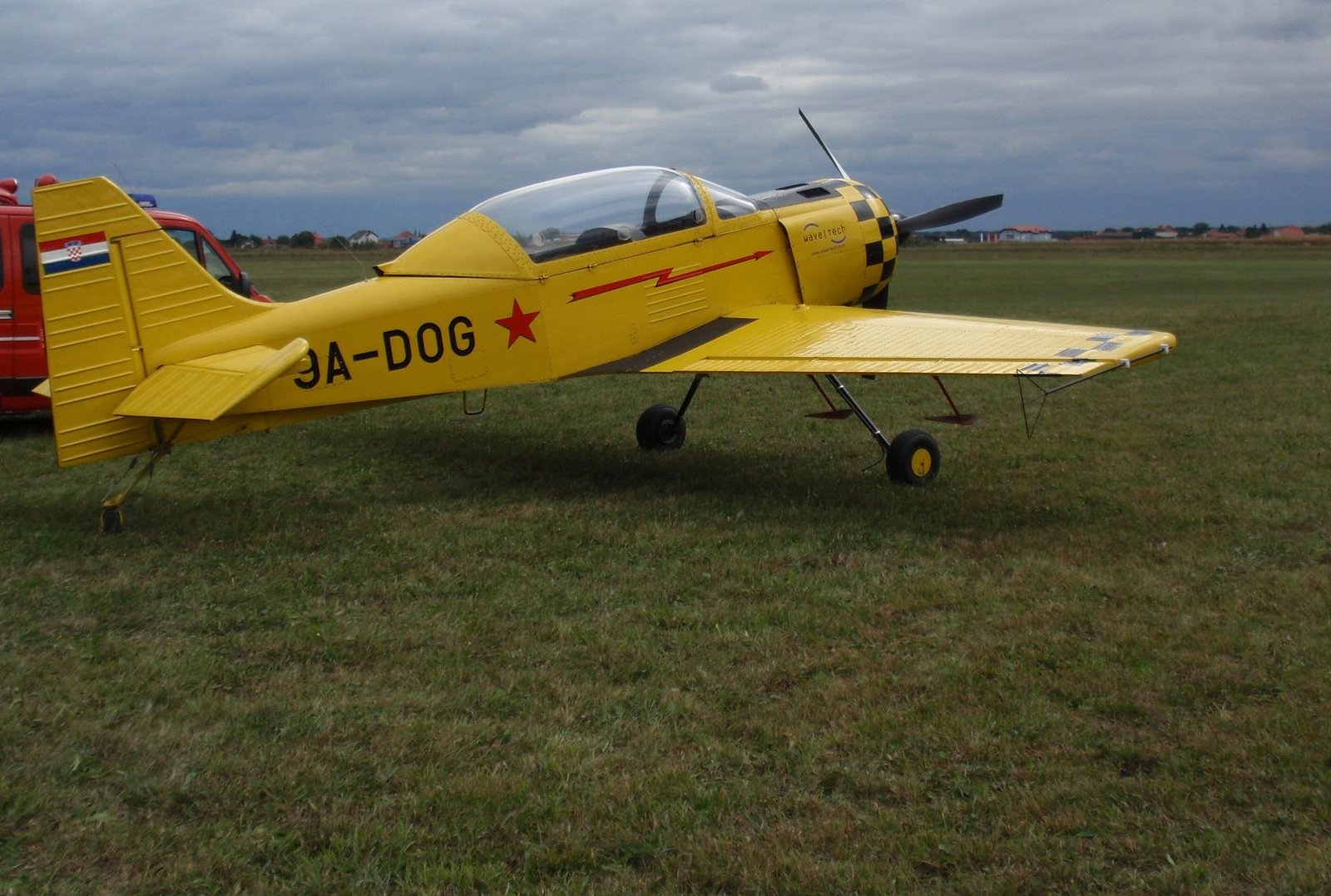
The Interavia I-3, known in Russia as the Technoavia SP-91, is a specialized two-seat aerobatic aircraft designed for high-performance competition and advanced training. The aircraft was developed by Sergey (Sergei) Nezhmetdinovich Yerstoyan (also spelled Estoyan), the lead designer responsible for the renowned Sukhoi Su-26, Su-29, and Su-31 series. Following his departure from Sukhoi, Yerstoyan co-founded SCF Technoavia, where he developed the SP-91 as a more cost-effective and slightly less aggressive alternative to the Su-29, while still maintaining the ability to compete in the Unlimited Class of aerobatics.
The aircraft first flew in 1993. It is characterized as a single-engine, low-wing monoplane with a crew capacity of two (one pilot and one passenger or student), although the airframe can be converted to a single-seat configuration. Structurally, the I-3 is built for extreme stress; it is rated for +11/-9 g with two occupants, and some reports indicate an ultimate load limit of approximately ±18 g.
Power is provided by a Vedeneyev M-14P nine-cylinder air-cooled radial piston engine. The standard engine output is approximately 268 kW (359–360 hp), although a "westernised" I-3M variant reportedly offered a more powerful 400 hp engine option. In terms of performance, the aircraft reaches a maximum cruise speed of 350 km/h and a maximum speed (Vne) of 400 km/h, with some data suggesting speeds up to 450 km/h. Range estimates vary significantly between sources, with figures cited between 400 km and 500 nautical miles.
Production took place in Russia through SCF Technoavia during the 1990s and into the early 2000s. The Interavia name served as the export designation for the SP-91 (sometimes referred to as the E-3). Production numbers were limited, with estimates suggesting approximately 20 to 25 aircraft were built. While no official registry exists, it is estimated that 10 to 12 aircraft survive today, including private examples such as the Croatian-registered 9A-DOG, which dates back to the first production year of 1993.