
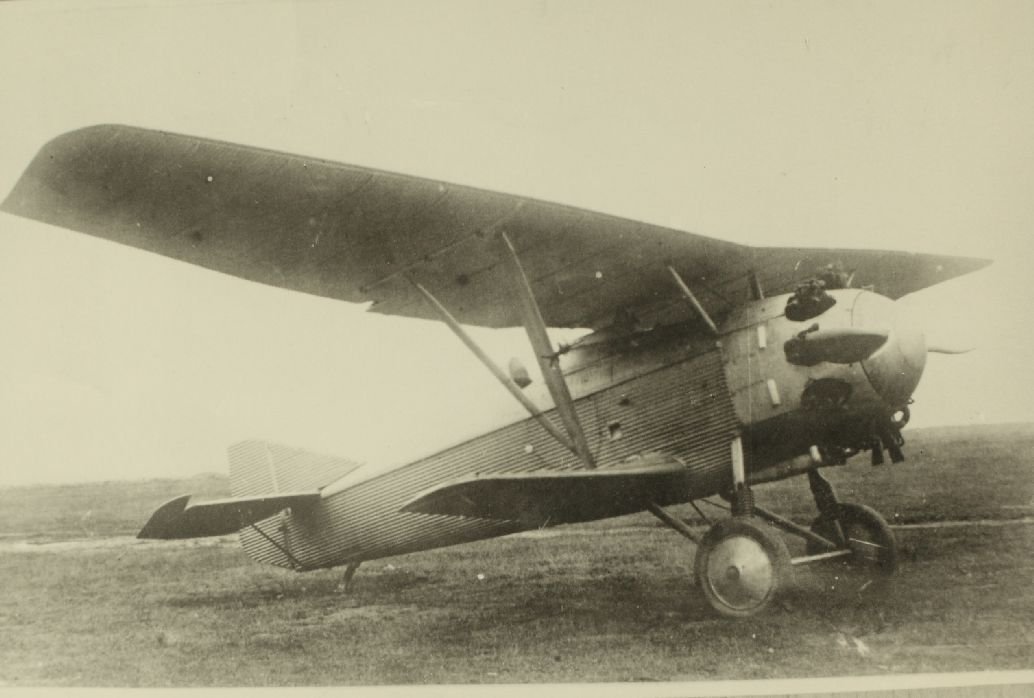
The Tupolev I-4 was a single-seat fighter developed in the Soviet Union during the late 1920s. The aircraft was designed at the Central Aerohydrodynamic Institute (TsAGI) in Moscow, where the design process was led by Andrei Nikolayevich Tupolev, who headed the institute's aircraft design section. According to records from Wikimedia Commons, the I-4 conducted its first flight on August 10, 1927. The aircraft entered service shortly thereafter, typically cited as occurring between 1928 and 1929, and continued to serve into the early 1930s.
Regarding its manufacturing, modern database classifications often associate the I-4 with the Khrunichev State Research and Production Space Center. However, historical evidence suggests this is a reflection of institutional lineage rather than a direct contemporaneous manufacturing label. The plant that would eventually become the M. V. Khrunichev Machine-Building Plant (Plant No. 23 in Moscow) was known for producing various Tupolev bombers, including the ANT-4/TB-1 and ANT-6/TB-3, as well as the Tu-2 and Ilyushin Il-4 during the 1930s and 1940s. The modern Khrunichev State Research and Production Space Center was formally organized in its current capacity in 1993, merging the machine-building plant with the Salyut design bureau. Since the 1960s, this entity has transitioned from aircraft production to the development of rocket and space hardware, most notably the Proton family of launch vehicles.
While the I-4 served as a fighter for the Soviet Air Forces (VVS), the provided historical records do not specify exact production totals, engine models, or detailed performance specifications. There is no documented evidence of the aircraft's participation in specific combat conflicts or its use in civil or commercial roles. The legacy of the I-4 persists primarily through its inclusion in the catalog of early Tupolev designs, marking a transitional period in Soviet aviation before the industry shifted toward the large-scale bomber production and subsequent aerospace engineering associated with the Khrunichev lineage.