
Design Origins and Development
John Isaacs conceived the Fury as an affordable sporting biplane that would capture both the aesthetic appeal and flight characteristics of the legendary Hawker Fury fighter. Drawing upon his previous success with the Currie Wot biplane, Isaacs began construction of his prototype (designated Fury Mk 1, registration G-ASCM) in 1961 at Southampton, England. The aircraft first flew on August 30, 1963, from Thruxton Aerodrome, initially powered by a 65-horsepower Walter Mikron III radial engine.
The original powerplant proved inadequate for the design's intended performance envelope. Recognizing this limitation, Isaacs re-engineered the aircraft with a 125-horsepower Lycoming O-290-D four-cylinder engine and strengthened the airframe accordingly. This improved version, designated the Fury Mk 2, achieved first flight in May 1967 and became the basis for the plans offered to homebuilders.
Construction and Distribution
Isaacs made plans available through the Popular Flying Association (now the Light Aircraft Association) beginning in 1967, establishing no formal manufacturing company. The design called for traditional wood-and-fabric construction methods familiar to amateur builders, yet incorporated modern stress analysis allowing the airframe to withstand 9G loads during aerobatic maneuvers. This combination of classical construction techniques with contemporary engineering made the Fury II accessible to skilled homebuilders while delivering genuine aerobatic capability.
The single-seat, open-cockpit design featured a gross weight of 1,000 pounds with an empty weight of 710 pounds. Its single-bay biplane configuration eliminated the complexity of multi-bay wire bracing while maintaining the classic proportions of its inspiration. Fixed tailskid landing gear simplified construction and maintenance compared to retractable systems.
Global Construction Projects
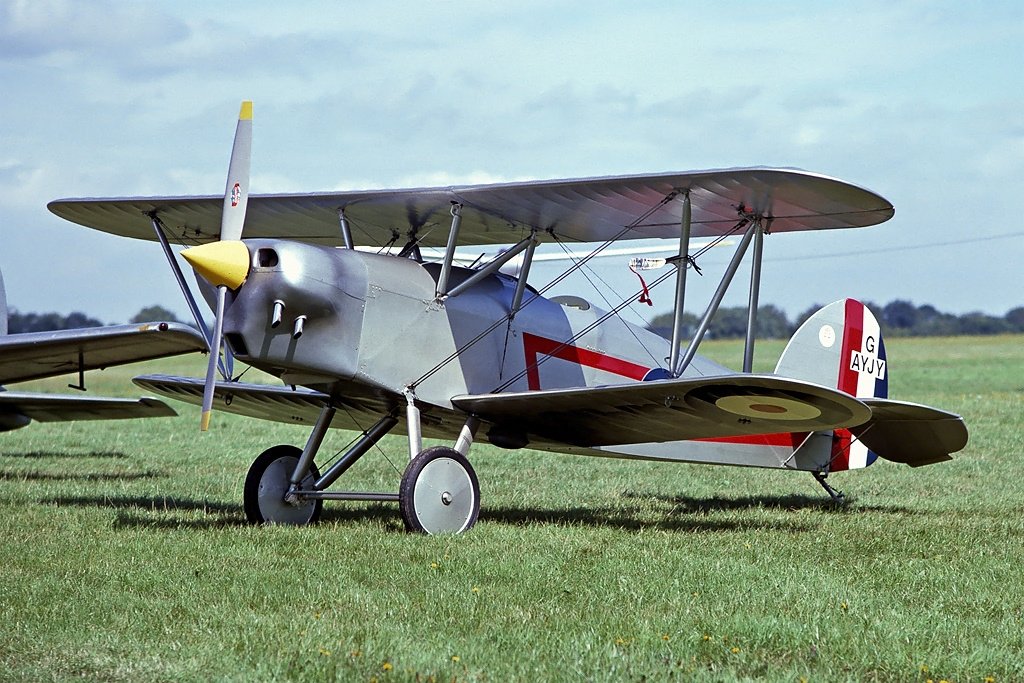
Builder enthusiasm extended far beyond the United Kingdom, with documented examples constructed across multiple continents. Notable early builds included G-AYJY, the second Fury completed after a six-year construction project and flying by April 1976. In Canada, William Marsden built CF-AAO in Edmonton, Alberta, while Barry Thompson constructed the first New Zealand example, ZK-DMN, achieving first flight on March 26, 1975.
Some projects required extraordinary dedication. Howard Brunt and Heinz Frick spent 25 years completing G-BZAS, demonstrating the commitment many builders brought to the project. G-RODI, registered on December 22, 1978, as serial number CM.1 and later redesignated PFA 011-10130, was not completed until 1986, illustrating the lengthy timescales typical of amateur construction.
Powerplant Details
The Lycoming O-290-D represented a significant upgrade from the prototype's Walter Mikron engine. This flat-four powerplant, manufactured by Lycoming Engines (a Textron division), entered production in the late 1940s and remained available for over four decades. Weighing approximately 250 pounds, the O-290-D provided adequate power for the Fury II's aerobatic mission while maintaining reasonable fuel consumption for recreational flying.
The engine's reliability stemmed from its derivation from World War II-era designs, incorporating proven metallurgy and engineering practices. Over 10,000 O-290 series engines were produced across all variants, ensuring parts availability and maintenance expertise remained accessible to operators.
Operational Service
Fury IIs found their primary role in recreational aviation and airshow demonstrations. G-AYJY appeared at Old Warden on April 19, 1976, while G-BIYK was displayed at the PFA Rally at Cranfield on July 7, 1984. A Lohr-Isaacs Fury variant appeared at the famous Oshkosh air show in 1978, introducing American audiences to the design.
Many operators chose authentic or fictional military color schemes to enhance the aircraft's vintage fighter appearance. G-BBVO wore markings as "S1579" while G-RODI appeared as "K3731," both evoking Royal Air Force schemes despite the aircraft's purely civilian nature.
Legacy and Continuing Operations
The Isaacs Fury II established itself as a benchmark for scale replica homebuilts, proving that amateur builders could successfully construct sophisticated aerobatic aircraft. Plans remain available through the Light Aircraft Association, ensuring the design's continued accessibility to new generations of builders.
Active examples continue flying in the United Kingdom, New Zealand, and other countries where original builders or subsequent owners maintain these hand-crafted aircraft. The design's enduring appeal lies in its successful combination of 1930s fighter aesthetics with practical homebuilt construction methods, creating an affordable path to vintage aerobatic flying that commercial manufacturers could not economically provide.