
Service Dominance
The Il-14 transformed Soviet civil aviation, providing Aeroflot with a reliable workhorse that pilots found pleasant to fly and generally superior to the aging Li-2. From its service entry on November 30, 1954, the aircraft demonstrated marked improvements over its predecessor in every measurable aspect: enhanced speed and range, superior handling characteristics, and substantially greater operational reliability. The type's versatility made it an excellent "flying truck," assigned to numerous specialized missions throughout its service life.
International Distribution
Beyond Soviet borders, the Il-14 achieved widespread distribution across the Communist bloc and developing nations. All Warsaw Pact countries received the aircraft, along with China, Afghanistan, Burma, Congo, Cuba, Egypt, Guinea, India, Indonesia, Iran, Mali, Mongolia, Nepal, North Korea, Syria, Vietnam, Yemen, and Yugoslavia. The Polish Air Force accepted their first example on June 17, 1955, later leasing it to LOT Polish Airlines three separate times between 1965 and 1975, demonstrating the aircraft's dual military-civilian utility.
The Ilyushin Legacy
The Ilyushin Design Bureau, renowned for creating the Il-2 Shturmovik—one of World War II's most decisive weapons with 36,163 units produced—applied their engineering expertise to civil aviation with the Il-14. The bureau's reputation for robust, practical aircraft design translated effectively to the commercial transport role. The Chkalov Plant in Tashkent, which manufactured the Il-14, continues aircraft production today, currently building the Il-76 transport.
Design Evolution
Test pilot V.K. Kokkinaki conducted the prototype's first flight on July 15, 1950, followed by a second, production-representative prototype on October 1, 1950. The Il-14 represented a comprehensive redesign rather than an evolutionary improvement of the Il-12, addressing fundamental deficiencies that had plagued the earlier aircraft. This thorough engineering approach resulted in an aircraft that remained viable well beyond its intended service life.
Powerplant and Performance
Two Ash-82T radial engines, each producing 1,900 horsepower through 14 cylinders arranged in twin rows, powered the Il-14. These Soviet-manufactured piston engines provided sufficient power for a service ceiling of 24,278 feet and reliable operation across diverse climatic conditions. The powerplant choice reflected Soviet preference for proven radial engine technology over the emerging turbine alternatives of the early 1950s.
Passenger Configurations
The Il-14's passenger capacity evolved significantly throughout production. The initial Il-14P carried just 18 passengers when introduced in 1954, but subsequent variants expanded capacity dramatically. The Il-14P-24 accommodated 24 passengers, while the Il-14M-28 and Il-14M-32 carried 28 and 32 passengers respectively. The highest-capacity Il-14M-36 seated 36 passengers by eliminating galley and cabin baggage compartments. Czechoslovak-built Avia-14 variants pushed capacity even further, offering configurations for 24, 32, and 40 passengers, with specialized VIP versions designated Il-14S.
Production Distribution
Total production of 1,123 aircraft was distributed across three manufacturing sites: 839 built in the Soviet Union, primarily at the Chkalov Plant in Tashkent, 204 manufactured by Avia in Czechoslovakia, and 80 produced by VEB Dresden in East Germany. This international production arrangement reflected both the aircraft's success and Soviet willingness to share technology with allied nations during the height of the Cold War.
Extended Service Life
Despite being technologically obsolete by the late 1960s with the advent of turbine-powered aircraft, the Il-14 continued operational service into the 1990s. This remarkable longevity testified to the aircraft's fundamental soundness and the economic realities of operators in developing nations. Military variants, including the Il-14T transport, served alongside passenger versions throughout this extended operational period.
Surviving Examples
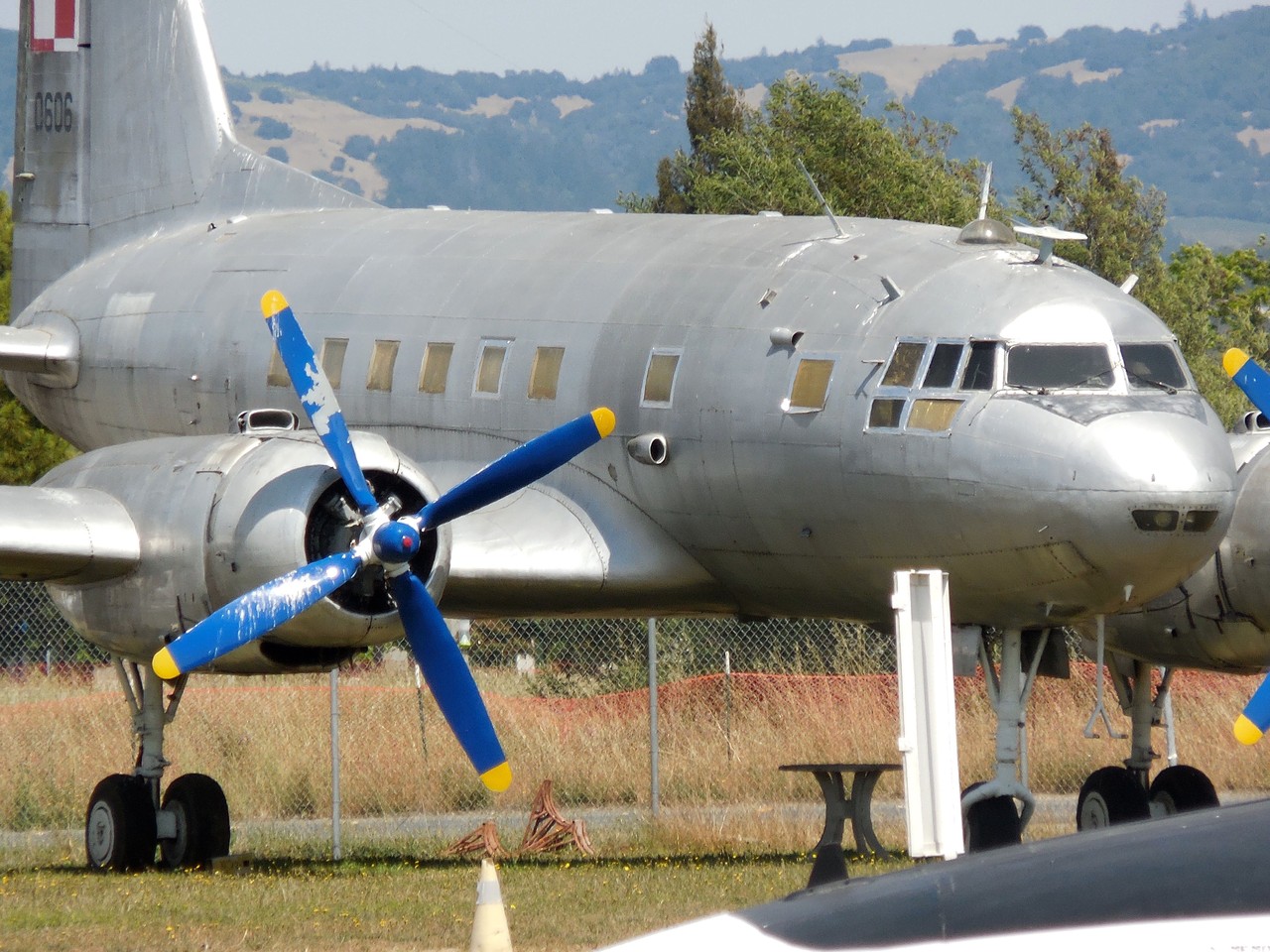
Several Il-14s survive today as static museum displays and airworthy examples in the airshow circuit. One notable survivor, an Il-14T with manufacturer serial number 7343408, was built at Tashkent in 1957 and served the Soviet Air Force until March 30, 1991, accumulating 9,148 flight hours. After near-scrapping, Russian Air Force officers preserved the aircraft, restoring it to airworthiness for a successful 2005 ferry flight from Moscow to Zürich. A few examples reached private ownership in the United States, while others are displayed in institutions like the Technik Museum in Sinsheim, preserving this significant chapter in aviation history.