
Service History
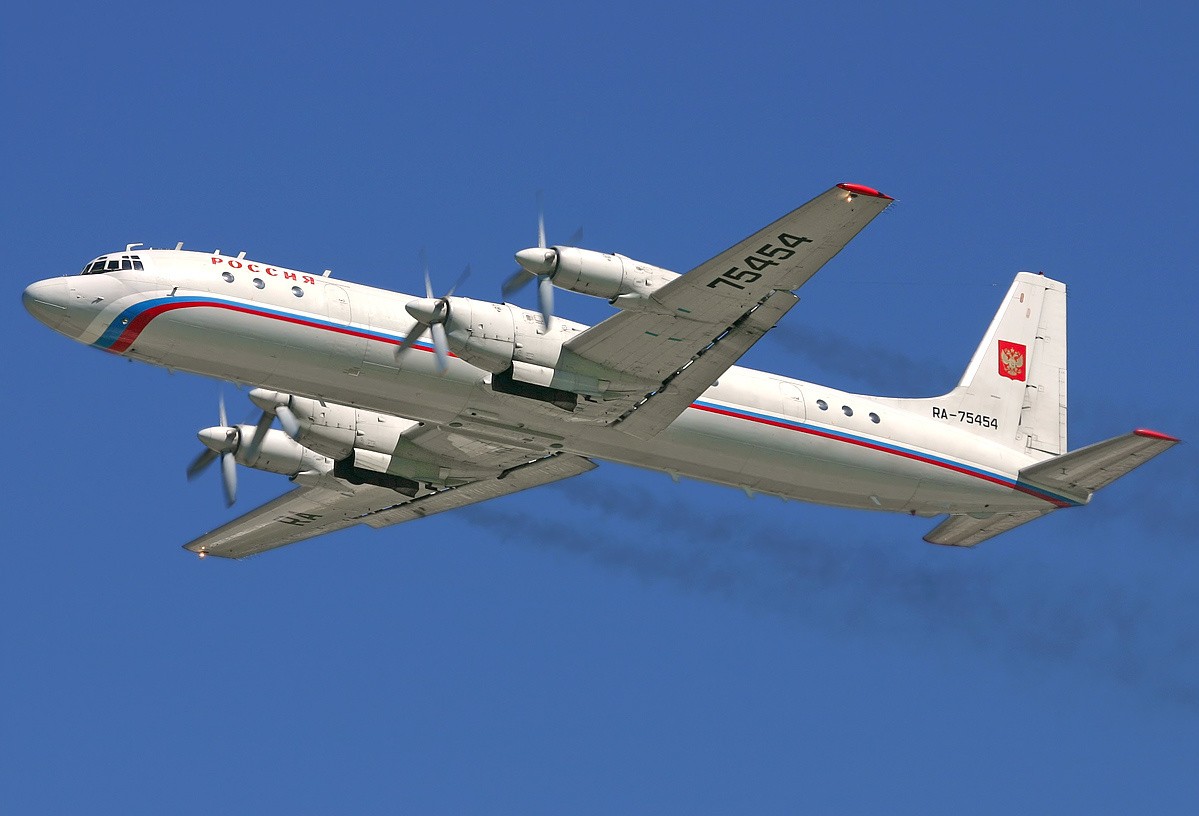
The Il-18D dominated Soviet and Eastern Bloc aviation throughout the 1960s and 1970s, serving as Aeroflot's primary medium to long-range airliner before jet aircraft became prevalent. Between 1966 and 1969, Plant No. 30 at Khodynka produced 122 Il-18D variants specifically designed for extended range operations. The aircraft enabled Aeroflot to establish reliable service on demanding routes including polar flights, where its robust turboprop engines proved more dependable than early jets in extreme conditions.
The Il-18 family achieved remarkable longevity in service, with at least one Il-18D (registration P-835) delivered to Air Koryo in October 1981 reportedly remaining operational more than four decades later. This extraordinary service life demonstrates the aircraft's fundamental design soundness and the reliability of its Soviet engineering.
Record-Setting Performance
Between 1958 and 1960, various Il-18 variants established 25 world records for range, altitude, and payload combinations, showcasing the type's exceptional capabilities. The aircraft earned international recognition at the 1958 Brussels World Fair, where it received the Grand Prix. These achievements helped establish the Soviet Union's credibility in commercial aviation and demonstrated that Soviet aircraft could compete with Western designs.
The Manufacturer
The Ilyushin Design Bureau traces its origins to 1933 under the leadership of Sergei Vladimirovich Ilyushin, one of the Soviet Union's most accomplished aircraft designers. The bureau had previously achieved success with military transports and bombers during World War II, including the famous Il-2 Sturmovik ground attack aircraft. Following the war, Ilyushin transitioned to civilian aircraft development while maintaining military projects.
Today, the Ilyushin name continues within Russia's United Aircraft Corporation (UAC), formed in 2006 through consolidation of the country's aerospace industry. The company remains active in both civilian and military aircraft development, though production has shifted from the historic Khodynka facility where the Il-18 was born.
Engine & Technical Innovation
The Il-18D represented a significant technological advancement through its adoption of four Ivchenko AI-20M turboprop engines, each generating 3,169 kilowatts (4,250 shaft horsepower). These engines, manufactured by Ivchenko-Progress in Zaporizhzhia, Ukraine, replaced the problematic Kuznetsov NK-4 turboprops that had plagued earlier variants. The change to AI-20 engines, mandated by Soviet decree in July 1958, proved crucial to the aircraft's success.
The "D" designation stood for "dalniy," meaning long-range, reflecting the variant's enhanced fuel capacity. Engineers added a 6,300-liter center-wing fuel tank, bringing total fuel capacity to 30,000 liters and significantly extending operational range. The aircraft featured a pressurized cabin with 17 windows on the port side and 16 on the starboard side, accommodating various seating configurations from 84 to 100 passengers depending on airline requirements.
Operational Excellence
Pilots praised the Il-18D for its stability and reliability, particularly in challenging weather conditions. The aircraft cruised at 650 kilometers per hour and demonstrated exceptional performance in hot-and-high conditions that challenged many contemporary designs. Its tricycle landing gear configuration and robust construction made it suitable for operations from less-developed airports throughout the Soviet Union and export markets.
The aircraft typically operated with a crew of five to nine, depending on configuration and route requirements. Flight crews appreciated the aircraft's straightforward systems and predictable handling characteristics, contributing to its reputation for operational reliability.
Military Adaptations
While the Il-18D itself remained purely civilian, the basic design spawned important military variants. The Il-38 "May" anti-submarine warfare aircraft, first flown in September 1961, utilized the Il-18's proven airframe with specialized naval equipment. The Soviet Air Force also operated VIP transport versions designated Il-18S, demonstrating the platform's versatility beyond commercial service.
Production Legacy
Total production of all Il-18 variants reached at least 678 aircraft by the program's conclusion around 1978-1985, with manufacturing concentrated exclusively at Moscow Plant No. 30. The Il-18D represented the pinnacle of the family's development, incorporating lessons learned from earlier variants while providing the range and capacity needed for expanding Soviet airline networks.
Today, surviving examples serve as monuments to Soviet aviation achievement. A preserved Il-18 stands at Sheremetyevo Airport, unveiled in April 1979 to commemorate the type's contributions to Soviet aviation. The aircraft's legacy continues to influence Russian aircraft design, establishing principles of rugged construction and operational reliability that characterize Russian aviation to this day.