
Service History
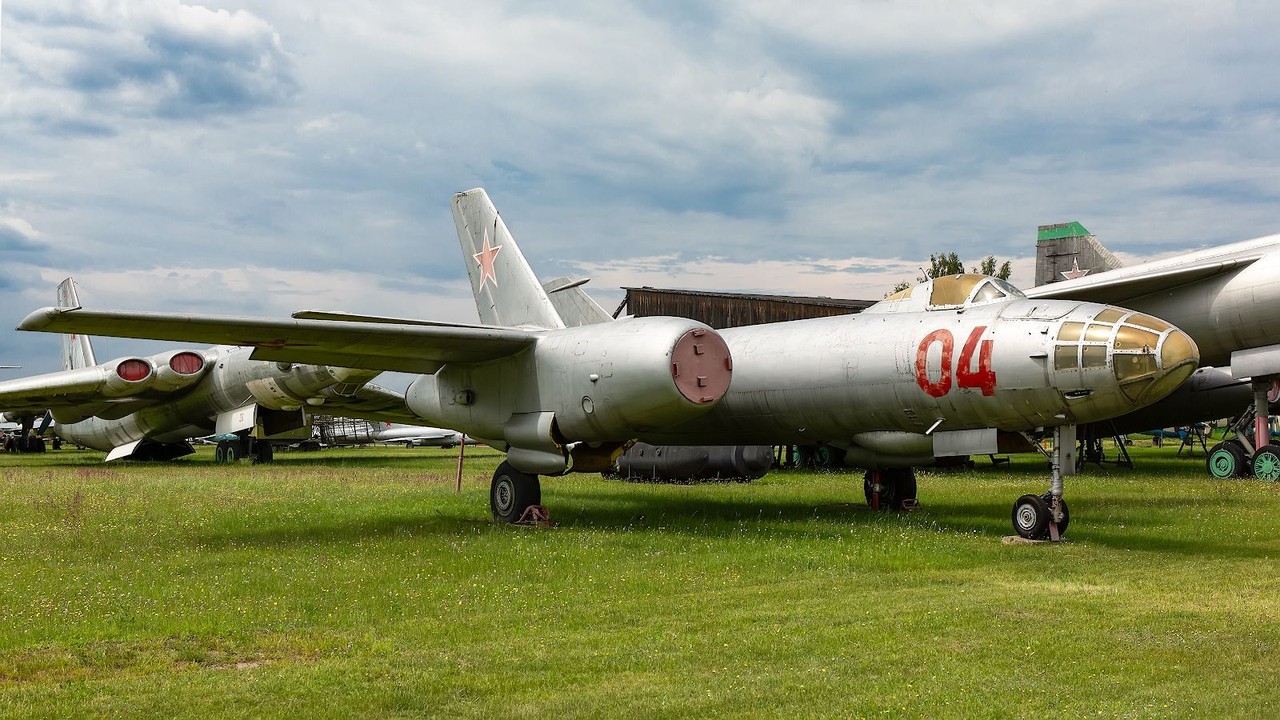
The Il-28 dominated Soviet tactical bombing operations throughout the 1950s and became one of the most widely distributed military aircraft of the Cold War era. By the end of 1950, the bomber was in full service with the VVS (Red Air Force), followed by naval aviation deployment in 1951. The aircraft was exported to approximately 20 nations, with roughly half of the 6,316 Soviet-built examples entering foreign service across Warsaw Pact countries, the Middle East, and Africa.
The People's Republic of China emerged as the largest operator, receiving over 250 Soviet-built Il-28s beginning in 1952, eventually operating more than 500 aircraft total. Chinese Il-28s appeared during the late Korean War as a strategic deterrent but saw no combat action. Finland operated four examples for target-towing duties from 1961 to the 1980s, while North Korea continues to maintain approximately a dozen serviceable aircraft today.
Wartime and Operational History
The Il-28 filled a critical gap in Soviet military aviation as a replacement for the piston-powered Tupolev Tu-2 bomber. Design requirements called for an aircraft capable of 500 mph speeds while carrying over 6,000 pounds of ordnance. The bomber's versatility allowed it to serve in multiple roles including reconnaissance, torpedo bombing, and target towing after becoming obsolete as a front-line weapon.
Variants included the Il-28R naval reconnaissance version, which deleted the right nose cannon and incorporated wingtip fuel tanks to compensate for reduced internal capacity. Two Il-28R prototypes were converted from standard bombers, with the first flying on January 8, 1951, under test pilot Vladimir Kokkinaki. Limited production began in summer 1951.
The Designer and Development
Sergei Ilyushin proposed development of the tactical jet bomber in late 1947, with full development beginning in early 1948. The veteran designer leveraged elements from his unsuccessful Il-22 project and incorporated copied British engine technology. Ilyushin's design competed directly against Andrei Tupolev's Tu-14, with Tupolev dismissively calling the Il-28 a "bastard child."
The prototype performed its maiden flight on July 8, 1948, with OKB chief test pilot Vladimir Kokkinaki at the controls, accompanied by radio operator B.A. Yerofeyev and navigator N.D. Sorokin. After parallel testing of both designs, Soviet authorities selected the Il-28 in May 1949. The first production aircraft rolled out of the Moscow factory in March 1950, with additional production lines established in Voronezh and Omsk.
Engine and Technical Innovation
The Il-28's powerplant represented a crucial technological leap for Soviet aviation. The initial prototype used British-built Rolls-Royce Nene engines obtained through a licensing agreement, while the second prototype flew on December 30, 1948, with Soviet-built RD-45 engines. Production aircraft employed improved Klimov VK-1 turbojets, each producing 5,000 pounds of thrust.
The bomber featured an all-metal, shoulder-wing configuration with straight wings and swept tail surfaces. Retractable tricycle landing gear provided improved ground handling compared to conventional tail-wheel arrangements. The three-man crew included a pilot, navigator, and radio operator who also served as tail gunner.
International Production
License production extended the Il-28's global reach significantly. China established production at the Harbin factory following the 1960s Soviet-Chinese split, with the first Chinese-built H-5 prototype flying in September 1964. Full Chinese production commenced in 1965, ultimately producing over 319 H-5 variants. Chinese aircraft incorporated design improvements including a redesigned wing structure that eliminated the horizontal manufacturing break, saving 240 pounds while complicating construction.
Czechoslovakia also manufactured the type under license, contributing to total worldwide production estimates ranging from 6,316 to over 10,000 aircraft including all variants and international production.
Pilot Experience and Performance
Pilots praised the Il-28 for its reliability, simplicity, and forgiving handling characteristics. The aircraft demonstrated excellent stability and met all original performance requirements, achieving the specified 500 mph speed capability while carrying maximum bomb loads. Crews appreciated the bomber's straightforward systems and robust construction, which contributed to high operational readiness rates throughout its service life.
The bomber's adaptability allowed successful transition to civilian roles after military obsolescence. Aeroflot operated Il-28s as the airline's first jet aircraft, transporting newspaper printing plates to Siberian cities and handling specialized cargo missions.
Legacy and Preservation
The Il-28 represents a pivotal moment in Soviet aviation history as the nation's first mass-produced jet bomber. Its widespread service across multiple air forces demonstrated Soviet technological advancement in the early jet age. Today, several examples are preserved in museums across Russia, Germany, Hungary, and other nations, serving as monuments to Cold War aviation development.
North Korea's continued operation of a small Il-28 fleet provides the nation with strategic bombing capability against South Korean and Japanese targets, though the aging aircraft would face significant challenges against modern air defense systems.