
Development and Design
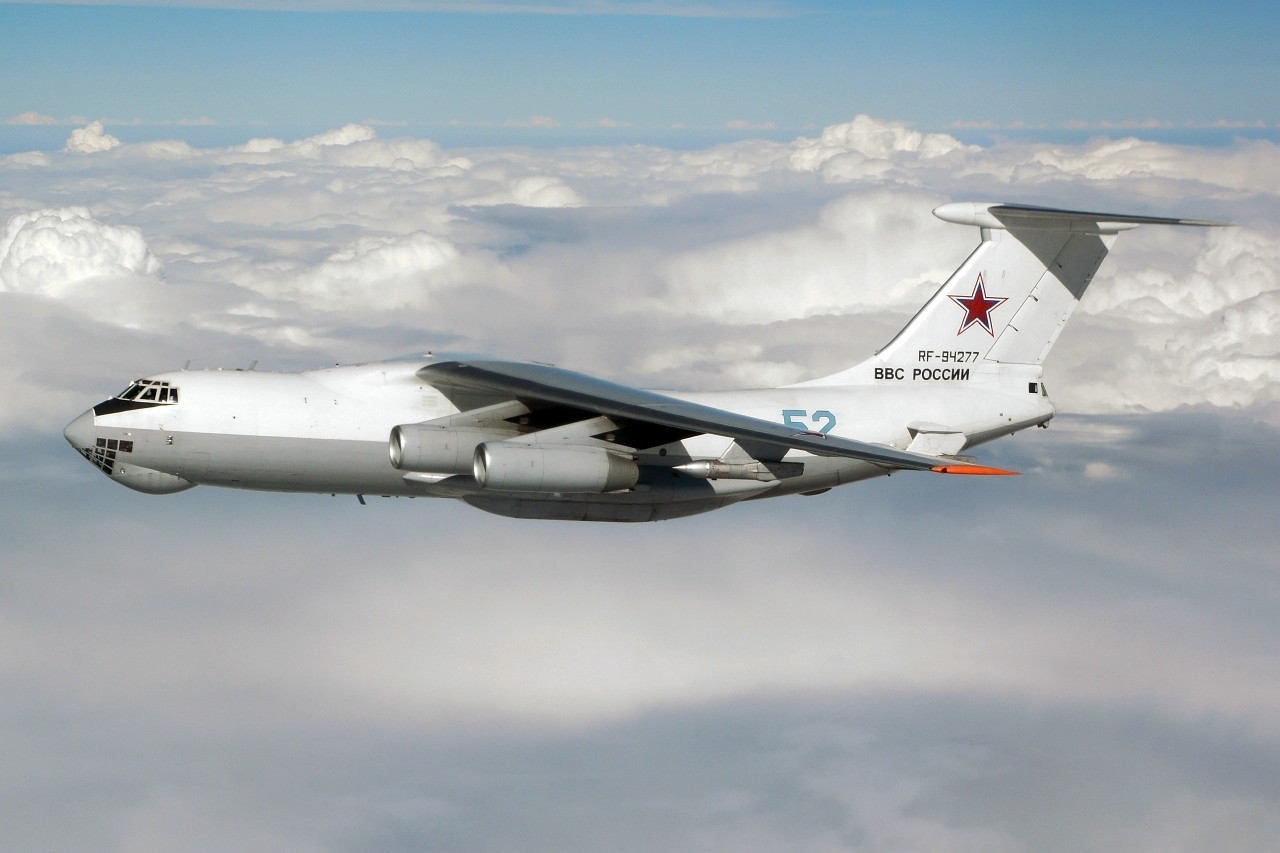
The Ilyushin Il-78 emerged from Cold War requirements for enhanced Soviet aerial refueling capabilities. The OKB Ilyushin design bureau, led by the Ilyushin team, developed the aircraft as a specialized derivative of the proven Il-76MD transport to meet Russian Air Force demands for increased fuel transfer capacity. The design team focused on creating a tanker capable of supporting simultaneous refueling operations for multiple aircraft while maintaining the robust operational characteristics of its transport parent.
Key design innovations included structural modifications to accommodate additional fuel storage systems, with early Il-78 variants featuring removable tanks for dual transport-tanker roles, while the improved Il-78M incorporated fixed internal fuel systems. Engineers replaced the Il-76's tail gunner position with an observer station and added ranging radar systems for precise formation flying. Formation lights mounted on the cargo ramp enabled critical night refueling operations, addressing the round-the-clock operational tempo demanded by Soviet strategic aviation.
Service Entry and Operations
Serial production commenced in 1984 at the Tashkent Aviation Plant, with the type entering official service between 1985 and 1987. The Il-78 immediately began replacing the aging Myasishchev M-4 "Bison" tankers that had served as interim solutions for Soviet aerial refueling needs. The aircraft's three-point probe-and-drogue system could transfer fuel at rates between 900 and 2,200 liters per minute, supporting complex multi-aircraft refueling scenarios essential for long-range strategic missions.
By 2014, approximately 53 Il-78s remained operational worldwide, serving air forces across multiple continents. Russia operates the largest fleet with 19 units, while international operators include India with 6 aircraft delivered between 2003-2004, Pakistan with 4 units delivered from 2009-2011, China with 4 aircraft procured in 2005, and additional examples serving with Ukraine, Algeria, and Libya. The type's export success demonstrated the aircraft's reliability and the growing global demand for aerial refueling capabilities.
Technical Capabilities
Powered by four Aviadvigatel D-30KP turbofan engines, each producing 27,000 pounds of thrust, the Il-78 achieves a maximum speed of 530 miles per hour and operates at service ceilings up to 39,370 feet. The aircraft's 4,536-mile range allows extended loiter times in refueling areas, critical for supporting long-duration combat air patrols and strategic bomber missions. Total fuel capacity varies by variant, with advanced Il-78M models carrying up to 110,000 kilograms of transferable fuel.
The aircraft requires a crew of six to seven, including specialized operators for the refueling systems. The D-30KP engines, also used in the MiG-31 interceptor and various commercial aircraft, provided proven reliability for long-range operations in harsh environments. These high-bypass turbofans offered the fuel efficiency essential for tanker aircraft, which must carry maximum fuel loads while maintaining sufficient reserves for their own operations.
Manufacturing and Variants
The Ilyushin Aviation Complex, founded in 1933 by renowned designer Sergei Ilyushin, leveraged decades of transport aircraft expertise in developing the Il-78. The company, famous for the Il-2 Shturmovik ground attack aircraft and the Il-76 transport family, transitioned from Soviet state enterprise to joint-stock company in the 1990s before integration into United Aircraft Corporation in 2006. This continuity ensured consistent engineering standards and manufacturing quality throughout the Il-78 production run.
Production encompassed approximately 30 original Il-78 aircraft through 1988, followed by 13 upgraded Il-78M variants with fixed fuel tank systems and increased maximum takeoff weight of 210 tonnes. The latest Il-78M-90A variant incorporates additional modernization packages, extending the type's operational relevance into the 21st century. Total production reached approximately 52-53 units, with manufacturing continuing as recently as 2014.
Limited Civil Applications
While designed primarily for military service, selected Il-78s found limited civilian applications as specialized freight carriers. Algeria operated early examples with registrations 7T-WIH and 7T-WIL from the mid-1980s, while ATI Airlines utilized UR-76767 for cargo operations. These conversions demonstrated the aircraft's versatility, though the specialized refueling equipment and military-specific systems limited widespread commercial adoption compared to standard Il-76 transports.
Legacy and Current Status
The Il-78 represents a crucial capability gap-filler for air forces requiring strategic reach without extensive overseas basing. As aerial warfare increasingly emphasizes long-range precision strikes and extended air patrols, the Il-78's ability to extend combat aircraft range remains strategically significant. The aircraft's continued production and international sales reflect ongoing global demand for aerial refueling capabilities, particularly among nations developing expeditionary air power capabilities.
Today, the Il-78 continues serving as the backbone of Russian aerial refueling operations while supporting allied air forces worldwide. Its robust design, derived from the successful Il-76 transport family, ensures operational longevity even as more advanced tanker designs emerge. The type's service record demonstrates the enduring value of purpose-built tanker aircraft in modern air operations.