
Development and Design
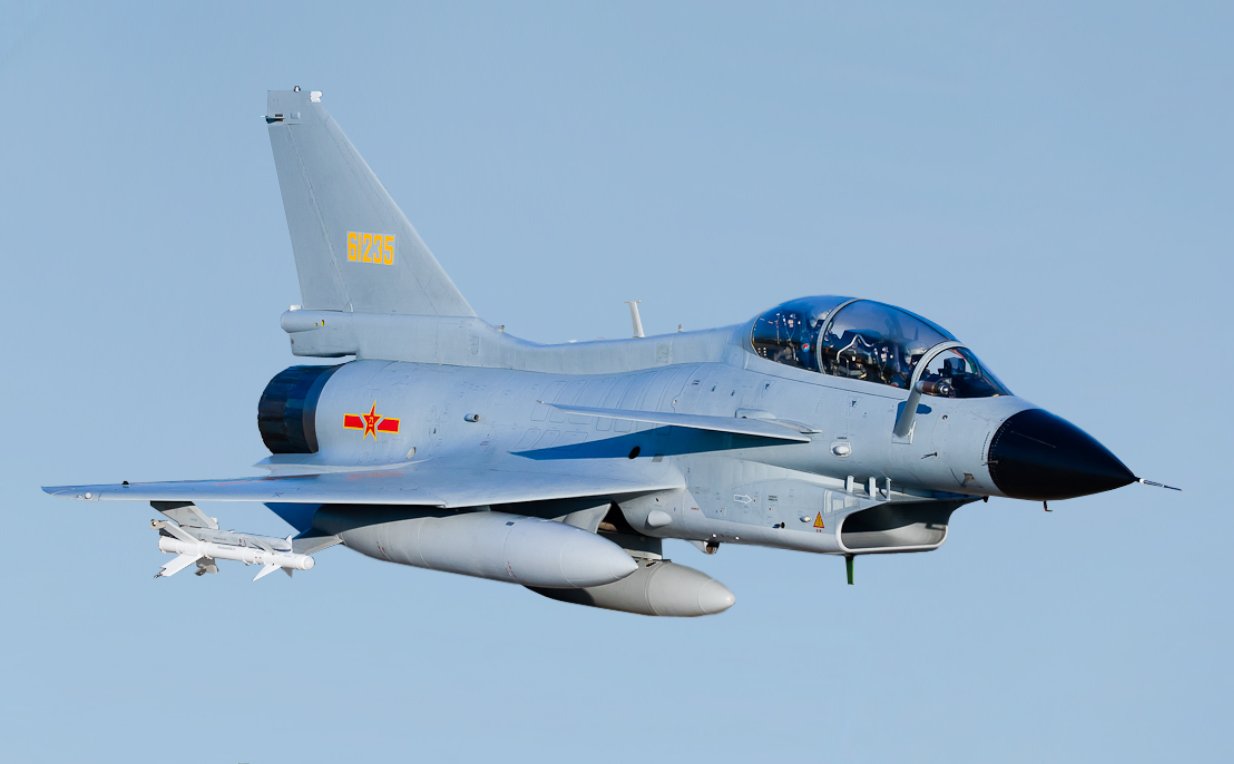
Launched in February 1980, the Lavi program was intended to produce a state-of-the-art 4th-generation multirole fighter for the Israeli Air Force (IAF). Designed by Israel Aircraft Industries (IAI) under the leadership of chief engineer Ovadia Harari, the aircraft was conceived to replace aging fleets of A-4 Skyhawks, F-4 Phantom IIs, and IAI Kfirs. The Lavi was optimized for close air support (CAS) and battlefield air interdiction (BAI), while maintaining a secondary air-defense role. Its advanced configuration featured a single-engine layout with a delta wing and canards, supported by a digital fly-by-wire flight control system and relaxed static stability to ensure high maneuverability and agility.
Technical Specifications and Performance
The Lavi was powered by a single Pratt & Whitney PW1120 afterburning turbofan, which produced 6,137 kg of dry thrust and 9,337 kg with afterburner. The aircraft was designed as a single-seat fighter, though a two-seat conversion trainer variant was also planned. For armament, it featured an internal 30 mm DEFA Type 552 (Improved) cannon integrated with a helmet-mounted sight. The Lavi's external ordnance capacity reached 7,257 kg, distributed across seven under-fuselage stations, four under-wing stations, and two wingtip stations for Rafael Python 3 missiles. Performance figures indicated a maximum speed of 1,965 km/h at 10,975 m (with 50% fuel and two Python 3 missiles) and a service ceiling of 15,239 m. Its combat radius varied by mission, reaching 2,131 km on a hi-lo-hi profile.
Production and Cancellation
Manufacturing took place at IAI facilities near Lod/Ben Gurion Airport. The first prototype, Lavi B-01, made its maiden flight on 31 December 1986, piloted by IAI chief test pilot Menachem Schmul. Despite its technical promise, the program suffered from schedule delays and cost overruns, with the first flight occurring roughly one year behind schedule. The project became a point of political contention in the United States due to concerns over technology transfer and competition with U.S. exports, despite approximately $1.8 billion in U.S. funding. On 30 August 1987, the Israeli cabinet cancelled the program by a narrow 12–11 vote. Consequently, the Lavi never entered series production or operational service. While two prototypes (B-01 and B-02) flew before the cancellation, a third airframe (B-03) flew in 1989 as a technology demonstrator. Some reports indicate a total of five prototypes were built.
Legacy
Although the Lavi never reached the IAF, the program significantly advanced Israel's aerospace capabilities in digital flight controls and integrated avionics. This experience shifted IAI's focus toward upgrading existing platforms and developing unmanned systems. Additionally, analysts have noted similarities between the Lavi and the Chinese Chengdu J-10, suggesting the Lavi's technical concepts may have influenced the latter's development.